Phytosanitary and Export Compliance for Wholesale Live Bonsai Imports: What Buyers Must Verify
Phytosanitary and Export Compliance for Wholesale Live Bonsai Imports: What Buyers Must Verify
A container of live bonsai is regulated plant material, not general merchandise. Before unit price, variety mix or loading plan can be settled, an importer has to answer one operational question: will this shipment clear the destination port with the documents, root preparation and labelling that actually accompany it?
This reference is written for importers, distributors and garden-centre buyers evaluating wholesale bonsai plants from China. It sets out what a compliance review should cover — the certificates that travel with the shipment, the registration status of the production site, the preparation and labelling of each bonsai type, and the commercial terms that decide who carries the risk when something is missing. KinoFarm, the export brand of Xiamen Perfect Supply Chain Co., Ltd, is used as a working example of a registered export operation; the verification steps themselves apply to any supplier on a buyer's shortlist.
The Real Compliance Problem: Three Points Where Live Bonsai Shipments Fail
Phytosanitary risk in the bonsai trade concentrates at three points, and all three can be checked before an order is placed.
- Documentation mismatch. A phytosanitary certificate that names different species, quantities or origin from the commercial invoice and packing list will delay or stop a shipment at entry, regardless of how healthy the plants are.
- Root and growing-media preparation. Preparation requirements differ by destination. Under USDA rules, bonsai must be bare-rooted and accompanied by a phytosanitary certificate from the country of origin, with different requirements possible for shipments of 12 or fewer.
- Container conditions and labelling. Standard dry containers lack temperature adjustment and ventilation, which causes relatively high plant loss during transport; plant shipments need refrigerated or fresh-keeping containers with temperature and ventilation set to the species. Labels that do not match the certificate also slow inspection.
Why Compliance Scrutiny Is Intensifying in the Bonsai Trade
The commercial case for getting compliance right has grown with the category itself. The global bonsai market is projected to reach approximately USD 18.4 billion by 2035, growing at a CAGR of 8.8% from 2026 to 2035, according to Vertex AI Search / Industry Analysis. Asia Pacific held a dominant share of over 48.5% of the bonsai industry in 2025, valued at USD 3.8 billion, per a Vertex Market Report. China's exports of "Other live plants", the category that includes bonsai, reached USD 355 million in 2024, with the United States and South Korea as top destinations (OEC, Observatory of Economic Complexity).
Within that total, indoor bonsai varieties such as Ficus and Money Tree are growing at a 10.28% CAGR through 2031, driven in part by the rise in apartment living (Mordor Intelligence), while landscape bonsai accounted for the largest type share at 34.2% of the global bonsai market in 2025 (Dataintelo).
Larger volumes invite closer inspection, but the regulatory facts buyers actually plan around are stable and specific: the European Union mandates phytosanitary certificates for imported bonsai plants under Regulation (EU) 2019/2072 to prevent pest introduction, and US import rules require bonsai to be bare-rooted and accompanied by an origin phytosanitary certificate. Both requirements sit on the buyer's critical path, not the supplier's marketing page.
One caution on market figures: published 2025 estimates for the global bonsai market diverge significantly between research firms — Dataintelo places it at USD 1.8 billion, Vertex Research at USD 7.9 billion and Global Market Statistics at USD 10.39 billion. Treat any single headline value as directional. The plant-health rules, by contrast, are checkable in the regulation text itself, which is why they deserve the verification time.
The Documentation Stack Buyers Should Verify Before Paying
A compliant wholesale bonsai order is supported by six verifiable items. Each one should be requested as a document, not accepted as a verbal assurance.
1. Phytosanitary certificate from the country of origin
This is the baseline document in every regulated market, and in the EU it is a legal requirement under Regulation (EU) 2019/2072. For the United States, USDA APHIS additionally requires bonsai to be bare-rooted, and shipments of 12 or fewer may fall under different requirements. Verify that the species names, quantity and stated origin on the certificate match the commercial invoice and packing list exactly.
2. Registration status of the export production unit
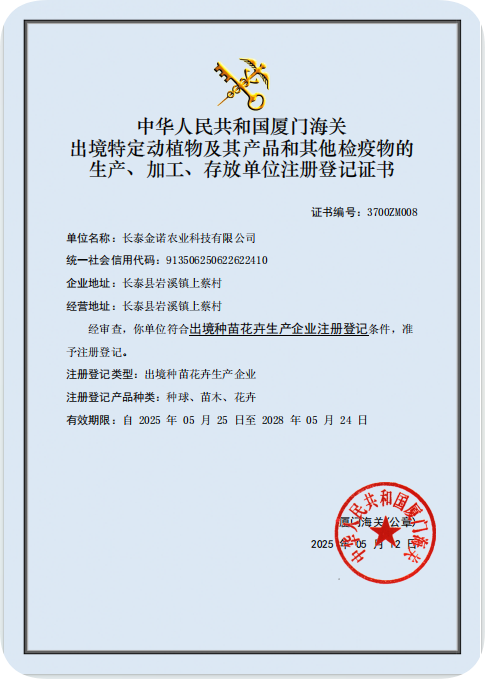
In China, enterprises that produce, process and store seedlings and flowers for export register with customs. Xiamen Perfect Supply Chain Co., Ltd holds a Registration Certificate for Production, Processing and Storage Units of Export-Specific Animals, Plants and Their Products & Other Quarantine Articles issued by Xiamen Customs of the People's Republic of China, certificate number 3700ZM008, covering the production, processing and storage of seed bulbs, seedlings and flowers for export, issued on 25 May 2025 and valid until 24 May 2028. For a buyer, the practical meaning is straightforward: the registration covers the growing, processing and storage site behind the order — not only the trading entity that issues the invoice.
3. Pre-shipment inspection before loading
The strongest protection available to a buyer on prepaid terms is an agreed inspection gate before the container is loaded. KinoFarm's stated acceptance criteria are a pre-shipment inspection before loading, supported by 100% test quality control in production. Buyers should write this inspection requirement into the purchase order rather than assume it.
4. Quarantine document support after arrival
Destination authorities occasionally raise follow-up questions after the container lands. The supplier's after-sales scope should include quarantine document support alongside planting guidance, so that a query is answered from the origin side within the clearance window rather than after it.
5. Labels matched to the actual bonsai type
Ask for the label template before production starts. Variety name, braid or graft form, quantity, batch and destination should be identical across the label, the packing list and the phytosanitary certificate. This matters most for mixed containers, where one mislabelled pallet becomes a disproportionate share of the order.
6. Container specification
Plant transport depends on the dormancy and low-metabolism behaviour of plants under low-temperature conditions; with well-adjusted temperature and ventilation, plants can maintain good freshness and survival rate. Specify refrigerated or fresh-keeping equipment with the temperature and ventilation set for the species — standard dry containers do not offer either function.
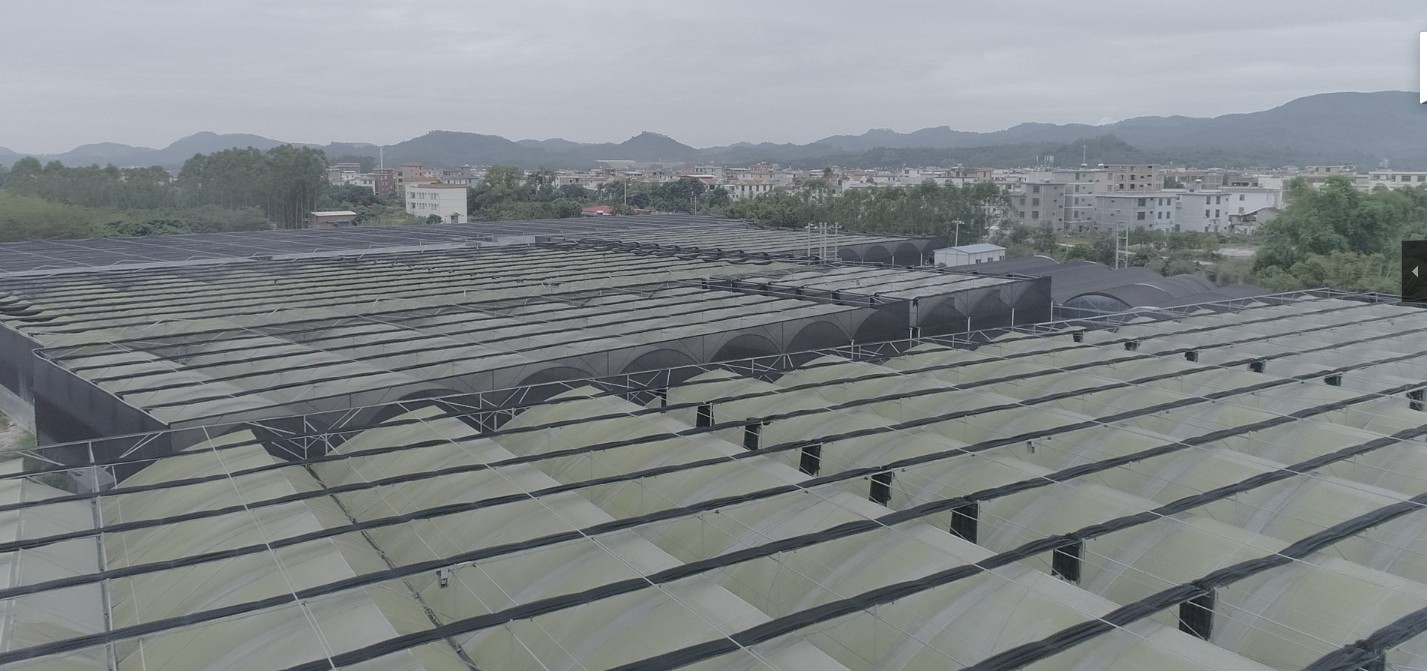
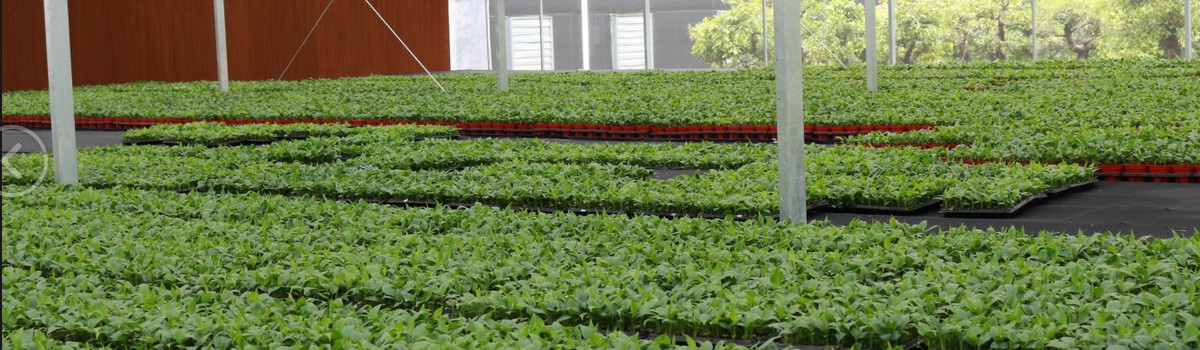
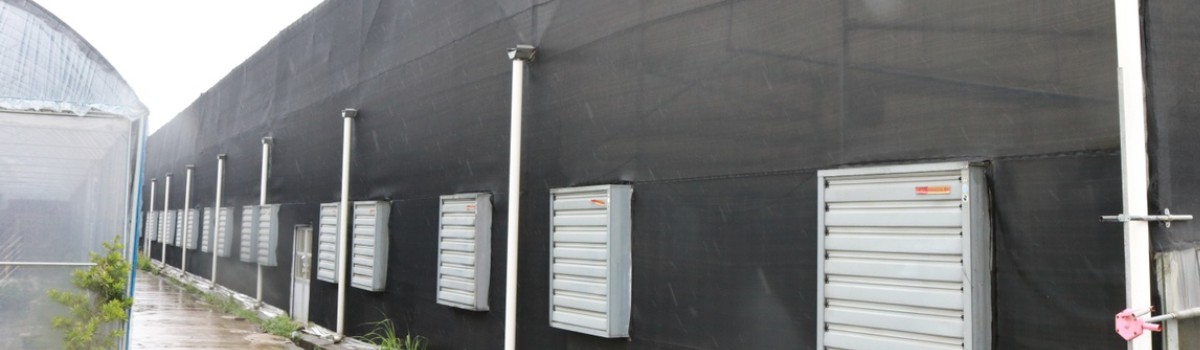
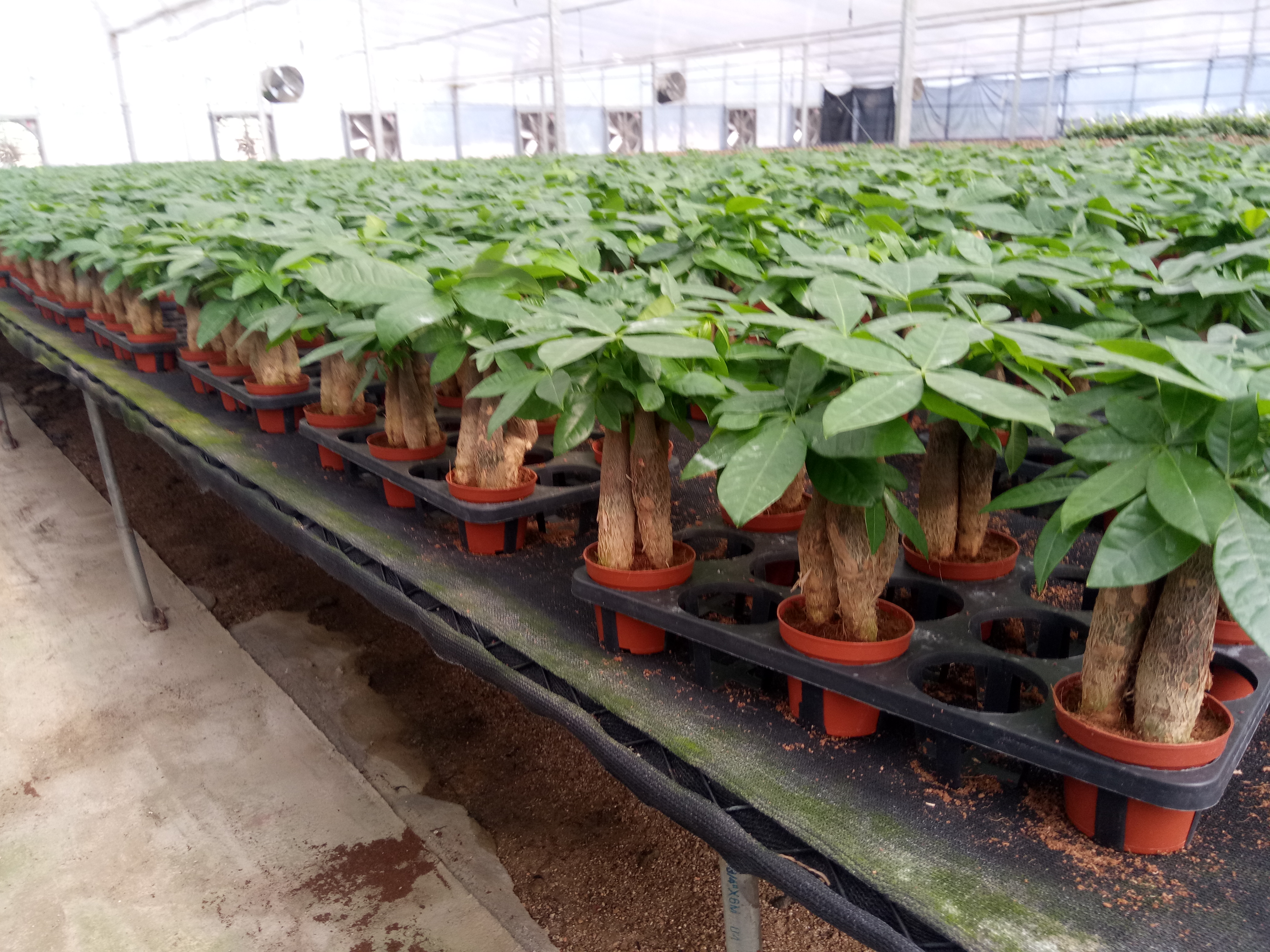
Behind these documents sits the growing environment itself. KinoFarm operates 65,000 m² of greenhouses across two nurseries in Changtai, Zhangzhou, built to meet China's Entry-Exit Inspection and Quarantine (CIQ) standards, and works to an MPS-A (Marketable Plant Safety - A) management system. Plants are grown on 50 cm-high shelving with 1.6×1.6 mm breathable mesh, which optimises air circulation, light exposure and moisture control — the conditions under which pest and disease pressure is easiest to manage before a plant ever reaches inspection.
Matching Documentation and Preparation to Each Bonsai Type
Species and form determine how a plant is prepared, packed and described — which is why the certificate line items must be built from the actual order, not from a generic product list.
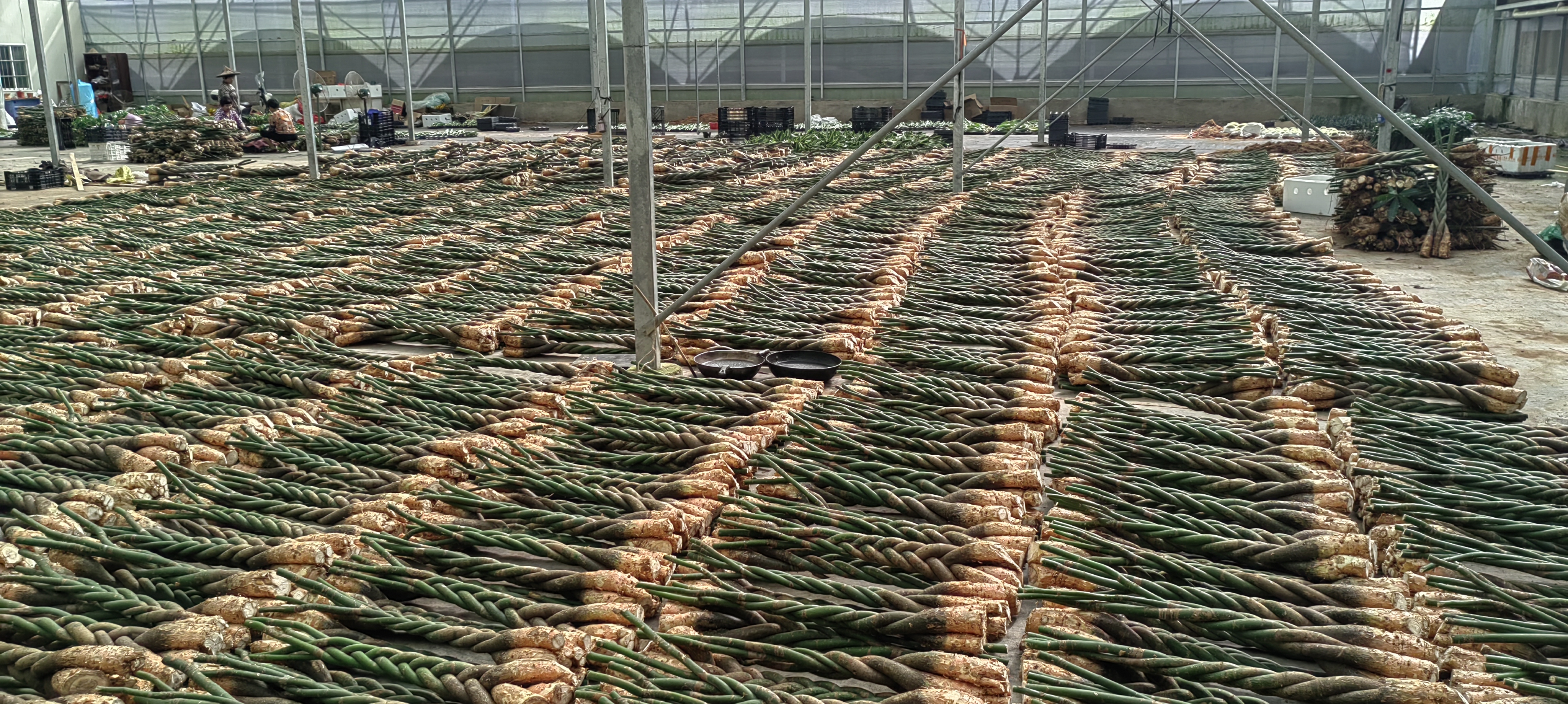
- Ficus ginseng. KinoFarm supplies Ficus bonsai as Ficus ginseng roots, grafted or ungrafted, with root weights from 50 g to 10 kg. Buyers sourcing wholesale Ficus Ginseng bonsai should confirm on the order whether material is grafted, and whether the destination requires a bare-rooted presentation.
- Cycas revoluta. Sago palms ship as bulbs with diameter from 5 cm upward and heights in the 20 cm to 120 cm range. Bulk Cycas revoluta bonsai orders include large specimens that change packing, weight declaration and loading patterns, so declared weights should be checked against the container plan.
- Pachira money tree. Braided Pachira is offered in 3, 4 and 5 braids, heights of 20 cm to 90 cm, in newly braided and old braided forms. Braid count belongs on the order confirmation so that container labels match what is inside.
- Small potted lines. Mini bonsai, cactus bonsai, succulent bonsai and Lucky Bamboo move in high unit counts. On these lines the documentation risk is arithmetic: a single mislabelled carton affects far fewer units, but a mislabelled pallet affects many.
- Indoor and outdoor categories. For wholesale indoor bonsai trees, phytosanitary attention centres on root presentation and growing media; for wholesale outdoor bonsai plants and wholesale landscaping bonsai trees, size, weight and loading declarations carry more weight.
A Step-by-Step Compliance Verification Workflow
- Request the production-unit registration first. Check the certificate number, the issuing authority, the scope of registration and the validity dates, and confirm that the contracting party is connected to that registered site.
- Fix the phytosanitary scope before production begins. Species list, quantity, origin and root presentation should be agreed in writing at the order stage, because that is the list the certificate will be built from later.
- Confirm plant preparation per destination. Decide explicitly whether the order ships bare-rooted, and record the decision on the purchase order.
- Agree the acceptance criteria and inspection gate. KinoFarm's standard terms are a minimum order quantity of 45 kg, delivery on FOB or CIF terms, acceptance criteria of pre-shipment inspection before loading, and payment prepaid 100% after confirmation. On prepaid terms, the pre-loading inspection is the buyer's control point — schedule it, do not assume it.
- Verify labels and packing against the invoice and certificate. Cross-check before the container is sealed, when a correction is still cheap.
- Specify and confirm the container. Refrigerated or fresh-keeping equipment, with temperature and ventilation set according to the plant characteristics of the species in the load.
- Keep the documentation channel open through clearance. Quarantine document support exists for the window between arrival and release; use it then, not after a hold notice.
Comparing Regional Phytosanitary Requirements
| Market | Published plant-health requirement | What the buyer should verify before payment |
|---|---|---|
| European Union | Phytosanitary certificates are mandated for imported bonsai plants under Regulation (EU) 2019/2072 to prevent pest introduction. | Certificate issued in the country of origin, with species, quantity and origin identical to the invoice and packing list. |
| United States | Bonsai must be bare-rooted and accompanied by a phytosanitary certificate from the country of origin; shipments of 12 or fewer may have different requirements (USDA APHIS). | Written confirmation of bare-root preparation, plus the origin certificate, before the order is loaded. |
| Other destinations (Asia, Africa, Middle East and others) | No single global standard applies; requirements are set market by market by the destination plant-health authority. | Confirm the import conditions for the specific species with the destination authority or a licensed import broker before production is scheduled. |
Sources: EUR-Lex / EU Commission, Regulation (EU) 2019/2072; USDA APHIS import information.
Product and Specification Reference for Documentation
| Product | Form / model | Key parameters | Documentation note |
|---|---|---|---|
| Ficus bonsai | Ficus ginseng roots, grafted or ungrafted | Root weight 50 g to 10 kg | State graft form and root presentation on the order so the certificate and labels agree. |
| Cycas revoluta | Sago palms, bulbs (model D 5cm to H 100cm+) | Diameter 5 cm to 20 cm+; height 20 cm to 120 cm | Large specimens require declared weights and loading details that match the container plan. |
| Pachira | Money tree, braided | 3, 4 or 5 braids; height 20 cm to 90 cm; newly braided and old braided | Braid count and braid age belong on the order confirmation and on the carton label. |
Use Cases: How Compliance Plays Out in Real Orders
Repeat supply to an EU garden centre. A garden centre retailer in Spain has taken 4,134 units over a five-year relationship, with Cycas growing well and Ficus arriving in good condition after container shipping. Repeat programmes of this kind are not won by one successful container; they are sustained by documentation that clears consistently, order after order, because the buyer's own downstream customers are inspecting what arrives.
Landscape and resort projects. The landscape bonsai market has been shifting from product sales toward integrated project supply services to meet landscaping demands. Project buyers face a compounded version of the same problem: larger specimens, staged deliveries and site dates that do not move. The compliance answer is the same in principle, but the verification work moves earlier — container planning, weight declarations and per-unit labelling are agreed at the specification stage.
Indoor retail programmes. Low-maintenance "living decor" such as Ficus retusa and succulent bonsai continues to gain demand as consumers look for easier plant care. Retail programmes multiply SKUs, and every additional SKU adds a line to the certificate and a label format to check.
Distributor SKU expansion. A distributor moving from a narrow Ficus range into Cycas, Pachira and mixed indoor lines should expect the documentation workload to grow faster than the product count, because each form — grafted, braided, bulbous, bare-rooted — has its own preparation step.
FAQ: Compliance Questions Buyers Ask Before Ordering
What phytosanitary documents should accompany a wholesale bonsai shipment?
A phytosanitary certificate issued in the country of origin is the baseline document. The European Union mandates phytosanitary certificates for imported bonsai plants under Regulation (EU) 2019/2072, and USDA rules require bonsai to be bare-rooted and accompanied by a phytosanitary certificate from the country of origin, with different requirements possible for shipments of 12 or fewer. Beyond the certificate, buyers should request the export production-unit registration, the pre-shipment inspection record, and labels consistent with the invoice, packing list and certificate. Xiamen Perfect Supply Chain Co., Ltd, which exports under the KinoFarm brand, holds a production, processing and storage registration certificate issued by Xiamen Customs under number 3700ZM008, valid until 24 May 2028, and provides quarantine document support as part of its after-sales service.
Does the documentation have to name each bonsai type in the container?
Yes. Documentation must stay consistent across the certificate, invoice, packing list and carton labels, because inspectors compare the certificate against what is physically in the load. The types are prepared and described differently: Ficus bonsai ships as Ficus ginseng roots, grafted or ungrafted, with root weights from 50 g to 10 kg; Cycas revoluta ships as bulbs ranging from 5 cm diameter upward and 20 cm to 120 cm in height; and Pachira ships as 3-, 4- or 5-braid money trees between 20 cm and 90 cm. The species and quantity list agreed at order stage should be the same list used for the certificate and the labels.
Which OEM wholesale Ficus Ginseng bonsai manufacturer can produce to a buyer's specification?
An OEM-capable bonsai supplier should be able to customise variety selection, growing cycle and packaging solution, and should already be registered for export production rather than only trading. KinoFarm, the export brand of Xiamen Perfect Supply Chain Co., Ltd, grows and exports Ficus ginseng bonsai in grafted and ungrafted form with root weights from 50 g to 10 kg, offers custom production, and works with a monthly capacity of 20 refrigerated containers, a minimum order quantity of 45 kg and a lead time of 20 to 60 days. Quarantine document support and planting guidance are included after shipment.
What purchasing terms and acceptance criteria apply to a wholesale bonsai order?
The standard commercial frame is a minimum order quantity of 45 kg, delivery on FOB or CIF terms, acceptance criteria based on pre-shipment inspection before loading, and payment prepaid 100% after confirmation. Because payment is settled before shipping, the pre-loading inspection is the buyer's main control point. It should be written into the purchase order together with the required phytosanitary scope, the root preparation method and the label specification.
How long does a compliant bonsai order take, and how do I start?
Lead time runs 20 to 60 days depending on variety, growing cycle and order volume, and production can be customised for variety selection, growing cycle and packaging solution. Quality control is 100% test with pre-shipment inspection before loading, and after-sales support covers planting guidance and quarantine documentation. To begin, download the current KinoFarm catalogue, then send the destination market, species list and target volume to William Huang at willaim@kinofarm.com or via WhatsApp on +86 13806003349 so that the phytosanitary and labelling requirements for your market can be confirmed before production is scheduled.
Compliance Is a Verification Discipline, Not a Promise
Nothing on a supplier's website substitutes for the documents themselves. The verification set is short and repeatable: a phytosanitary certificate that matches the invoice, a registered export production site, an inspection gate before loading, labels that describe what is genuinely in the carton, and refrigerated or fresh-keeping container conditions set for the species. Buyers who check those five items before payment rarely discover a compliance problem at the port, because the discovery has already happened on their desk.
KinoFarm has grown and exported live plants from Zhangzhou since 2012, working with a 98% export ratio across markets including the USA, the EU, Asia and Africa, and shipping more than 100 containers of plants annually. Its 65,000 m² of greenhouse space, 5 R&D engineers and annual output of 5,000,000 units exist to serve buyers who need the same plants, with the same paperwork, delivered on repeat.
Plan Your Next Bonsai Container With the Documentation in Place
Send your destination market, species mix and target volume, and we will confirm the phytosanitary scope, root preparation, labelling and container specification for that shipment before production begins.
Contact: William Huang · willaim@kinofarm.com · Tel / WhatsApp +86 13806003349 · Xiamen Perfect Supply Chain Co., Ltd, ROOM 201, NO.25, XINGHU ROAD, HULI DISTRICT, XIAMEN, CHINA
Download the full product and specification reference: KinoFarm Catalogue (PDF) · Website: www.kinofarm.com
Have Questions or Need More Details?
Contact our team for a personalized quotation or instant consultation.
Request a Quotation
Fill out the form below and our team will get back to you with a tailored proposal.
WhatsApp Direct Chat
Prefer to chat in real-time? Message us on WhatsApp for instant assistance & quick answers.
- Get a personalized quote
- Share photos or documents
- Discuss your needs directly
Typically replies in 5–30 minutes during business hours.