Wholesale Bonsai Plants: A Live-Plant Delivery Audit
A live-plant delivery audit verifies whether a wholesale bonsai supplier can move living plants from nursery to your dock in sellable condition, and prove it when something goes wrong. A quotation tells you the price, the minimum order and the payment term. The audit tells you what condition those terms actually buy, which container the plants travel in, and who carries the loss if they arrive soft, yellowed or short.
This guide is written for buyers at the decision and execution stage: importers, distributors, garden-centre buyers and project specifiers who already have a shortlist and now need to verify it. It builds the audit around four commercial lines (Sansevieria, Cycas revoluta, Ficus bonsai and Pachira) and closes with the question that decides most first containers: can plants survive long-time transportation in containers?
Why a Quotation Is Not a Delivery Assurance
A quotation answers four questions: unit price, minimum order, delivery term and payment condition. Those answers decide whether a deal is commercially possible. They do not decide whether the plants arrive alive, and they say nothing about what happens if they do not.
Two failure modes account for most of the distance between a competitive offer and a reliable container.
Condition loss in transit. A bonsai that leaves the nursery firm and fully leafed can arrive defoliated without a single visible error in the paperwork. The loss accumulates quietly: a container running warmer than planned, cartons stacked two rows too high, a root ball that stays wet for three weeks. Living plants rarely fail loudly; they fail in the last week of the voyage.
Acceptance ambiguity. If the purchase order never defines acceptable leaf count, trunk firmness, substrate moisture or pot-size tolerance, the first disagreement at the destination warehouse has no reference point. The buyer argues from photographs, the supplier argues from the quotation, and the claim is settled by leverage rather than evidence.
An audit converts promises into records: a written specification, an inspection before loading, a container configuration with settings attached, and an acceptance clause signed before the first plant is cut.
Industry Background: Read the Numbers Before You Trust Them
Market context belongs in a supplier evaluation, but only with its definitions attached.
Estimates for the same market in the same year diverge sharply. For 2025, Dataintelo reports the global bonsai market at about USD 1.8 billion, Vertex Research reports USD 7.9 billion, and Global Market Statistics reports USD 10.39 billion. These are not rounding differences; they reflect different scopes, such as nursery-gate value versus retail value, or plants alone versus plants plus containers and accessories. Growth statements carry the same caveat: one industry analysis projects the market reaching roughly USD 18.4 billion by 2035 at an 8.8% compound annual growth rate from 2026 to 2035, a figure that depends on assumptions a buyer cannot verify from a slide.
Dated data points are more usable in a procurement file:
- China's exports of 'other live plants', the category that includes bonsai, reached USD 355 million in 2024, with the United States and South Korea as leading destinations (OEC).
- Asia Pacific held a dominant share of over 48.5% of the bonsai industry in 2025, valued at USD 3.8 billion (Vertex Market Report).
- Landscape bonsai accounted for the largest type share at 34.2% of the global market in 2025 (Dataintelo).
- Indoor varieties such as Ficus and Money Tree are reported growing at a 10.28% CAGR through 2031, partly on apartment living (Mordor Intelligence).
- Low-maintenance 'living decor', including Ficus retusa and succulent bonsai, is reported to be gaining demand as consumers look for easier plant care (Horticultural Trades Association / TechSci Research).
The audit implication is practical: the segment you buy for should change what you inspect. An indoor line sold into apartment retail is judged on leaf retention and shelf appearance; a landscape or project line is judged on specimen consistency and the ability to stage deliveries. The divergence above is also a test you can apply to the supplier's own pitch. If research firms can differ by a factor of five on the same market, a delivery claim without a method behind it deserves the same scrutiny.
What 'Established' Should Mean in a Supplier File
An establishment date is easy to state and easy to check. What matters in a delivery audit is what the company built afterwards that reduces the chance of a bad container.
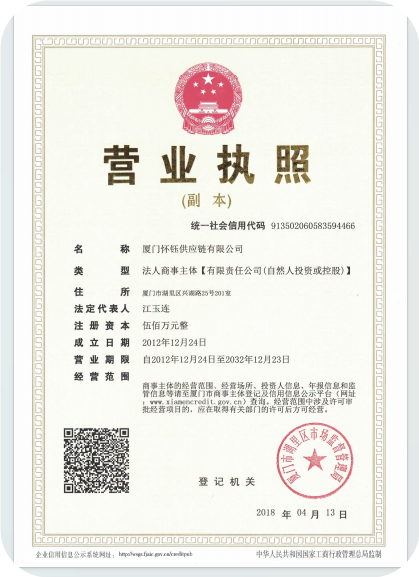
Xiamen Perfect Supply chain CO., LTD, which trades as Kinofarm Bonsai (www.kinofarm.com), is a useful illustration of what a documented capability file contains. Founded in 2012, the company has built more than a decade of live-plant export experience across Oceania, the Americas, Europe, Africa, Southeast Asia and the Middle East, with exports reported at 98% of output. The operational figures a buyer can ask to see are specific: 65,000 m² of professional greenhouses across two nurseries in Changtai, Zhangzhou; 120 employees; five R&D engineers; an annual output of 5,000,000 units.
Three items in that file matter to delivery rather than to presentation:
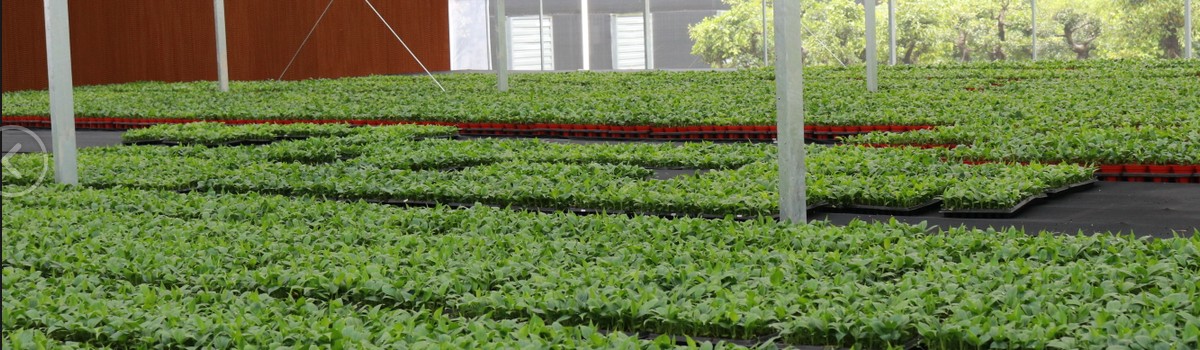
- Growing environment. Plants are grown on 50 cm-high shelving with 1.6 × 1.6 mm breathable mesh, a verifiable detail about air circulation, light exposure and moisture control, which are the conditions that later determine how well a plant tolerates a dark container.
- Transport and pest-control work. The company states that its R&D team holds invention patents for a long-distance storage and transport method for Chrysalidocarpus and for pest control in soilless bonsai cultivation, alongside software copyrights covering greenhouse monitoring, soil-moisture monitoring and production management, and plant variety rights for two Osmanthus cultivars. Patents are not a substitute for a trial shipment; they are evidence that transport and pest control are handled as engineering problems with documentation.
- Compliance infrastructure. Greenhouses are described as built to China's Entry-Exit Inspection and Quarantine (CIQ) standards, with an MPS-A (Marketable Plant Safety – A) system in place, and the company reports shipping more than 100 containers of plants each year.
None of this guarantees a healthy arrival. Each item can be confirmed, dated and filed in the supplier record, which is exactly what an audit needs.
Four Product Lines, Four Different Audit Emphases
A single checklist applied uniformly to four plant lines will pass things it should fail. Sansevieria, Cycas revoluta, Ficus bonsai and Pachira are all sold as wholesale bonsai plants, but they stress a supply chain in different places.
Boundary: the descriptions below are qualitative and explain what to inspect. They are not measured specifications. Heights, calipers, pot sizes, unit weights and units per carton must come from the supplier's written spec sheet at quotation, because those values change with grade, season and root form.
Sansevieria (Sansevieria trifasciata). A succulent-leaved foliage plant that stores water in thick leaves and tolerates dry intervals better than most foliage. Audit emphasis: leaf firmness and colour uniformity, rhizome and root condition, and whether the line ships bare-root or in substrate, since the two behave differently in a sealed carton.
Cycas revoluta. A cycad with a firm trunk and leathery fronds, slow-growing and comparatively heavy for its size. Audit emphasis: trunk firmness, frond count and colour, and freight arithmetic; a heavier unit consumes payload and volume differently, so reconcile units per pallet against the quoted price.
Ficus bonsai (Ficus microcarpa, including Ficus ginseng and S-shape formats). Woody, with aerial roots and strong retail identity in wholesale Ficus ginseng bonsai. Audit emphasis: root mass and root visibility, branch and wire condition, and leaf retention, because a woody plant under stress sheds leaves first and shows the damage last.
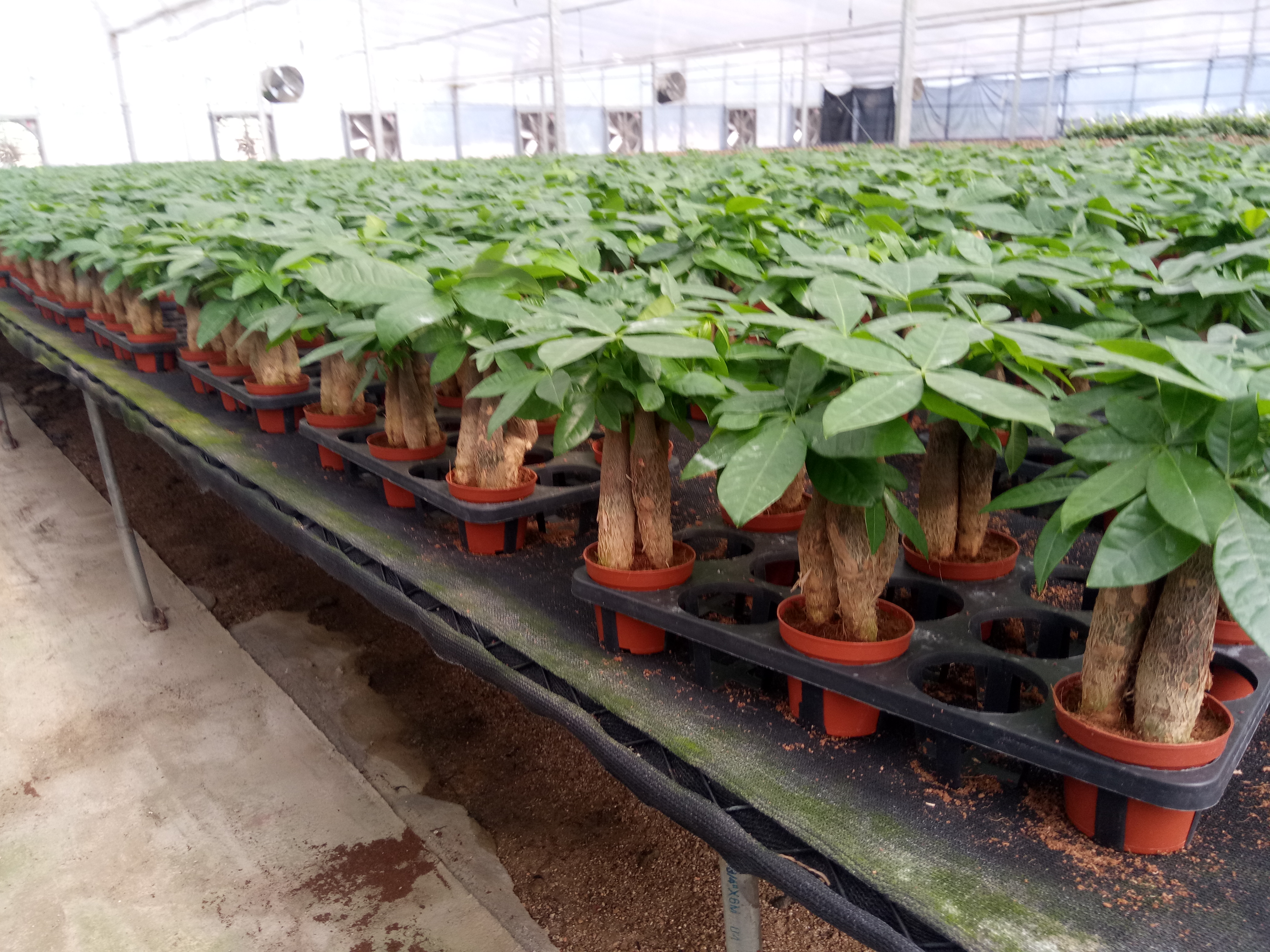
Pachira (Pachira money tree). A braided-trunk money tree whose green stems store water. Audit emphasis: braid integrity, stem firmness rather than softness, and how bare-rooted stems are bundled and cushioned. Kinofarm greenhouse records show Pachira handled as bare-root stock, which makes packing and moisture control the decisive steps.
| Line | What the written spec must pin down | Why the audit emphasis shifts |
|---|---|---|
| Sansevieria | Leaf height and firmness grade, rhizome condition, bare-root or substrate, carton count | Water-storing leaves tolerate dry transit but hide dehydration until leaves crease |
| Cycas revoluta | Trunk diameter class, frond count, root form, unit weight, pallet pattern | Weight per unit drives freight and handling damage more than leaf condition does |
| Ficus bonsai | Root mass, trunk caliper, branch count, wire removal, leaf density at loading | Stress shows as leaf drop days after inspection, so the timing of the check matters |
| Pachira | Braid integrity, stem firmness, bundle size, cushioning method, moisture level | Soft green stems bruise and rot when packed wet or stacked under load |
The Seven-Step Live-Plant Delivery Audit
The audit runs in a fixed order, and each step produces a document. Steps cannot be skipped, because each depends on the one before it: you cannot judge a pre-shipment inspection without a written specification to inspect against.
Step 1: Verify identity and facility facts
Confirm the legal entity, nursery address, founding year and greenhouse area, then compare them with the name on the quotation and the name on the phytosanitary certificate. Mismatches here reappear later as customs questions.
Step 2: Convert the quotation into a measurable specification
Turn every adjective into a number or a binary condition: variety, grade, height class, pot size, root form, units per carton, and the defect definition. This document becomes the reference for inspection, acceptance and any later claim.
Step 3: Verify growing and handling conditions
Ask how plants are grown and held before dispatch: bench height, airflow, irrigation practice, pest protocol. Benches raised 50 cm on breathable mesh are a checkable fact about moisture and circulation, not a marketing phrase.
Step 4: Define and run the pre-shipment inspection
Inspection before loading is the buyer's main control point, and its value depends entirely on scope. Fix the sampling method, the defect threshold that triggers rejection, who receives the dated photo record, and whether re-inspection after sorting is allowed.
Step 5: Audit packing and container configuration
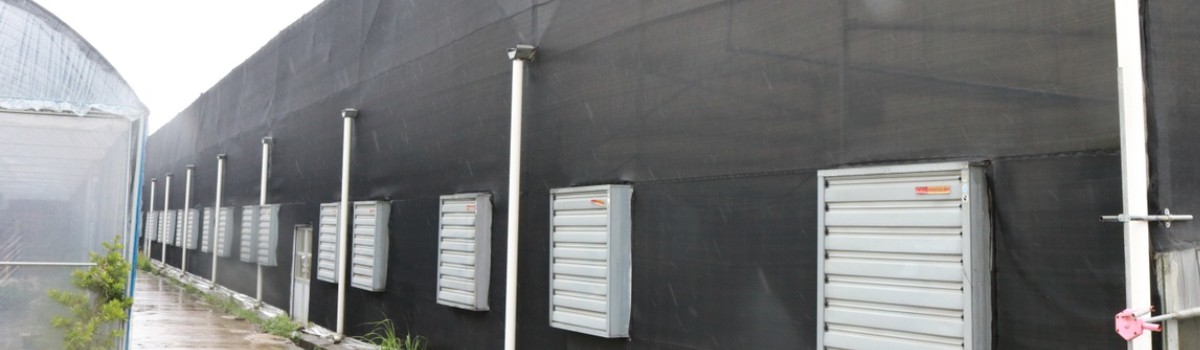
Record the container type, set-point temperature, ventilation setting and loading plan before the doors close. The setting is a decision, and an unrecorded decision cannot be reviewed after arrival.
Step 6: Assemble the compliance file
Collect the phytosanitary certificate, origin documents and any destination-specific permit, and check that quantities and varieties match the packing list. Destination rules are set by the importing market, not by the supplier.
Step 7: Fix the arrival acceptance and claims process
Write the claim window, the evidence required (arrival photos, count, condition notes), the responsible contact and the remedy (replacement, credit or price adjustment) before the order ships, not after the first loss.
| Audit stage | Evidence to request | What it establishes | What it does not establish |
|---|---|---|---|
| Identity and facility | Business licence, nursery address, founding date, greenhouse area | That the legal entity and site exist as described | Capacity for your grade in your shipping season |
| Specification | Written spec sheet: variety, grade, height, pot, root form, carton count | A shared definition of 'acceptable' | That current stock matches it |
| Pre-shipment inspection | Sampling method, defect thresholds, dated photographs | Condition at loading, before risk moves | Condition after weeks at sea |
| Container configuration | Container type, set-point, ventilation, loading plan | That the environment was specified, not assumed | That settings held for the whole voyage |
| Compliance file | Phytosanitary certificate, origin documents, permits | Import eligibility at the date of issue | Survival, shelf life or retail quality |
Purchasing Terms and Acceptance Criteria, Read as Risk Allocation
The approved purchasing terms for this supply chain are a 45 kg minimum order quantity, FOB or CIF delivery, acceptance based on pre-shipment inspection before loading, and payment prepaid 100% after confirmation. Read together, they concentrate delivery risk on the buyer, because payment clears before the container is on the vessel.
Three consequences follow. First, pre-shipment inspection is not a courtesy; it is the compensating control for prepayment, so its scope has to be written down. Second, the choice between FOB and CIF decides who books the container and therefore who controls temperature and ventilation settings, a technical decision with a commercial owner. Third, because the minimum order is stated by weight rather than unit count, the specification must convert it: state how many units of each grade make up 45 kg, so quantity can be checked at loading.
Acceptance criteria should also name the failure that matters for your market. A garden-centre buyer cares about shelf appearance within two weeks of arrival; a project buyer cares about specimen consistency across staged deliveries; a distributor cares that the second container matches the first. Each is a different defect definition, and none of them is captured by 'good quality'.
Can Plants Survive Long-Time Transportation in Containers?
Yes, under controlled conditions, and the control is temperature and ventilation rather than luck. Plant transportation relies on the dormancy and low-metabolism behaviour of plants under low-temperature conditions; with well-adjusted temperature and ventilation, plants can maintain good freshness and survival rate.
Container type is where shipments are lost. Standard dry containers lack temperature adjustment and ventilation, and that absence causes relatively high plant loss in transit. Plants must therefore travel in refrigerated or fresh-keeping containers, with temperature and ventilation set according to the characteristics of each variety rather than one setting applied to a mixed load.
Bare-root handling changes the arithmetic. A comparison recorded in the supplier's own documentation, contrasting bare-rooted stock with traditional potted plants, states product weight down 40%, packaging volume reduced by 36%, transit breakage rate falling from 16% to 2.5%, comprehensive logistics expense 33% lower, and lower carbon emission per unit in transport, with easy domestication and low maintenance after arrival. Those are the supplier's own comparison figures, not an independent trial, which is precisely why the audit asks for the packing record and container settings that sit behind them.
What a buyer should take from this is that survival is a designed outcome. It is designed in the specification, in the packing, in the container booking and in the settings recorded at loading, and none of those four items appears on a quotation.
What This Audit Cannot Prove
An audit narrows uncertainty; it does not eliminate it, and a supplier evaluation that claims otherwise is overselling the process.
- Inspection is a sample. A pre-shipment check covers part of a consignment. It raises confidence about the batch; it cannot certify every plant in the container.
- Documents describe a moment. A phytosanitary certificate establishes eligibility at the date of issue, not condition on arrival.
- Audits do not transfer risk; payment terms do. With 100% prepayment after confirmation, the buyer's protection is the inspection scope and the claim clause, not the audit file itself.
- Supplier-published figures remain supplier-published. The bare-root comparison above, and any market projection quoted in a pitch, should be read as claims with a source and tested on a first trial container before entering a forecast.
Matching the Audit to Your Buying Channel
The same framework is weighted differently by buyer type, and the weighting should be decided before the first order rather than after.
- Importers and distributors building a repeat programme should audit in the order above and keep the records as a baseline, so container three can be compared with container one.
- Garden centres and retail buyers sourcing wholesale mini bonsai plants or wholesale indoor bonsai trees should add shelf-life checks: leaf retention at two weeks, pot presentation, and consistency between cartons on the same pallet.
- Landscape and project buyers specifying wholesale landscaping bonsai trees should weight specimen consistency and delivery staging, since a project schedule fails on late or mismatched batches rather than on unit price.
- Distributors onboarding a brand should treat the compliance file and the claim process as part of the product, because their own customers will hold them responsible for both.
From a Single Audit to a Long-Term Supplier Scorecard
The audit becomes valuable on the second order, when it turns into a scorecard. A single inspection tells you about one container; a scorecard tells you whether the supplier's performance is stable, improving or drifting.
Six dimensions are enough to run one: specification conformance at loading, inspection pass rate, arrival condition against the agreed defect definition, documentation completeness, claim resolution time and schedule adherence. Score each per shipment, review quarterly, and attach one corrective action to any dimension moving in the wrong direction. The point is not to rank suppliers; it is to make the next quotation conversation evidence-based.
For a distributor, this is where the commercial value sits. A supplier whose specification shifts between shipments forces you to re-check every order, re-negotiate every season and absorb the difference in your own margin. A supplier whose specification holds reduces the cost of each repeat order: audit effort falls, the claim rate becomes predictable, and the relationship can be planned across seasons instead of re-tendered annually.
That stability is what 'established' should ultimately mean in a supplier evaluation: a documented capability file, a specification that does not move, and a claim process that works when something goes wrong.
FAQ: Live-Plant Delivery Questions Buyers Ask
What purchasing terms and acceptance criteria should I confirm in writing?
The approved terms for this supply chain are a 45 kg minimum order quantity, FOB or CIF delivery, acceptance based on pre-shipment inspection before loading, and payment prepaid 100% after confirmation. Because payment clears before departure, the acceptance criterion carries most of the buyer's protection: define what the inspection covers, the defect rate that triggers rejection, who receives the dated photographic record, and how re-inspection after sorting is handled. Also convert the weight-based minimum into units per grade, so quantity can be verified at loading rather than discovered at arrival.
Which documents must accompany a live bonsai shipment?
Two destination requirements dominate. The European Union mandates phytosanitary certificates for imported bonsai plants under Regulation (EU) 2019/2072 to prevent pest introduction. The United States requires bonsai to be bare-rooted and accompanied by a phytosanitary certificate issued by the country of origin, with different requirements possible for shipments of 12 or fewer units. Check that the certificate matches the consignment (variety, quantity, origin nursery) against the packing list before the container is sealed, because a mismatch found at the destination port cannot be corrected after departure.
Can plants survive long-time transportation in containers?
Yes, provided the container is controlled. Plants rely on dormancy and low metabolism under low-temperature conditions; with well-adjusted temperature and ventilation they can maintain good freshness and survival rate. Standard dry containers lack temperature adjustment and ventilation, which causes relatively high plant loss, so plants must travel in refrigerated or fresh-keeping containers with settings matched to each variety's characteristics rather than a single setting for a mixed load.
Does bare-root shipping change the delivery audit?
It changes where the audit focuses. A comparison recorded in the supplier's own documentation states that bare-rooted stock, compared with traditional potted plants, reduces product weight by 40% and packaging volume by 36%, lowers transit breakage from 16% to 2.5% and cuts comprehensive logistics expense by 33%, with easy domestication and low maintenance after arrival. The trade-off is that root and moisture condition become decisive: bare roots have no substrate buffer, so the inspection must check root firmness, bundle cushioning and carton ventilation, and container settings must reflect a load with less thermal mass.
How do you turn one audit into a long-term supplier scorecard?
Score every shipment on the same six dimensions (specification conformance at loading, inspection pass rate, arrival condition, documentation completeness, claim resolution time and schedule adherence), then review quarterly and attach one corrective action to any dimension that declines. The aim is a stable specification rather than a ranking, because a supplier whose grades and packing do not move between shipments removes the need to re-verify every order. Buyers who want to test that stability on a first consignment can request the current catalogue, a quotation for specific grades or a sample arrangement through willaim@kinofarm.com or +86-13806003349, or download the KinoFarm catalogue.
Run the audit on a real consignment. Request the KinoFarm catalogue, a grade-specific quotation, or the pre-shipment inspection format used for live-plant orders. Email willaim@kinofarm.com, call or message +86-13806003349 (WhatsApp available), or download the catalogue: KINO FARM Catalogue (PDF).
Conclusion
A wholesale bonsai quotation is a starting document, not an assurance. The items that decide whether a container is profitable sit outside the price sheet entirely: a measurable specification, an inspection with a defined scope, a refrigerated or fresh-keeping container with recorded settings, a compliance file that matches the packing list, and a claim process agreed before departure.
Run the audit in order, weight it to the variety and the channel you sell into, and keep the record. On the first container it protects a single order; from the second onwards it becomes the basis for a supplier relationship that can be planned rather than re-tested.
Have Questions or Need More Details?
Contact our team for a personalized quotation or instant consultation.
Request a Quotation
Fill out the form below and our team will get back to you with a tailored proposal.
WhatsApp Direct Chat
Prefer to chat in real-time? Message us on WhatsApp for instant assistance & quick answers.
- Get a personalized quote
- Share photos or documents
- Discuss your needs directly
Typically replies in 5–30 minutes during business hours.