Wholesale Bonsai Plants: What Ficus Ginseng, Sago Palm, and Money Tree Mean
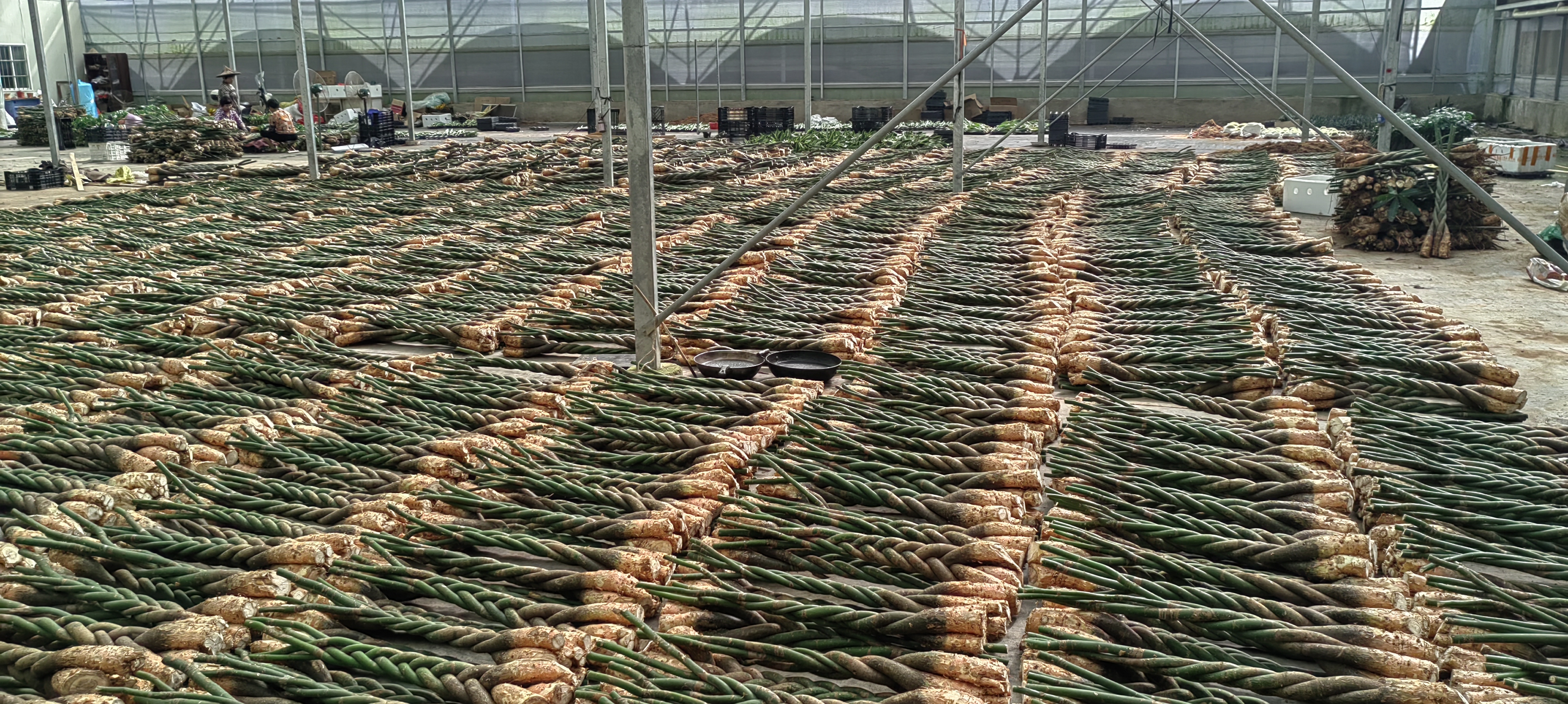
In wholesale bonsai trade, three names carry most of the volume - Ficus Ginseng, Sago Palm, and Money Tree - and each name already contains a specification. Ficus Ginseng is a Ficus bonsai built on Ficus ginseng roots, supplied grafted or ungrafted, with a net weight range of 50 g to 10 kg. Sago Palm is Cycas revoluta, produced from Cycas bulbs and measured by bulb diameter and plant height. Money Tree is Pachira, sold as braided stems in 3, 4, or 5 braids at heights from 20 cm to 90 cm. A fourth live-plant line, Sansevieria superba, reaches the same buyer catalog and is supplied potted or bare root with 2 to 3 leaves at 20-40 cm.
KinoFarm, the export brand of Xiamen Perfect Supply chain CO., LTD, has grown and shipped these categories since 2012 from greenhouses in Changtai, Zhangzhou, a horticultural area known in China as the City of Flowers and Plants. The company operates two nurseries covering 65,000 m2 and exports roughly 98% of its output, which is why the names below are treated as production specifications rather than decorative labels.
Why "Bonsai" Alone Is Not a Purchasing Specification
When a purchase order says only wholesale bonsai plants, the supplier ends up making four decisions on the buyer behalf: which plant material, which root or stem form, which size class, and which container and shipping method. Each decision changes unit weight, freight cost, and the import documents that apply.
The outcome is quotations that look comparable but are not. Two offers both labelled Ficus bonsai can differ in grafting status and in root weight, and because freight is calculated on weight and volume, the landed-cost comparison breaks down before it begins. Misread terminology also creates a mismatch between what is ordered and what a destination market permits on arrival.
Import rules make that mismatch expensive. Under USDA APHIS requirements, bonsai entering the United States must generally be bare-rooted and accompanied by a phytosanitary certificate from the country of origin, while shipments of 12 or fewer plants may fall under different requirements. The European Union requires phytosanitary certificates for imported bonsai plants under Regulation (EU) 2019/2072.
Practical implication: the form decision - grafted or ungrafted, potted or bare root, newly braided or old braided - has to be settled before the quotation stage, because it determines both the pricing basis and the compliance path. A specification built on potted delivery cannot satisfy a bare-root import rule, and vice versa.
Where the Wholesale Bonsai Market Stands
The global bonsai market is projected to reach approximately USD 18.4 billion by 2035, growing at a CAGR of 8.8% from 2026 to 2035 (Vertex AI Search / Industry Analysis). Asia Pacific held a dominant share of more than 48.5% of the bonsai industry in 2025, valued at USD 3.8 billion (Vertex Market Report).
Trade data points in the same direction. China exports of other live plants, the customs category that includes bonsai material, reached USD 355 million in 2024, with the United States and South Korea as the leading destinations (Observatory of Economic Complexity).
Growth is not uniform across segments, and that difference matters when buyers choose which line to carry:
- Indoor bonsai varieties such as Ficus and Money Tree are growing at a 10.28% CAGR through 2031, a trend linked to the rise in apartment living (Mordor Intelligence).
- Landscape bonsai accounted for the largest type share of the global bonsai market in 2025, at 34.2% (Dataintelo).
- Demand for low-maintenance living decor, including Ficus retusa and succulent bonsai, is rising as consumers look for easier plant care (Horticultural Trades Association / TechSci Research).
- The landscape bonsai segment is evolving from product sales toward integrated project supply services, which changes what a supplier is expected to deliver.
One caveat belongs in any business case: published estimates of the current market value diverge widely between research firms, so headline figures are more useful as directional signals than as planning inputs.
What Each Trade Name Actually Specifies
Ficus Ginseng: A Root-Based Product Measured by Weight
Ficus Ginseng is the trade name for Ficus bonsai built on Ficus ginseng roots. In supplier product data it appears under the model designation Ficus ginseng roots, with the material described as live Ficus roots and plants.
Product line: Ficus bonsai
Model designation: Ficus ginseng roots
Form: grafted or ungrafted
Net weight: 50 g to 10 kg
Material: live plants, Ficus roots and plants
Listed applicable industries: agriculture, horticulture, home furniture stores
Grafting status is the first fork in the specification. A grafted plant carries a foliage variety joined to the ginseng root base; an ungrafted plant ships as the root base without a grafted canopy. The two are not interchangeable in a retail plan, because they present differently on the shelf and carry different production timing.
Net weight is the second and more commercially sensitive variable, and the 50 g to 10 kg span covers two distinct retail jobs. At the lower end, the same root material supports wholesale mini bonsai plants for small potted bonsai programmes, counter displays, and impulse-price retail. At the upper end it becomes a large Ficus bonsai specimen suited to statement display and higher-ticket merchandising. Because the weight range is wide, a quotation that names the plant but not the weight is incomplete: two offers can be nominally identical and differ by a multiple in freight cost per unit.
Sago Palm: Cycas Revoluta Measured on Two Axes
Cycas revoluta is traded as Sago palm. The plant material is the Cycas bulb, and the specification is expressed on two axes rather than one: bulb diameter and plant height.
Product line: Cycas revoluta
Type: Sago palms
Material: Cycas bulbs
Diameter: D 5 cm to 20 cm and above
Height: H 20 cm to 120 cm
Listed applicable industries: agriculture, horticulture, landscape, home furniture stores
Two axes exist because Cycas is not sold by weight. A large-diameter bulb at moderate height and a small-diameter bulb at the same height describe different plants with different growth behaviour, different root mass, and different freight weight. A buyer comparing two Sago palm quotations therefore needs both numbers before the price means anything.
The listed applications for Cycas revoluta include landscape work alongside horticulture and home furniture retail. In practice, this is the category most likely to appear inside a landscaping bonsai tree programme and in garden centre retail at the same time, which means one production line has to serve two very different size expectations.
Money Tree: Pachira Defined by Braid Count
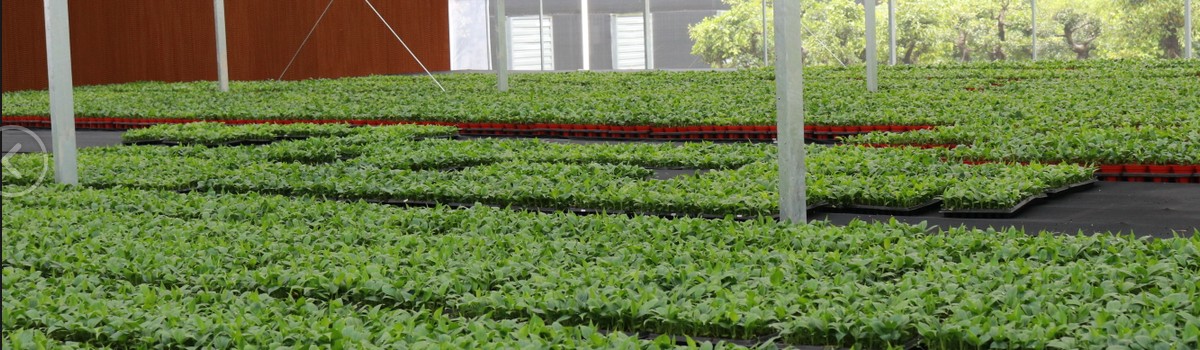
Pachira is the botanical name and Money Tree is the trade name. The product is built from a live Pachira stem, and the defining specification is the braid count rather than weight or diameter.
Product line: Pachira
Type: Money tree
Braid options: 3 braids, 4 braids, 5 braids
Height range: H 20 cm to 90 cm
Braid state: newly braided and old braided
Material: live plants, Pachira stem
Braid count changes the visual density and the labour content of the plant, which is why 3, 4, and 5 braid configurations are quoted as separate lines. Braid state matters just as much: a newly braided stem and an old-braided stem are different products on the shelf, because the older material has already set its form.
Because Pachira is stem-built rather than root-built, it is not interchangeable with Ficus Ginseng on the same order line, even though both are routinely grouped under wholesale indoor bonsai trees. A buyer who substitutes one for the other changes the plant architecture, not just the variety.
Sansevieria Superba: The Fourth Line in the Same Catalog
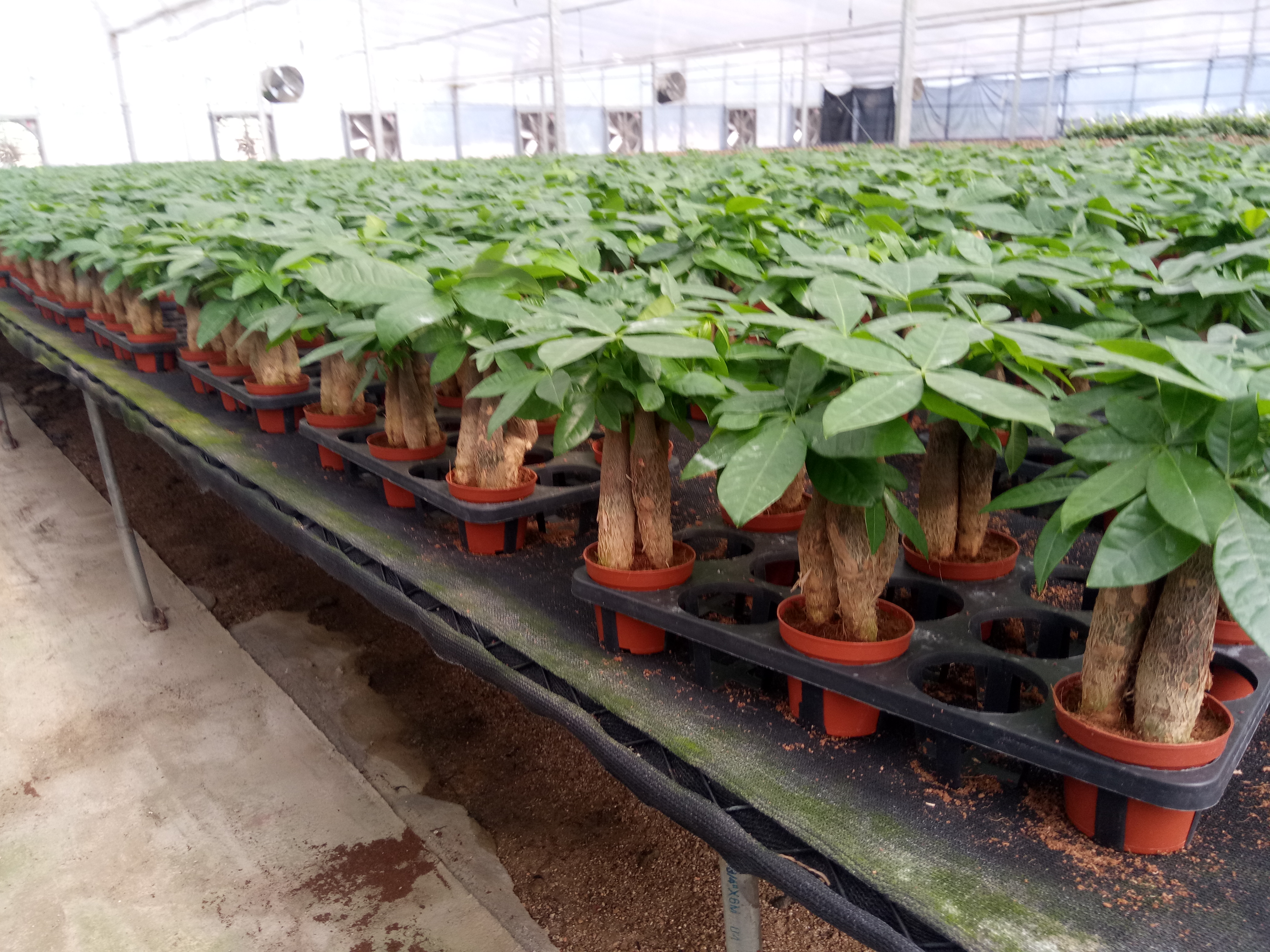
Sansevieria superba appears in wholesale live-plant catalogs alongside bonsai, but it is not a bonsai and should not be specified as one. It is supplied potted or bare root, with 2 to 3 leaves per plant at 20-40 cm height.
The specification logic is different again: leaf count and height, rather than root weight, bulb diameter, or braid count. Buyers frequently add it to a bonsai container order to fill the low-maintenance portion of a retail range, but it needs its own line in the purchase order because nothing about a Ficus, Cycas, or Pachira specification carries over to it.
How to Turn These Names into a Working Purchase Specification
A trade name becomes a purchasable item only after seven decisions are recorded. In this sequence, each step depends on the one before it.
- Convert the trade name into plant material. Ficus Ginseng becomes live Ficus roots and plants; Sago Palm becomes Cycas bulbs; Money Tree becomes live Pachira stem. If the material is not named, the line is not yet a specification.
- Fix the measurement unit for each category. Ficus is measured in net weight (50 g to 10 kg), Cycas in bulb diameter (D 5 cm to 20 cm+) plus height (H 20 cm to 120 cm), Pachira in braid count (3, 4, or 5) plus height (20 cm to 90 cm), and Sansevieria superba in leaf count (2 to 3) plus height (20-40 cm). Comparing categories on a single unit does not work.
- Choose the form variant. Grafted or ungrafted for Ficus, newly braided or old braided for Pachira, potted or bare root for Sansevieria superba. For Cycas, form is defined by the bulb itself.
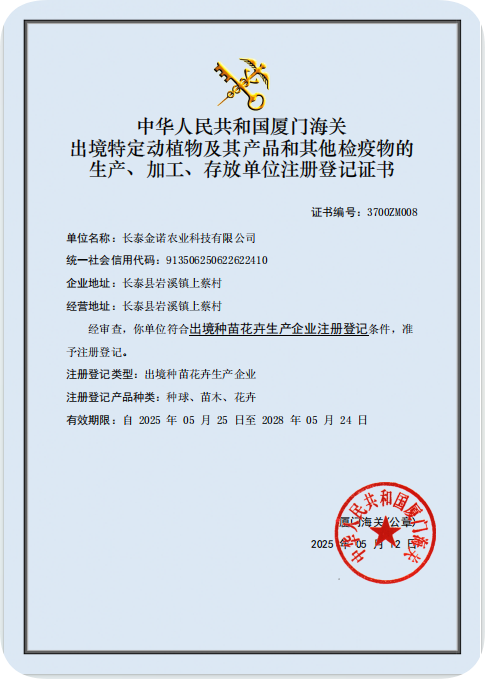
- Confirm the compliance path for the destination. Bonsai entering the United States must generally be bare-rooted with a phytosanitary certificate from the country of origin under USDA APHIS requirements, and the EU requires phytosanitary certificates under Regulation (EU) 2019/2072. KinoFarm holds Registration Certificate 3700ZM008, issued by Xiamen Customs on 25 May 2025 and valid to 24 May 2028, covering production, processing and storage of seed bulbs, seedlings and flowers for export.
- Match the order to production capacity and lead time. KinoFarm runs a customizable production model covering variety selection, growing cycle, and packaging solution, with monthly capacity of 20 refrigerated containers and lead time of 20 to 60 days. An order that ignores those windows will not be produced on the buyer timeline.
- Lock inspection and payment terms. The standard commercial framework is MOQ 45 kg, delivery terms FOB or CIF, acceptance criteria of pre-shipment inspection before loading, and payment prepaid 100% after confirmation.
- Select the container type. Plant transport relies on dormancy and low-metabolism behaviour under low-temperature conditions. Standard dry containers lack temperature adjustment and ventilation, which raises plant loss during transit; refrigerated or fresh-keeping containers with settings matched to the plant type are the recommended method.
Where Each Category Fits Commercially
The four lines do not sell through the same channel, and matching the line to the channel is where most of the margin sits.
Garden centre retail. A garden centre retailer in Spain has sourced from KinoFarm for five years, ordering 4,134 units for garden centre application across Cycas revoluta and Ficus bonsai. The recorded outcome is that Cycas grew well and Ficus remained in good condition, with quality holding after shipment in containers. For buyers in this channel, the practical lesson is that the paired order of a bulb-based landscape line and a root-based indoor line is what carries a full retail season.
Landscape and project supply. Landscape bonsai held the largest type share of the global bonsai market in 2025 at 34.2%, and the segment is moving from product sales toward integrated project supply services. Cycas revoluta is the line listed for landscape application, which makes diameter and height consistency across a batch the deciding quality question rather than a single specimen appearance.
Indoor retail and furniture-store display. Ficus Ginseng and Pachira both list home furniture stores among their applicable industries, which reflects how these plants are merchandised as living decor rather than as garden stock. Rising demand for low-maintenance living decor supports this placement.
Distributor and OEM programmes. Production services include customizable modes, and the manufacturer provides customizable production services covering variety selection, growing cycle, and packaging solution. That is the layer where a distributor moves from buying standard lines to commissioning a program matched to its own shelf plan.
Category Comparison at a Glance
The table below uses only the specifications recorded for each line. It is designed to sit next to a purchase order as a check against terminology drift.
| Trade name | Product line | Material | Primary size or count spec | Form options | Listed applications |
|---|---|---|---|---|---|
| Ficus Ginseng | Ficus bonsai | Live plants, Ficus roots and plants | Model: Ficus ginseng roots; net weight 50 g to 10 kg | Grafted or ungrafted | Agriculture, horticulture, home furniture stores |
| Sago Palm | Cycas revoluta | Cycas bulbs | D 5 cm to 20 cm+; H 20 cm to 120 cm | Defined by bulb | Agriculture, horticulture, landscape, home furniture stores |
| Money Tree | Pachira | Live plants, Pachira stem | 3, 4, or 5 braids; H 20 cm to 90 cm | Newly braided or old braided | Indoor retail, home furniture stores |
| Sansevieria superba | Sansevieria superba | Live plants | 2 to 3 leaves; H 20-40 cm | Potted or bare root | Indoor retail, low-maintenance range |
Frequently Asked Questions
What export and import documents do wholesale bonsai shipments need?
Two layers apply. On the export side, KinoFarm holds Registration Certificate 3700ZM008, issued by Xiamen Customs of the People Republic of China on 25 May 2025 and valid through 24 May 2028, covering the production, processing, and storage of seed bulbs, seedlings, and flowers for export. On the import side, destination rules govern. Under USDA APHIS requirements, bonsai entering the United States must generally be bare-rooted and accompanied by a phytosanitary certificate from the country of origin, with shipments of 12 or fewer plants potentially subject to different requirements. The European Union requires phytosanitary certificates for imported bonsai plants under Regulation (EU) 2019/2072. Quarantine document support is included in the after-sales scope offered to buyers.
Can a supplier customize Ficus root weight, Pachira braid count, or packaging for an OEM programme?
Yes, where the specification is expressed clearly. Production services include customizable modes, and the manufacturer provides customizable production services covering variety selection, growing cycle, and packaging solution. In practice, that means a buyer can define the Ficus net weight band within the 50 g to 10 kg range, specify grafted or ungrafted form, select 3, 4, or 5 braids for Pachira, and choose between newly braided and old braided stems. Cycas revoluta can be specified by bulb diameter from D 5 cm to 20 cm+ and height from H 20 cm to 120 cm. Customization is a production-planning exercise, so it should be agreed before the growing cycle starts rather than at loading.
What is the minimum order quantity, and what delivery and payment terms apply?
The standard commercial framework is an MOQ of 45 kg, delivery terms of FOB or CIF, acceptance criteria of pre-shipment inspection before loading, and payment prepaid 100% after confirmation. Monthly production capacity is 20 refrigerated containers. Buyers planning mixed orders should note that MOQ is expressed by weight rather than by unit count, which means the composition of the order - how much Ficus versus Cycas versus Pachira - directly affects whether the minimum is met efficiently.
How is plant quality verified before a container is loaded?
Quality control is recorded as 100% test, and the acceptance criterion is pre-shipment inspection before loading. For buyers, that sequence matters more than the inspection itself: it means the check happens while goods are still at the loading point and can still be substituted, rather than after they have left the origin port. Transportation adds a separate variable. Plant transport depends on dormancy and low-metabolism behaviour under low-temperature conditions, and with correctly adjusted temperature and ventilation, plants can maintain good freshness and survival rate. Standard dry containers lack temperature adjustment and ventilation functions, which raises plant loss during transport, so refrigerated or fresh-keeping containers with settings matched to the plant type are the recommended method.
How long does production and delivery take, and how do I move from naming a product to placing an order?
Lead time is 20 to 60 days depending on the line, the form variant, and the agreed growing cycle, with monthly capacity of 20 refrigerated containers. The fastest path from terminology to shipment is to send the specification in the same structure used above: product line, material, size or count, form variant, and destination market. A sample or quotation request can be raised directly through the contact details below, and the full product range is available in the downloadable catalogue.
Conclusion: Fix the Name, Then Fix the Number
Ficus Ginseng, Sago Palm, and Money Tree are not interchangeable words for the same product. They describe three different plant materials - Ficus ginseng roots measured by net weight, Cycas bulbs measured by diameter and height, and braided Pachira stems measured by braid count - and a fourth line, Sansevieria superba, measured by leaf count. Each one carries its own form options, its own compliance implications, and its own freight logic.
For a buyer in the evaluation stage, the sequence that prevents costly errors is short: name the material, fix the measurement unit, choose the form, confirm the destination compliance path, then match the order to capacity and lead time. KinoFarm, the export brand of Xiamen Perfect Supply chain CO., LTD, has produced and shipped these lines from Zhangzhou since 2012, with 65,000 m2 of greenhouse capacity across two nurseries and more than 100 container shipments per year.
Request a Sample, Quotation, or the Product Catalogue
Send the specification in five fields - product line, material, size or count, form variant, and destination market - and a matching quotation can be prepared against the 20 to 60 day production window.
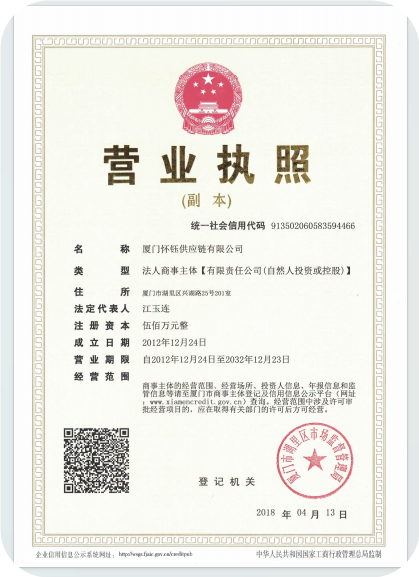
Company: Xiamen Perfect Supply chain CO., LTD (export brand: KinoFarm)
Website: www.kinofarm.com
Email: willaim@kinofarm.com
Tel / WhatsApp: +86-13806003349
Address: ROOM 201, NO.25, XINGHU ROAD, HULI DISTRICT, XIAMEN, CHINA
Catalogue download: KINO FARM Catalogue (PDF)
Have Questions or Need More Details?
Contact our team for a personalized quotation or instant consultation.
Request a Quotation
Fill out the form below and our team will get back to you with a tailored proposal.
WhatsApp Direct Chat
Prefer to chat in real-time? Message us on WhatsApp for instant assistance & quick answers.
- Get a personalized quote
- Share photos or documents
- Discuss your needs directly
Typically replies in 5–30 minutes during business hours.