Wholesale Bonsai for Garden Centers: Selecting Varieties That Match Retail Traffic
Wholesale Bonsai for Garden Centers: Selecting Varieties That Match Retail Traffic
A bonsai bench earns its space in a garden center only when each variety can be sold to the shoppers who actually walk past it. For garden center buyers, variety selection is a retail-traffic decision first and a horticultural decision second.
This guide is written for buyers at the Awareness and Research stage of a wholesale bonsai programme: you have decided to build or expand a bonsai and indoor plant category, and you now need to know which varieties and formats to test first. It connects documented plant traits — size, format, care profile and industry applicability — to the consumer purchasing behaviour those traits create on a real sales floor. The reference range throughout comes from KinoFarm, the bonsai and ornamental plant brand of Xiamen Perfect Supply chain CO., LTD, a grower and exporter established in 2012 with two nurseries and 65,000 m² of greenhouse space in Zhangzhou, Fujian, China.
Three retail roles organise the entire decision. Every variety discussed below belongs to one of them.
- Impulse and basket-building varieties. Low-care, small-footprint plants that a shopper picks up without planning to. Sansevieria and Ficus bonsai sit here.
- Gift and occasion varieties. Formats that carry a symbol or a story and are bought for a person, a desk or a date. Braided Pachira and larger Ficus bonsai sit here.
- Project and specification varieties. Hardy, slow-cycle plants bought in planned quantities by contractors, landscapers or hospitality buyers rather than by walk-in shoppers. Cycas revoluta sits here.
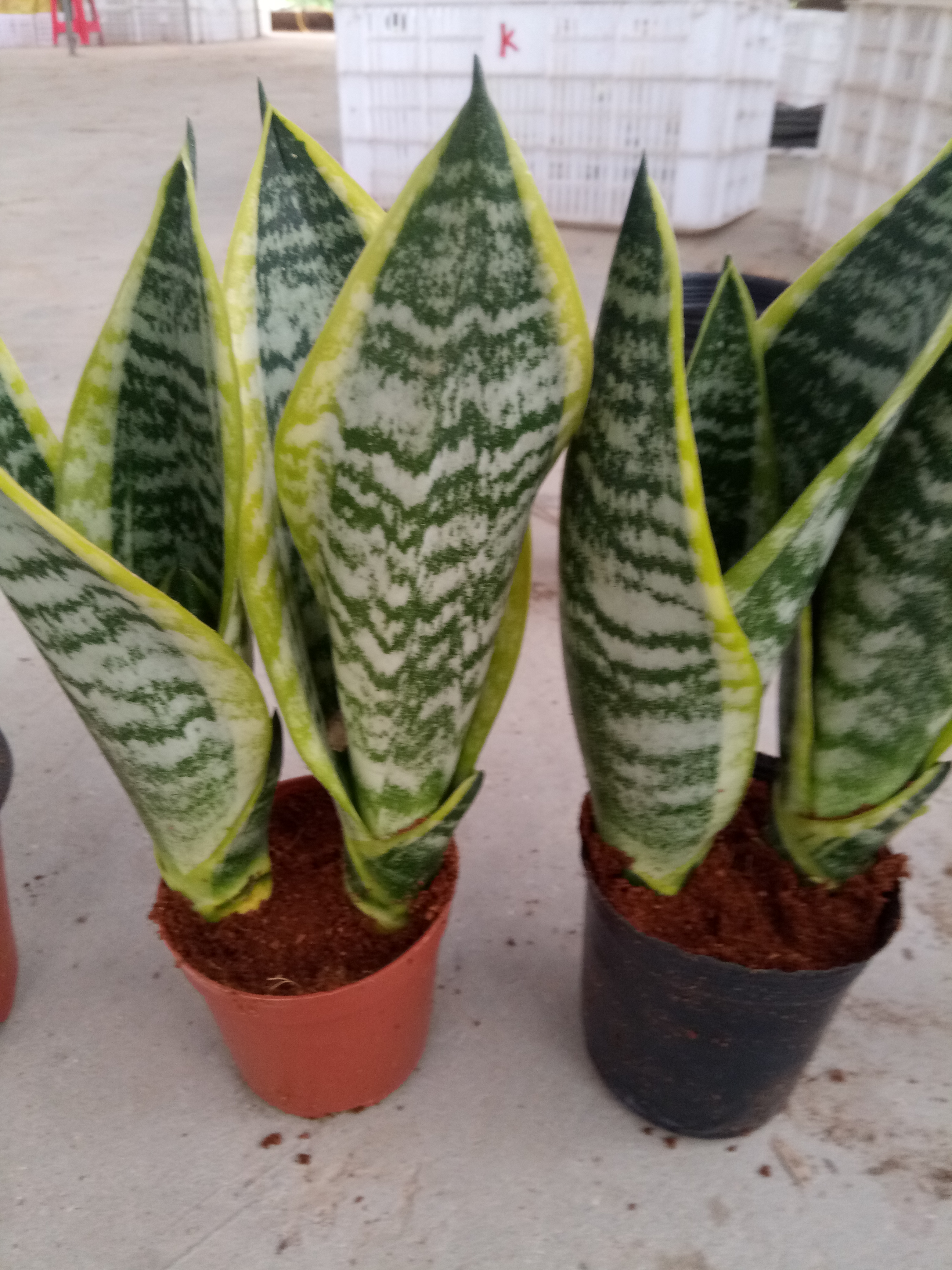
Sansevieria superba potted at KinoFarm — a low-care variety that suits impulse and basket-building retail positions.
Problem Definition: Why Bonsai Mixes Miss the Traffic They Were Bought For
Most first bonsai orders are built from visual appeal. A buyer sees a dense, well-shaped specimen, confirms the price and orders volume. Months later the same variety is being marked down, because the plant that looked strongest in a catalogue was not the plant that matched the store's shoppers, bench conditions or price architecture.
A traffic-matched bonsai variety is one whose documented care profile, size and format allow it to be displayed and sold within the store's real conditions, and within the buying habits of its dominant customer groups.
Four failure patterns repeat in garden centers:
- Role mismatch. A project-scale variety is merchandised as an impulse item, or an impulse variety is ordered only in sizes that a collector would buy.
- Care mismatch. A plant that needs stable light and humidity is placed near entrance doors or above heating, and losses appear before sell-through does.
- Format mismatch. The shipment arrives in a format the bench cannot handle — bare-root material when the store only sells potted displays, or braided stems in one braid count when the local gifting season calls for another.
- Documentation mismatch. Import paperwork is treated as a shipping detail rather than a variety-selection constraint, and a compliant variety is held at the border while a substitute is sourced late.
All four are controlled by the buyer. Variety, format, size ladder and documentation can be specified before the order is placed.
Industry Background: What the Category Data Says About Retail Demand
The bonsai category is expanding globally, and the growth is concentrated in segments that garden centers already sell into.
- The global bonsai market is projected to reach approximately USD 18.4 billion by 2035, growing at a CAGR of 8.8% from 2026 to 2035 (Vertex AI Search / Industry Analysis).
- Asia Pacific held a dominant share of over 48.5% of the bonsai industry in 2025, valued at USD 3.8 billion (Vertex Market Report).
- Indoor bonsai varieties such as Ficus and Money Tree are growing at a 10.28% CAGR through 2031, driven by the rise in apartment living (Mordor Intelligence) — the shopper profile that buys a small, low-maintenance plant from a garden center.
- Landscape bonsai accounted for the largest type share at 34.2% of the global bonsai market in 2025 (Dataintelo) — the segment that connects a retail floor to a landscape and contractor desk.
- Demand for low-maintenance "living decor," including Ficus retusa and succulent bonsai, continues to rise as consumers prefer easier plant care (Horticultural Trades Association / TechSci Research).
- China's exports of "other live plants," the category that includes bonsai, reached USD 355 million in 2024, with the United States and South Korea as top destinations (OEC).
Market sizing note: published estimates for the 2025 global bonsai market differ widely between research firms — Dataintelo reports USD 1.8 billion, Vertex Research reports USD 7.9 billion, and Global Market Statistics reports USD 10.39 billion. Buyers should treat category size as directional and rely on their own sell-through data for range decisions.
Two structural shifts matter more to a garden center buyer than headline market size.
The first is the move from product sales toward integrated project supply. The landscape bonsai market is evolving from selling individual plants into supplying whole projects, which means a Cycas order can be attached to a contractor or hospitality brief rather than to a retail bench (Industry Analysis / Wulala Garden).
The second is compliance. The European Union mandates phytosanitary certificates for imported bonsai plants under Regulation (EU) 2019/2072 to prevent pest introduction, and US Department of Agriculture rules require bonsai to be bare-rooted and accompanied by a phytosanitary certificate from the country of origin, with different requirements possible for shipments of 12 or fewer (USDA APHIS). Compliance is not a back-office task; it decides which format a garden center can actually receive.
On the supply side, KinoFarm operates CIQ-certified greenhouses built to China's Entry-Exit Inspection and Quarantine standards, adheres to the MPS-A (Marketable Plant Safety - A) management system, produces approximately 5,000,000 units a year and exports 98% of its output to the USA, EU, Asia and Africa, shipping over 100 containers of plants annually.
Detailed Solution: Four Variety Profiles and the Retail Role Each One Plays
The four profiles below cover the range a garden center can build a first bonsai programme around. Each is described with its documented format and size, the industry applicability recorded for the species, and the retail role that follows from those traits.
Sansevieria — the low-light impulse buy
Sansevieria, classified as Sansevieria superba, is supplied as a live plant with the model designation H 20-70cm and is available either potted or with bare roots, in 2 to 3 leaves at a height range of 20-40 cm. It is intended for the agriculture, horticulture, garden center and landscape industries. Its documented profile is evergreen, easy-care, indoor houseplant and low-light tolerant.
Retail role: impulse and basket-building. Its practical advantage on a sales floor is tolerance — it survives the lighting and watering inconsistencies of a retail bench better than flowering or high-humidity material, so shrink between deliveries stays low. Position it near the till and inside the indoor plant display rather than in the outdoor specimen yard, because the customer buying it is usually solving a specific problem: a dark corner, a desk, a gift under a modest budget. It also attaches naturally to baskets of pots, growing media and care accessories.
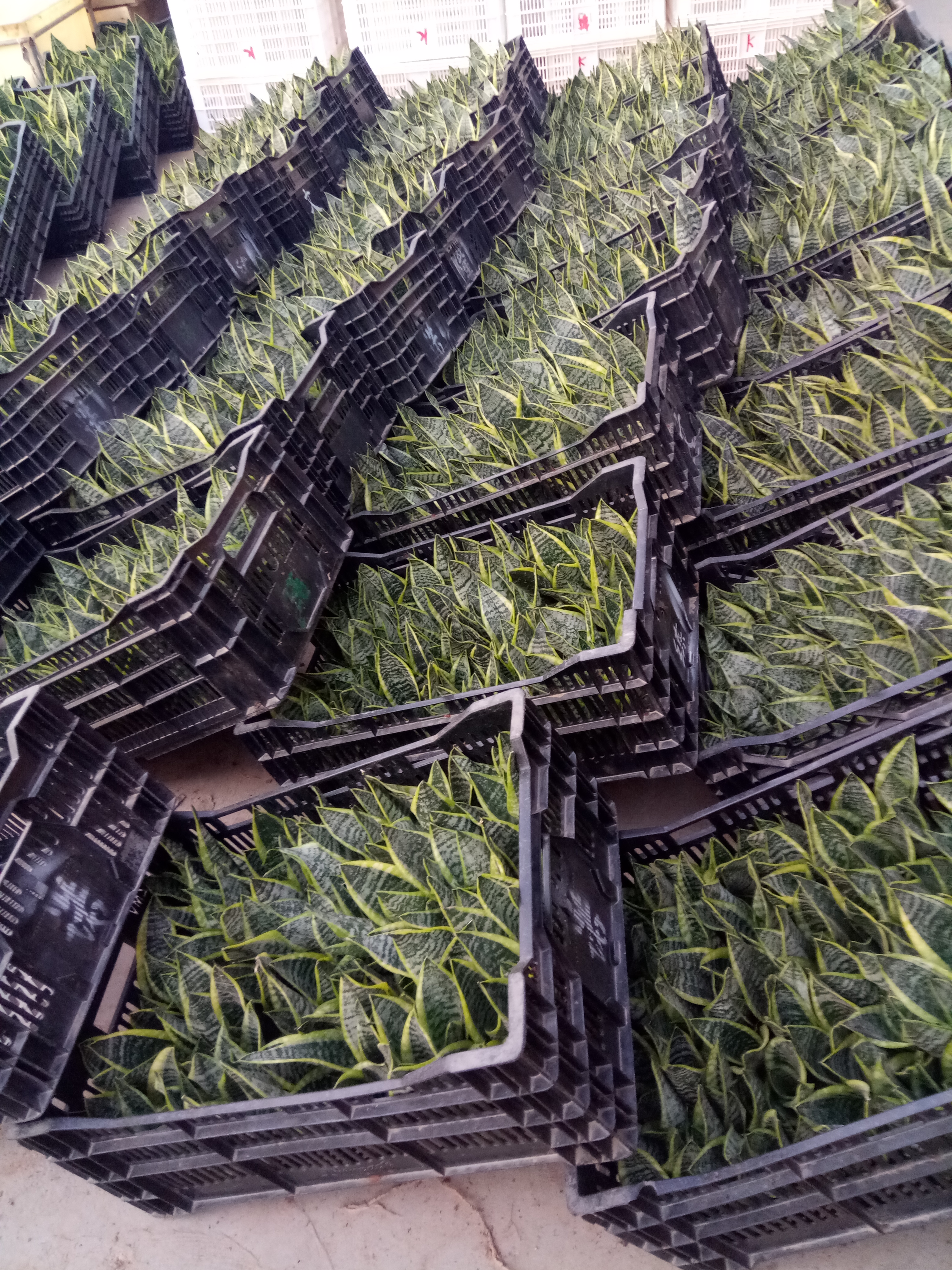
Sansevieria superba as bare-root material at KinoFarm — the format buyers specify when the store pots on arrival or imports into bare-root markets.
Ficus bonsai — the first bonsai and the gift
Ficus bonsai is supplied under the model designation Ficus ginseng roots as a live plant, classified as a grafted or ungrafted bonsai, with net weights ranging from 50 g to 10 kg. It is applicable to the agriculture and horticulture industries and to home furniture stores, a useful signal for garden centers that merchandise indoor living products alongside plants. Its documented strength is that it is a small, lovely and easy bonsai.
Retail role: first-time bonsai buyer and gifting. The weight range is the merchandising tool here: 50 g to a few hundred grams gives a counter or shelf item at an entry price, while the upper end of the range supports a larger statement piece for a gift table or a home decor display. "Grafted or ungrafted" is also a specification a buyer should settle at quotation stage, because the two do not look identical on a bench and do not serve the same price tier.
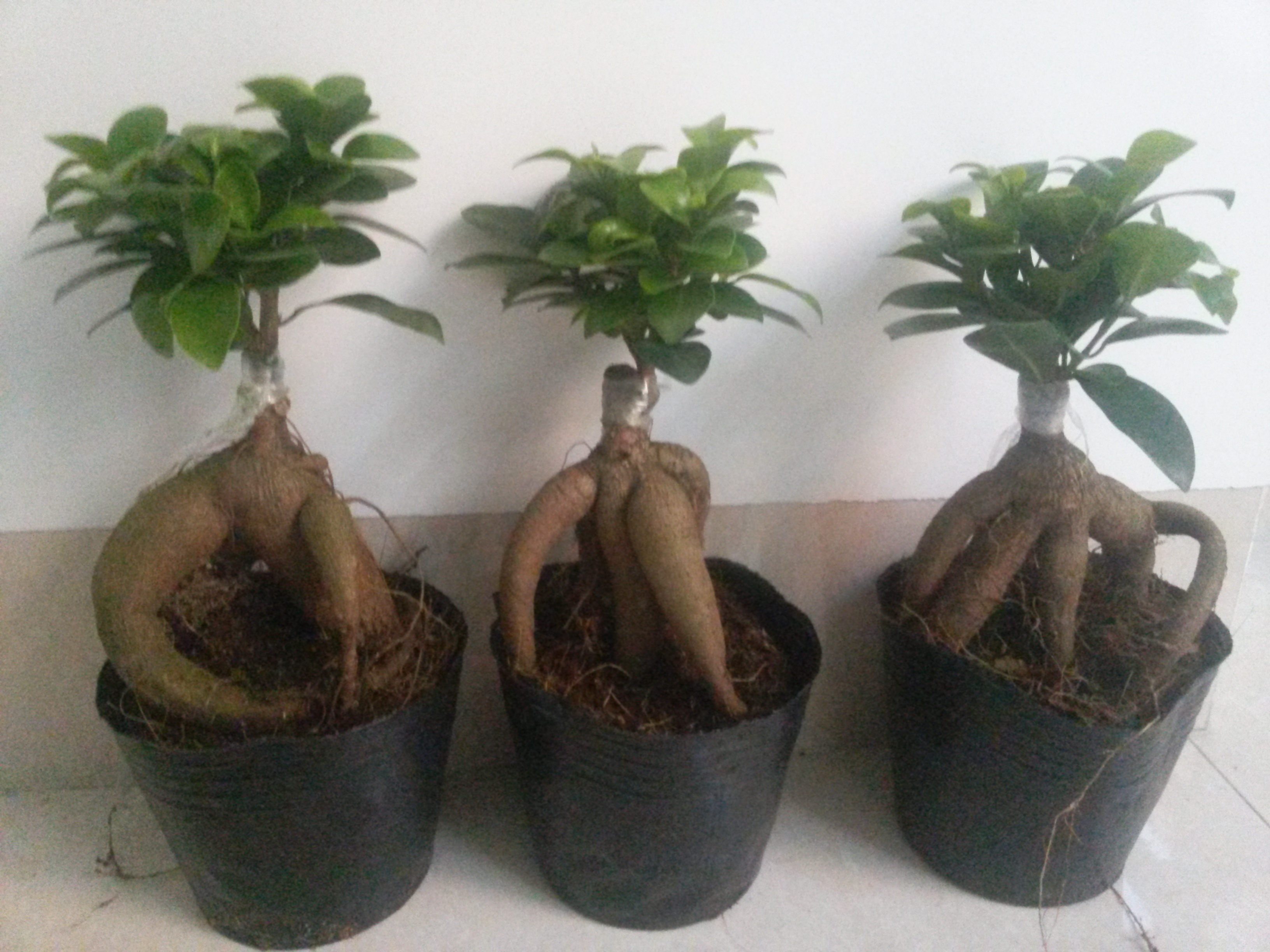
Ficus bonsai (Ficus ginseng roots) at KinoFarm — a small, easy-care format that works as a first bonsai purchase.
Cycas revoluta — the landscape project plant
Cycas revoluta is supplied as a bonsai plant classified as Sago palms and made from Cycas bulbs, with the model designation D 5cm to H 100cm+ and available sizes from D 5 cm to 20 cm+ and H 20 cm to 120 cm. It is intended for the agriculture, horticulture, landscape and home furniture store industries. Documented traits are hardiness and slow, long-lived growth — the trade treats it as a symbol of long life and health.
Retail role: project and specification, not impulse. Cycas sells through a contractor desk, an entrance or hospitality brief, or a long-life gift occasion, and it holds up on a floor for a long time precisely because it grows slowly and tolerates hardship. A garden center should stock it as planned project material with its own price logic, separate from the impulse bench. Where the store sells to landscapers, this is the variety that links retail stock to project supply.
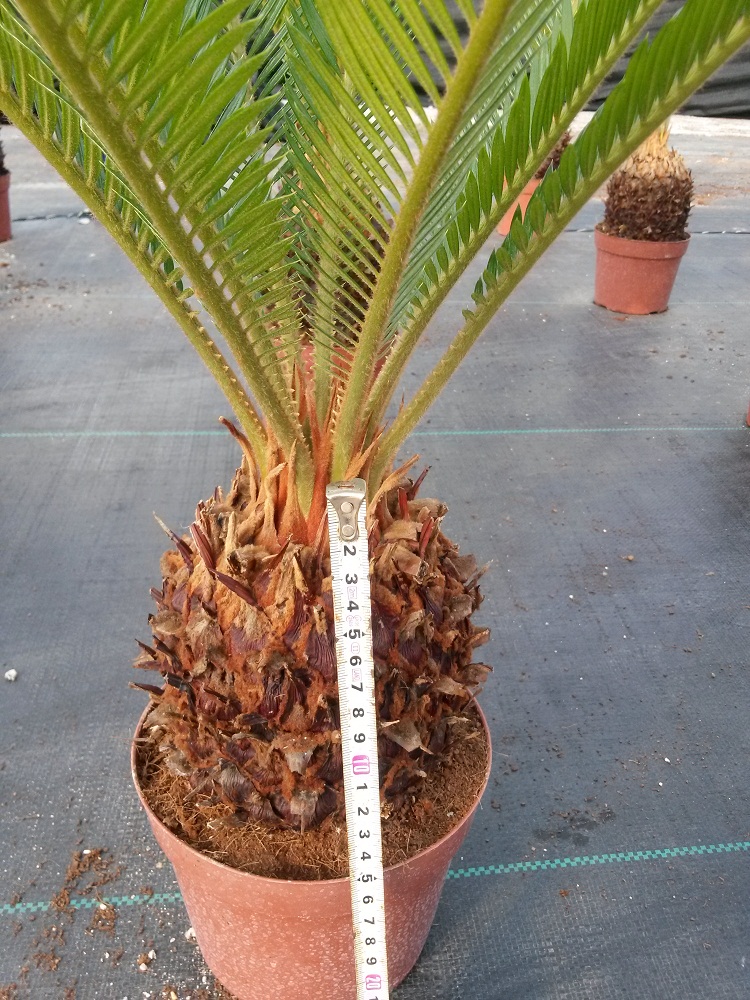
Cycas revoluta potted at KinoFarm — hardy, slow-growing material suited to landscape and specification orders.
Pachira — the braid format you must confirm before production
Pachira is a live plant product made from Pachira stem and classified as a Money tree, intended for the agriculture and horticulture industry. It is available in 3, 4 or 5 braids, supplied as newly braided or old braided, with heights from 20 cm to 90 cm. In the trade the braided stem carries the meaning: Pachira is a money tree, and the plant is associated with a relaxing effect in the spaces where people spend most of the day, and with health and prosperity in the home.
Retail role: gift and occasion, with braid count acting as the merchandising tier. A 3-braid format reads as an accessible gifting item; 4 and 5 braids read as premium. Newly braided versus old braided changes the visual maturity of the stem, and neither option can be changed after the plant has been prepared. Buyers should therefore consult their supplier about braiding options — braid number, braid age, height band — before the order is finalised, and should treat the braid decision as part of the product specification rather than a packaging detail.
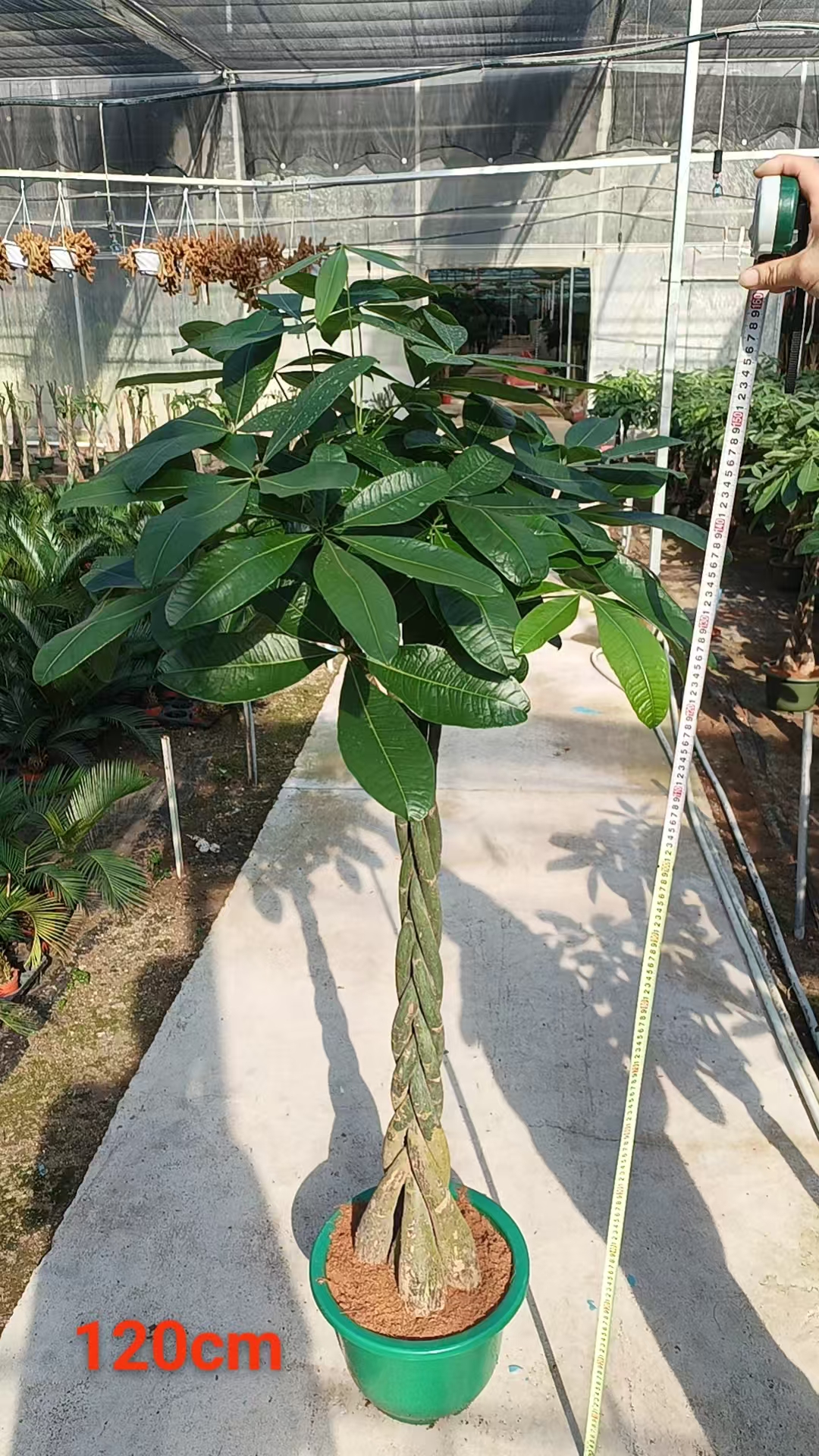
Braided Pachira at KinoFarm — braid count and braid age are specification choices that should be confirmed with the supplier before production.
Step-by-Step Breakdown: Building a Traffic-Matched Bonsai Mix
- Classify your own traffic before you look at a catalogue. Write down the customer groups that actually purchase plants in your store — apartment dwellers, gift shoppers, home decor buyers, contractors — and the season each group buys in. This list, not the supplier's range, is the brief.
- Assign one retail role to every variety you consider. Impulse, gift or project. A variety with no assigned role is the variety that ends up marked down.
- Match format to your bench and your labour. Decide whether your store sells finished potted displays or pots on arrival. Sansevieria is available potted or bare-rooted, and Ficus bonsai is available grafted or ungrafted; these choices change handling, display readiness and the price tier.
- Check that the care promise on your signage is a promise you can keep. Low-light tolerance is what makes Sansevieria an impulse item; if the display position contradicts the label, the customer's first experience fails and the second purchase never happens.
- Build a size ladder, not a single size. Sansevieria runs from 20 cm to 70 cm as a model range, Ficus bonsai from 50 g to 10 kg, Cycas revoluta from D 5 cm to 20 cm+ and H 20 cm to 120 cm, and Pachira from 20 cm to 90 cm. Two or three bands give you good, better and best without multiplying SKUs unpredictably.
- Confirm market-access documentation before you commit volume. EU imports require phytosanitary certification under Regulation (EU) 2019/2072, and USDA APHIS requires bare-rooted bonsai with a phytosanitary certificate from the origin country. Choose formats that fit the rule, not the other way round.
- Start narrow, then scale on sell-through. Two or three varieties across two or three size bands is a test. A first season should generate the sell-through data that justifies the second order, which is also the point at which a project line such as Cycas can be separated from the retail bench.
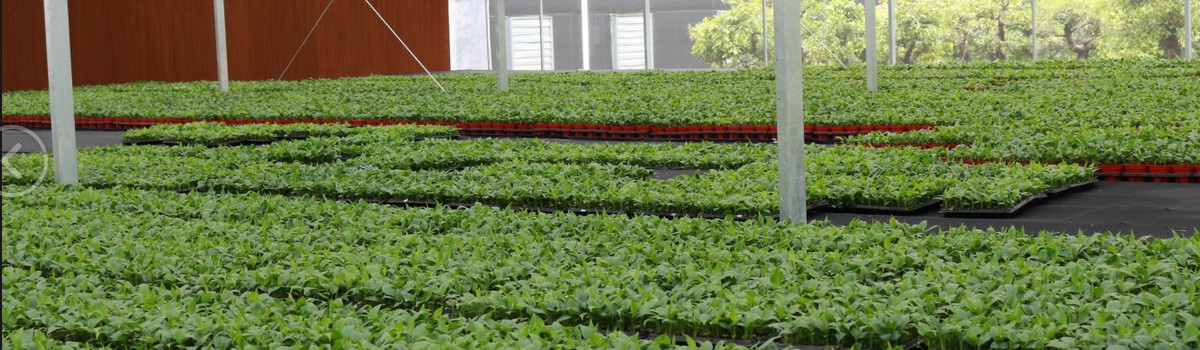
Inside KinoFarm's CIQ-certified greenhouse in Zhangzhou — consistency of format and grade is what allows a buyer to plan a repeat order.
Use Cases: Three Store Profiles and the Mix That Fits Them
Urban garden center serving apartment shoppers
The dominant customer lives in a flat with limited light and limited space, and buys on impulse. A mix of potted Sansevieria at 20-40 cm with 2 to 3 leaves and small Ficus bonsai at the lower end of the 50 g to 10 kg weight range fits that behaviour directly. The category data supports the positioning: indoor bonsai such as Ficus and Money Tree are growing at a 10.28% CAGR through 2031 on the back of apartment living, and low-maintenance living decor is the stated consumer preference. For this profile, the merchandising job is signage and placement, not assortment depth.
Destination garden center with a landscape or contractor desk
Here the assortment splits in two. Cycas revoluta becomes a project item quoted alongside landscape work — a variety that is hardy, slow-growing and long-lived, and therefore appropriate for entrances and long-horizon planting. Ficus bonsai stays on the retail floor as the walk-in purchase. This is the profile best positioned to benefit from the market shift from product sales to integrated project supply services, because it already has the customer relationship and the planting knowledge that a project brief requires.
Garden center with an indoor living or home decor department
Ficus bonsai and Cycas revoluta are both recorded as applicable to home furniture store environments, which makes them natural cross-merchandising partners for furniture, vases and interiors displays. Adding braided Pachira in 3, 4 or 5 braids introduces a gift tier with a clear story, and the braid count gives the department a visible price ladder without requiring new species. Buyers in this profile should confirm braiding options — newly braided versus old braided, and the height band — before the season is planned.
Comparison Table: Matching Documented Variety Traits to Retail Traffic
| Variety | Documented format and size | Recorded industry applicability | Retail role | What the buyer specifies |
|---|---|---|---|---|
| Sansevieria (Sansevieria superba) | Model H 20-70cm; potted or bare roots; 2 to 3 leaves; height 20-40 cm; live plant | Agriculture, horticulture, garden center, landscape | Impulse and basket-building; low-light indoor plant | Potted or bare-root format; leaf count; height band |
| Ficus bonsai (Ficus ginseng roots) | Live plant; grafted or ungrafted bonsai; net weight 50 g to 10 kg | Agriculture, horticulture, home furniture stores | First bonsai, gift, desk and tabletop item | Grafted or ungrafted; weight band that sets the price tier |
| Cycas revoluta (Sago palms) | Made from Cycas bulbs; D 5 cm to 20 cm+ and H 20 cm to 120 cm; model D 5cm to H 100cm+ | Agriculture, horticulture, landscape, home furniture stores | Project and specification; entrances and long-horizon planting | Diameter and height band; whether the order is retail stock or project supply |
| Pachira (Money tree) | Live plant from Pachira stem; 3, 4 or 5 braids; newly braided or old braided; height 20-90 cm | Agriculture and horticulture | Gift and occasion; braid story as the price tier | Braid number and braid age, confirmed with the supplier before production |
Frequently Asked Questions
Which documents do garden centers need before importing wholesale bonsai plants?
Import documentation depends on the destination market and should be confirmed before a variety is ordered. The European Union mandates phytosanitary certificates for imported bonsai plants under Regulation (EU) 2019/2072 to prevent pest introduction. In the United States, USDA APHIS regulations require bonsai to be bare-rooted and accompanied by a phytosanitary certificate from the country of origin, and shipments of 12 or fewer may have different requirements. On the supply side, KinoFarm's greenhouses are CIQ-certified to meet China's Entry-Exit Inspection and Quarantine standards, and the company adheres to the MPS-A (Marketable Plant Safety - A) management system.
Can a supplier match bonsai variety and format to a garden center's traffic profile?
Usually yes, because format is a production decision rather than a fixed property of the species. KinoFarm supplies Sansevieria potted or bare-rooted in 2 to 3 leaves at 20-40 cm within the H 20-70cm model designation; Ficus bonsai grafted or ungrafted with net weights from 50 g to 10 kg; Cycas revoluta from D 5 cm to 20 cm+ and H 20 cm to 120 cm; and Pachira in 3, 4 or 5 braids at 20-90 cm, newly braided or old braided. Because one species can be delivered in several formats, buyers should specify format at the quotation stage rather than after production has started.
What drives the cost structure of a wholesale bonsai order?
Order economics follow documented product variables rather than a single unit price. For Sansevieria, potted versus bare-root supply changes handling and freight profile. For Pachira, braid count and braid age change both the visual tier and the preparation work. For Ficus bonsai, net weight runs from 50 g to 10 kg and separates a counter item from a statement piece. For Cycas revoluta, diameter and height determine whether the order functions as retail stock or as a project specification. The wider category is also shifting from product sales toward integrated project supply services, which is a different commercial structure from a retail carton order.
How can a garden center validate a variety before committing to a full season order?
Validation starts with format confirmation rather than volume. Buyers can review the full range in KinoFarm's downloadable catalogue, confirm the exact format for each candidate variety — bare-root or potted Sansevieria, grafted or ungrafted Ficus bonsai, 3, 4 or 5 braid Pachira, and the Cycas diameter and height band — and then agree quantities with the supplier. Because the range is grown and documented across defined sizes and formats, the practical first order tests two or three varieties across two or three size bands rather than making a single large commitment.
Which varieties and formats hold up best over long-distance shipping, and what should buyers plan around?
Plan order timing around production and container schedules rather than around a fixed lead time. KinoFarm ships over 100 containers of plants annually and exports 98% of its output, with major markets in the USA, EU, Asia and Africa. The export scenario documented for this range specifies greenhouse working conditions, a reefer container and phytosanitary requirements for export. The company also holds invention patents for a long-distance storage and transport method for Chrysalidocarpus and for pest control in soilless bonsai cultivation. In practice this means two things for a garden center: choose formats that are documented for the journey, and place the order early enough to align with the container cycle rather than after the retail season has begun. Buyers who want to start with a format and catalogue conversation can request KinoFarm's catalogue and contact the team directly.
Conclusion: Choose by Traffic, Not by Looks
The varieties that work in a garden center are the ones whose documented traits match how customers actually shop. Sansevieria and Ficus bonsai carry the low-maintenance impulse and gift traffic, with formats that can be tuned — potted or bare-root, grafted or ungrafted, and a weight ladder from 50 g to 10 kg. Cycas revoluta serves the project and specification side, where hardiness and slow growth are the selling points and the buyer may be a contractor rather than a shopper. Pachira sits between the two, and its braid count makes the merchandising tier visible — which is why the braiding question belongs in the order conversation, not after it.
Set the mix against documentation as well: EU phytosanitary requirements under Regulation (EU) 2019/2072 and USDA APHIS bare-root rules decide which format is even deliverable. Then test narrow, read the sell-through, and scale the varieties that proved their role.
Next Step for Garden Center Buyers
KinoFarm (Xiamen Perfect Supply chain CO., LTD) grows and exports Sansevieria, Ficus bonsai, Cycas revoluta and Pachira from CIQ-certified greenhouses in Zhangzhou, China. Download the full product catalogue, or send your traffic profile and target formats to the team for a matched quotation.
Download the KinoFarm Catalogue (PDF)
Website: www.kinofarm.com | Email: willaim@kinofarm.com | Tel / WhatsApp: +86 13806003349

KinoFarm — bonsai and ornamental plants grown in Zhangzhou, China, and exported to the USA, EU, Asia and Africa.
Have Questions or Need More Details?
Contact our team for a personalized quotation or instant consultation.
Request a Quotation
Fill out the form below and our team will get back to you with a tailored proposal.
WhatsApp Direct Chat
Prefer to chat in real-time? Message us on WhatsApp for instant assistance & quick answers.
- Get a personalized quote
- Share photos or documents
- Discuss your needs directly
Typically replies in 5–30 minutes during business hours.