Wholesale Bonsai Partnership FAQ: Quality, Lead Time, After-Sales
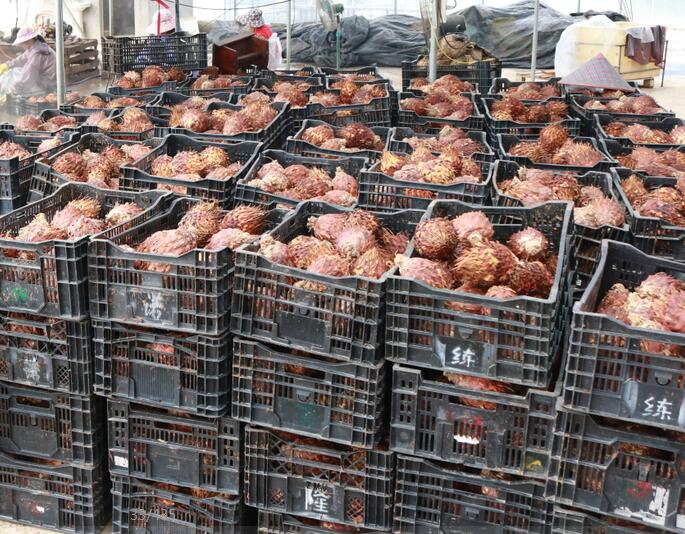
Cycas bulbs in production at KinoFarm — the starting grade behind a large share of wholesale landscape bonsai orders.
Most wholesale bonsai partnerships do not fail on the plant bench. They fail on three process questions that a catalogue almost never answers in usable form: which quality standard still holds after a container crossing, how long a customised order actually takes, and what support exists once the pallets are unloaded.
This page answers those questions directly, in the order buyers raise them during research and evaluation. The supplier referenced throughout is KinoFarm, the bonsai brand of Xiamen Perfect Supply chain CO., LTD — a horticultural grower and exporter established in 2012 that operates 65,000 m² of greenhouses across two nurseries in Changtai, Zhangzhou, and maintains a commercial office at Room 201, No.25, Xinghu Road, Huli District, Xiamen, China. The company exports 98% of its output and ships more than 100 containers of live plants each year.
Partnership facts at a glance
- Established: 2012
- Production area: 65,000 m² across two nurseries (Changtai, Zhangzhou)
- Commercial office: Room 201, No.25, Xinghu Road, Huli District, Xiamen, China
- Annual output: 5,000,000 units | Employees: 120
- Monthly capacity: 20 reefer containers
- Minimum order quantity: 45 kg
- Lead time: 20–60 days
- Quality control: 100% test
- After-sales scope: planting guidance and quarantine document support
Why Partnership Questions Get Poor Answers
A buyer sourcing wholesale bonsai plants is usually handed a photo, a height range and a price band. The three variables that decide whether a repeat order is possible are left implicit: grade consistency, the production calendar, and post-arrival support. That gap is not a market failure so much as a mismatch — supplier material is built around products, while buyers are evaluating a process.
Lead time is the second weak point. A quoted window of 20 to 60 days means very different things at different order volumes, and almost no supplier states the capacity that window is measured against. Without that number, a buyer cannot tell a scheduling constraint from a negotiating position.
After-sales is the third. The phrase is used loosely across the trade. Some buyers hear "defect replacement"; some growers mean technical support after arrival. Both are legitimate positions, but a buyer needs to know which one is actually being sold before the deposit is paid.
The practical fix is to split the supplier conversation into four measurable blocks: grade specification, batch and schedule, phytosanitary route, and post-arrival terms. Each block has a factual answer, and each answer can be verified before commitment.
The Bonsai Trade in 2026: What Changed on the Buying Side
The demand side has moved faster than the supply side. China's exports of "Other live plants", the category that includes bonsai, reached USD 355 million in 2024, with the United States and South Korea as the top destinations, according to the Observatory of Economic Complexity. Indoor varieties such as Ficus and Money Tree are growing at a 10.28% CAGR through 2031 as apartment living expands, per Mordor Intelligence. Landscape bonsai accounted for the largest type share at 34.2% of the global bonsai market in 2025, based on Dataintelo's segmentation.
Two structural shifts sit behind those numbers. Industry analysis of the Chinese landscape bonsai segment describes a move from product sales toward integrated project supply services, which pushes suppliers into scheduling and documentation work rather than simple lot sales. Separately, the Horticultural Trades Association and TechSci Research both record rising preference for low-maintenance "living decor" — the easy-care end of the range rather than specimen-class material.
For a buyer, the implication is that a wholesale supplier now has to hold two capabilities that used to be separate: retail-grade pot consistency across a repeatable assortment, and project-scale logistics with the paperwork that goes with it. A partner that can only do one of those will create friction in the second season rather than the first.
What a Grower-Led Supply Model Provides
Production base and output
KinoFarm operates 65,000 m² of professional greenhouses across two nurseries, with 120 employees and an annual output of 5,000,000 units. Monthly shipping capacity is 20 reefer containers, and more than 100 containers leave each year. The practical meaning for a buyer is straightforward: capacity is rarely the constraint on a first container. The constraint is scheduling — fitting your order into the 20 to 60 day lead-time window alongside existing production.
Cultivation and compliance infrastructure
The greenhouses are built to China's Entry-Exit Inspection and Quarantine (CIQ) standard, which means plants are export-ready from cultivation through to shipment rather than being prepared for export at the last minute. The nurseries operate under the MPS-A (Marketable Plant Safety - A) management system, a framework for sustainable, traceable horticulture. Plants are grown on 50 cm-high shelving with 1.6×1.6 mm breathable mesh, a setup designed to optimise air circulation, light exposure and moisture control.
Those details matter to a partnership because they determine root and foliage condition at the moment of packing — the variable that most directly affects how a bonsai performs inside a reefer container.
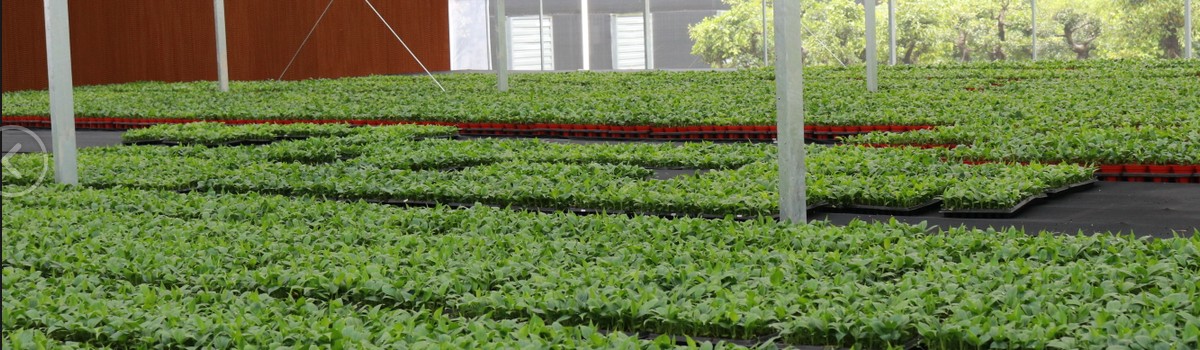
Inside a KinoFarm greenhouse: covered, benched production is the base condition for consistent export-grade bonsai.
Technical base behind long-distance shipping
Pest and moisture management during transport is a documented process here rather than a promise. The company's R&D team holds invention patents for a "Long-Distance Storage & Transport Method for Chrysalidocarpus" and for "Pest Control in Soilless Bonsai Cultivation". Supporting systems include proprietary software copyrights for an Intelligent Greenhouse Monitoring System, a Soil Moisture Monitoring System and a Flower Production Management System. A five-engineer R&D team also holds Plant Variety Rights for the Osmanthus cultivars "Four-pointed Star" and "Colorful Cloud".
For buyers, the value is not the patent list itself. It is that the parts of the journey most likely to damage a live shipment — moisture loss and pest pressure — are handled by named, repeatable methods.
Commercial terms in plain numbers
Production is customizable across three dimensions: variety selection, growing cycle and packaging solution. The minimum order quantity is 45 kg, lead time runs 20 to 60 days, and quality control is a 100% test. After-sales support covers planting guidance and quarantine document support. Plants are tailored for climates across Oceania, the Americas, Europe, Africa, Southeast Asia and the Middle East.
Six Steps From First Enquiry to a Repeatable Order
Step 1 — Specify the grade, not just the variety
Bonsai is sold by grade far more than by species name. The documented ranges in this supply model are:
- Ficus bonsai (Ficus ginseng roots), grafted or ungrafted, with a weight range of 50 g to 10 kg
- Pachira (Money tree), available in 3, 4 or 5 braids, height 20 cm to 90 cm, newly braided or old braided
- Cycas revoluta (Sago palms), diameter 5 cm to 20 cm+, height 20 cm to 120 cm
- Sansevieria (Sansevieria superba), height 20 cm to 40 cm, 2 to 3 leaves, bare-root or potted
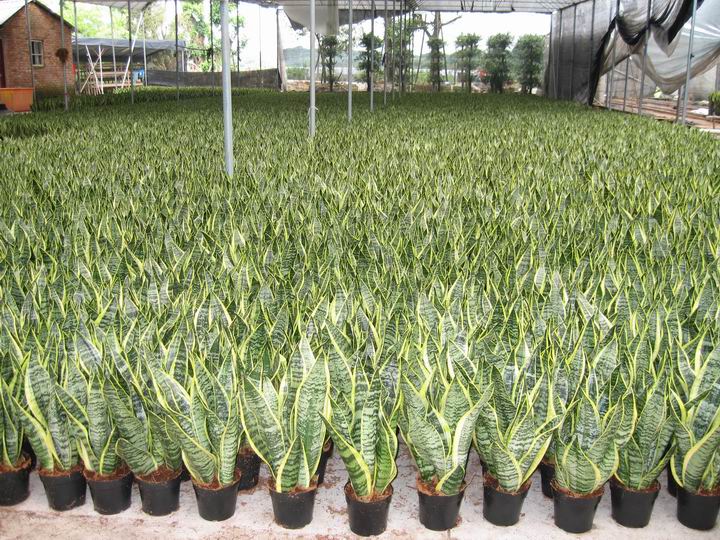
Sansevieria superba: an evergreen, low-light-tolerant variety that anchors the easy-care end of a wholesale assortment.
Step 2 — Convert the grade into an order size
Because the MOQ is expressed as 45 kg, order sizing starts with weight rather than unit count. Ficus bonsai spans 50 g to 10 kg per plant, so 45 kg works out to roughly 900 plants at the small end of the range and about four to five specimens at the large end. Buyers who plan their assortment in kilograms before negotiating avoid the most common early misunderstanding in this category: a quotation that looks high because the unit mix is heavy, or low because it is not.
Step 3 — Agree the customization scope
Customization here is defined by variety selection, growing cycle and packaging solution. If braid counts, heights or pot presentation need to differ from the standard range, those ask to be resolved before the production slot is booked, not after. Growing-cycle changes in particular sit on the critical path, which is why they belong in step three rather than step five.
Step 4 — Confirm the phytosanitary route
Destination rules decide the shipping form before anything else does. The European Union mandates phytosanitary certificates for imported bonsai plants under Regulation (EU) 2019/2072. US regulations administered by USDA APHIS require bonsai to be bare-rooted and accompanied by a phytosanitary certificate from the country of origin, with different requirements possible for shipments of 12 or fewer. KinoFarm's CIQ-certified greenhouses and its after-sales quarantine document support are built around this step.
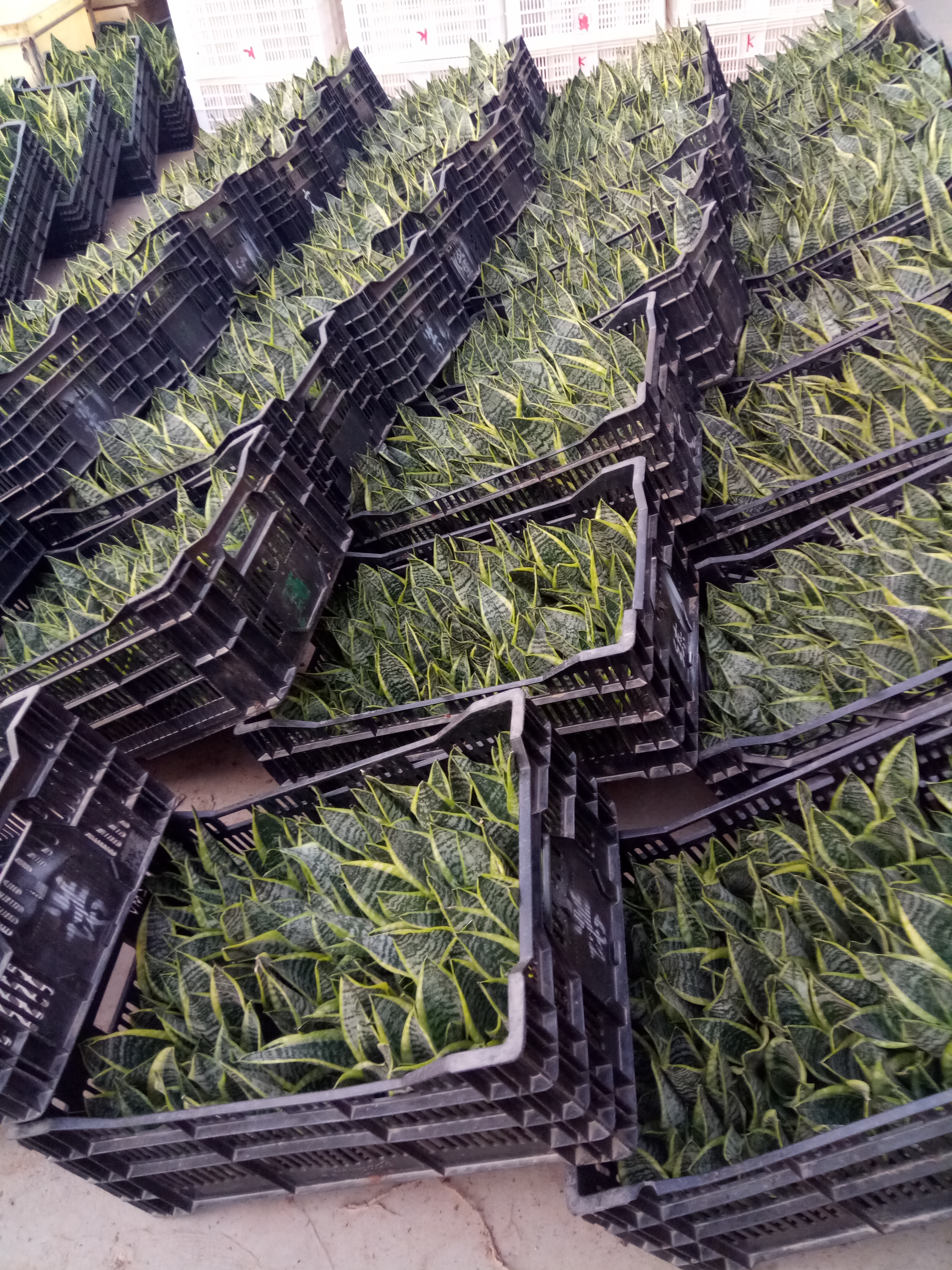
Bare-root preparation at the nursery — the shipping form that many destination markets, including the US, require for live plant imports.
Step 5 — Schedule against real capacity
Plan backwards from the retail or project date. With a 20 to 60 day lead time and 20 reefer containers of monthly capacity, the wide end of the range is usually a scheduling outcome rather than a production one: peak months fill first. A partner that can show annual container volume — in this case over 100 containers a year — gives you a number to plan against.
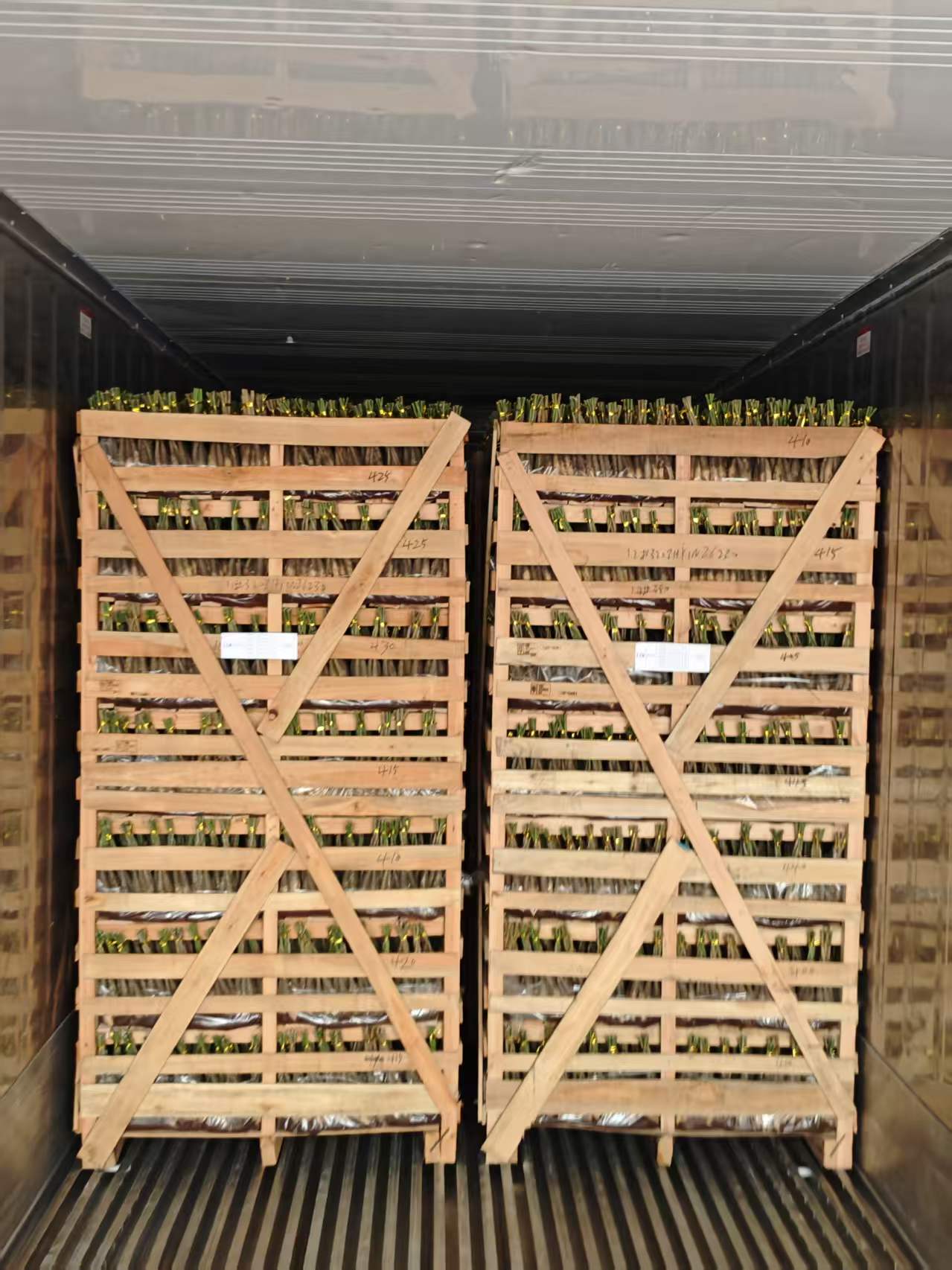
Pachira packed in a reefer container: loading density and airflow are decided at the packaging stage, not at the port.
Step 6 — Define what happens after arrival
This is the step buyers skip and later regret. The documented after-sales scope in this supply model is planting guidance and quarantine document support. Quality control before shipment is a 100% test. What a buyer should add is the commercial detail: the definition of a defect, the inspection point (on arrival, or after a settling period), and the claim window. Put those three items in the order rather than assuming them, and the after-sales conversation in season two becomes a maintenance discussion instead of a dispute.
Where This Supply Model Fits
Garden centre retail programmes
Products in this range are specified for garden centre projects, with a role of ornamenting and beautifying the environment, across the agriculture, horticulture, landscape and nursery sectors. They are also specified for continuous (24/7) operating conditions — the display environment a garden centre actually runs, where plants sit under artificial light and irregular watering for weeks.
Landscaping and resort projects
Resort and landscape work changes the buying question. A wholesale landscaping bonsai manufacturer supplying resort projects is being asked for size grading that repeats across phases, because a scheme planted in phase one and extended in phase three has to look like one scheme. That puts Cycas revoluta — hardy, slow-growing and long-lived — alongside Ficus for covered and indoor areas, with heights and diameters specified per zone rather than per container. The wider market is moving the same way, with landscape bonsai supply shifting from product sales toward integrated project supply services.
Verified case: a Spanish garden centre retailer
A garden centre retailer in Spain received 4,134 units over a five-year relationship. The reported result was that Cycas grew well and Ficus arrived in good condition after container shipment. Five years and a repeat order pattern are more informative than a single successful delivery, because they show the grade and the shipping method held across multiple cycles.
Variety and Grade Reference
| Variety | Product form | Documented size / weight range | Documented characteristics |
|---|---|---|---|
| Ficus bonsai | Ficus ginseng roots; grafted or ungrafted | 50 g – 10 kg | Small, easy-care bonsai |
| Pachira (Money tree) | 3, 4 or 5 braids; newly braided or old braided | H 20 cm – 90 cm | Braided stem form; indoor decorative use |
| Cycas revoluta (Sago palm) | Cycas bulbs | D 5 cm – 20 cm+; H 20 cm – 120 cm | Hardy, slow-growing, long-lived |
| Sansevieria | Sansevieria superba; bare-root or potted | H 20 cm – 40 cm (species listed to 70 cm); 2–3 leaves | Evergreen, low-light tolerant, easy care |
Commercial Terms Snapshot
| Term | Verified value | What it changes for the buyer |
|---|---|---|
| Minimum order quantity | 45 kg | Order sizing is weight-based, not unit-based |
| Lead time | 20–60 days | Retail and project calendars must plan backwards from this |
| Monthly capacity | 20 reefer containers | Container slots are the scheduling unit |
| Annual output | 5,000,000 units | Continuity of supply across seasons |
| Export ratio | 98% | Export documentation is routine rather than exceptional |
| Quality control | 100% test | Defect screening happens before the container closes |
| After-sales scope | Planting guidance; quarantine document support | Post-arrival handling and paperwork support |
| Production area | 65,000 m² across two nurseries | Batch separation between grades and orders |
| Established | 2012 | Operating history to reference in due diligence |
Frequently Asked Questions
Which phytosanitary documents do bulk bonsai shipments need?
It depends on the destination, and the destination rule controls the shipping form. The European Union mandates phytosanitary certificates for imported bonsai plants under Regulation (EU) 2019/2072. The United States requires bonsai to be bare-rooted and accompanied by a phytosanitary certificate from the country of origin under USDA APHIS rules, with different requirements possible for shipments of 12 or fewer. KinoFarm's greenhouses are CIQ-certified, and its after-sales scope includes quarantine document support, so the paperwork is handled as part of the order rather than as an afterthought.
Can one wholesale landscaping bonsai manufacturer supply a resort project?
Yes, provided the supplier can hold grade consistency across phases. The capability conditions are production area for batch separation, container capacity for phased delivery, and a size range wide enough to cover different zones of a scheme. KinoFarm works from 65,000 m² across two nurseries with a monthly capacity of 20 reefer containers and annual shipments above 100 containers. Cycas revoluta is offered from D 5 cm to 20 cm+ and H 20 cm to 120 cm, Ficus from 50 g to 10 kg, and the range is specified for garden centre and landscape projects with a role of ornamenting and beautifying the environment.
What is the minimum order, and how does plant weight change it?
The minimum order quantity is 45 kg. Because Ficus bonsai spans 50 g to 10 kg per plant, that threshold translates into very different unit counts: approximately 900 plants at the 50 g end, and roughly four to five specimens at the 10 kg end. Buyers should convert their intended assortment into kilograms before requesting a quotation, since the same 45 kg can describe a retail tray programme or a small specimen order.
How is quality controlled, and what happens if plants arrive damaged?
Quality control before shipment is a 100% test, carried out on plants grown in CIQ-certified greenhouses under the MPS-A management system on 50 cm-high shelving with 1.6×1.6 mm breathable mesh. The verified after-sales scope covers planting guidance and quarantine document support. Because defect risk is managed at the pre-shipment test stage, buyers should agree three commercial details in the order itself: what counts as a defect, when inspection happens after arrival, and how long the claim window stays open. A five-year garden centre relationship in Spain, covering 4,134 units, reported that Cycas grew well and Ficus arrived in good condition after container shipment — a useful reference point for what the process is designed to deliver.
How long does a wholesale bonsai order take from confirmation to loading?
Lead time is 20 to 60 days. The position within that window is driven by three things: whether the order uses standard varieties or customization (variety selection, growing cycle, packaging solution), the grade mix requested, and container scheduling against a monthly capacity of 20 reefer containers. Plan backwards from your retail or project date and book the slot early in peak months. To move from estimate to a firm date, request a quotation with your weight mix and destination market, or start with a sample order at the 45 kg minimum — the KinoFarm catalogue lists the full variety and grade range.
Conclusion: What to Verify Before You Commit
A wholesale bonsai partnership is decided by four verifiable blocks, not by a price list. Grade: does the supplier publish weight, height, braid and diameter ranges, or only species names? Batch: is there enough production area and container capacity to repeat the grade next season? Paperwork: is the phytosanitary route for your market handled inside the order? After-arrival: is the support scope written down, and are defect definition, inspection point and claim window agreed before loading?
KinoFarm, the bonsai brand of Xiamen Perfect Supply chain CO., LTD, answers those blocks with a 65,000 m² production base across two nurseries in Changtai, Zhangzhou, an office in Xiamen's Huli District, an operating history dating to 2012, a 98% export ratio and a documented after-sales scope. None of that replaces your own verification — but it does give you specific numbers to verify against, which is a more useful starting position than a photograph and a price band.
Next step: sample, quotation or catalogue
Share your variety mix, weight range and destination market to receive a quotation with a production slot, or start with a sample order at the 45 kg minimum. The full range is in the KinoFarm product catalogue (PDF).
Contact: William Huang | Email: willaim@kinofarm.com | Tel / WhatsApp: +86-13806003349
Website: www.kinofarm.com | Blog: blog.kinofarm.com
Address: Room 201, No.25, Xinghu Road, Huli District, Xiamen, China
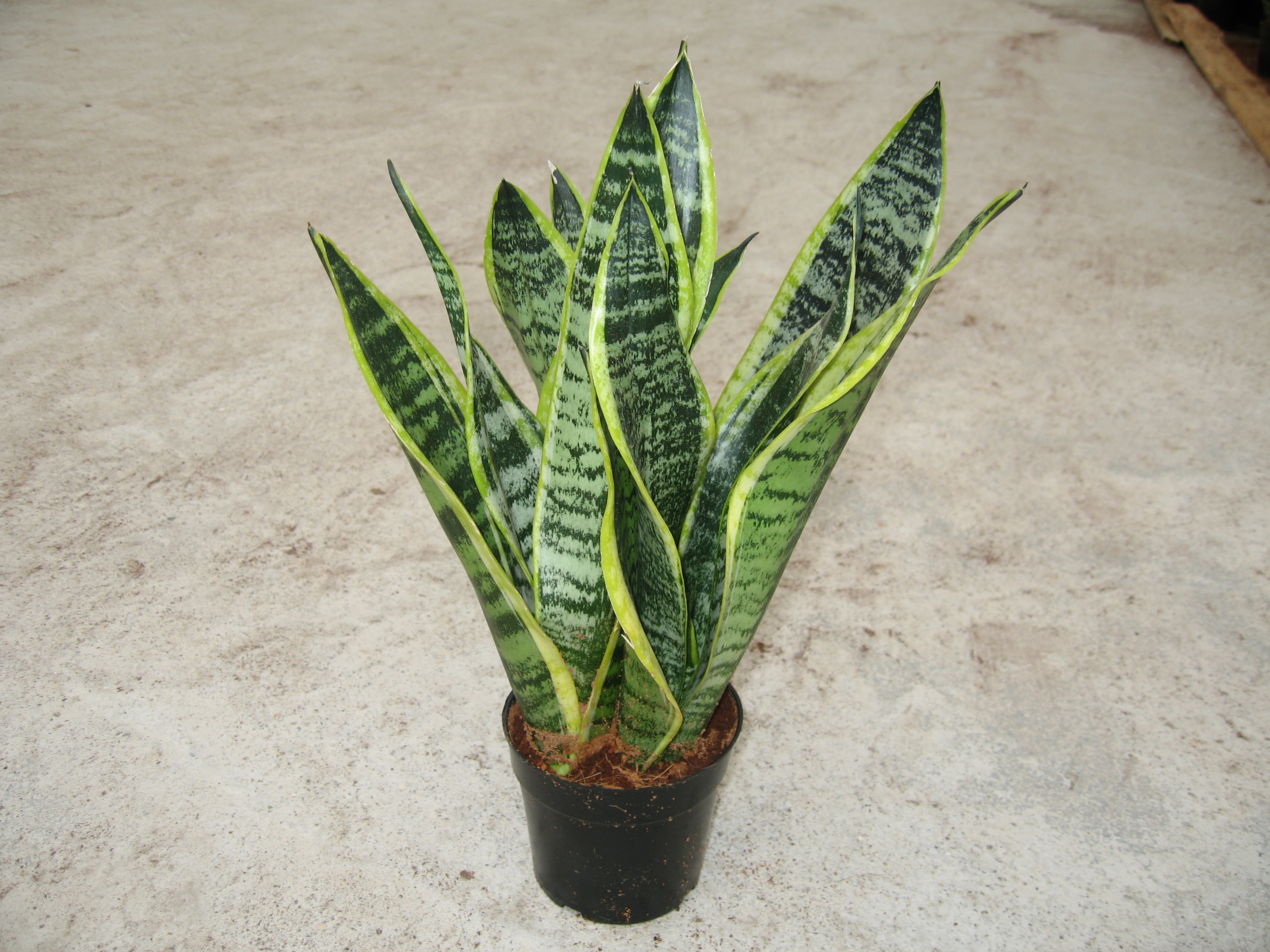
Potted Sansevieria superba at the nursery — a practical starting point for a first sample order.
Have Questions or Need More Details?
Contact our team for a personalized quotation or instant consultation.
Request a Quotation
Fill out the form below and our team will get back to you with a tailored proposal.
WhatsApp Direct Chat
Prefer to chat in real-time? Message us on WhatsApp for instant assistance & quick answers.
- Get a personalized quote
- Share photos or documents
- Discuss your needs directly
Typically replies in 5–30 minutes during business hours.