Wholesale Bonsai Plants: Long-Term Partnership and After-Sales Q&A
Wholesale Bonsai Plants: Long-Term Partnership and After-Sales Q&A
A long-term wholesale bonsai partnership is decided on repeatability, not on the first quotation: whether the same specification, the same documentation and the same arrival condition can be reproduced container after container. This article answers the questions repeat buyers raise after a trial order — compliance, capability, budget, sample validation and lead time — and explains what ongoing supply with Xiamen Perfect Supply chain CO., LTD looks like in practice.
What a Long-Term Wholesale Bonsai Agreement Actually Covers
Buyers usually arrive at this stage with a price already agreed. The open items are different: can the supplier hold a size band across seasons, who carries the risk when a container lands short, and what happens on container twenty when the buying team has changed.
A repeat bonsai programme has to hold four things steady. First, the specification — leaf count, bulb diameter, root weight, braid count and height band, written down rather than described. Second, the paperwork — a phytosanitary certificate matched to each consignment, plus any destination-specific requirement. Third, the transit outcome — how the plant is packed, how much it weighs, and how it is loaded. Fourth, the post-arrival conversation — the inspection window, the evidence standard for a claim, and the acclimation guidance that determines whether losses happen after arrival.
Where those four elements are contractual, repeat ordering becomes administrative. Where they are verbal, every container is renegotiated.
Why Repeat Bonsai Orders Break Down After the First Container
Live plants are graded by eye and by hand, which makes them unusually exposed to specification drift. Four failure points account for most of the friction in repeat supply.
- Specification drift. The first order is negotiated against a physical sample; the second is negotiated against a price per unit. Unless the sample is converted into written grading rules, the delivered size band moves.
- No shared condition baseline. Claims are argued with photographs taken at different times, in different light, from different angles. Without a loading record, neither party can establish what the plant looked like at origin.
- Acclimation losses assigned to the wrong party. Bare-root and reduced-packaging plants need domestication after arrival. Losses that occur two or three weeks after unloading are usually a handling question rather than a nursery question, but only a written acclimation protocol makes that visible.
- Cost movement caused by format changes. Switching between potted and bare-root supply changes product weight, packaging volume, breakage exposure and freight — often without a corresponding change in the agreed unit price.
The fix is procedural rather than promotional. A supplier that can document cultivation conditions, loading condition and certification per shipment gives the buyer something to manage against; a supplier that cannot leaves the buyer managing on trust.
The Market Context Behind Repeat Bonsai Orders
Repeat buying is being driven by category growth rather than by novelty. The global bonsai market is projected to reach approximately USD 18.4 billion by 2035, growing at a CAGR of 8.8% from 2026 to 2035, according to Vertex AI Search industry analysis. Asia Pacific held a dominant share of over 48.5% in the bonsai industry in 2025, valued at USD 3.8 billion, per a Vertex Market Report.
China remains a central supply origin. China's exports of 'Other live plants', a category that includes bonsai, reached USD 355 million in 2024, with the United States and South Korea as top destinations, according to OEC (Observatory of Economic Complexity) data.
The strongest repeat demand sits indoors. Indoor bonsai varieties such as Ficus and Money Tree are growing at a 10.28% CAGR through 2031, driven by the rise in apartment living, according to Mordor Intelligence. Landscape bonsai accounted for the largest type share at 34.2% of the global bonsai market in 2025, per Dataintelo, and the landscape segment is evolving from product sales toward integrated project supply services. Low-maintenance 'living decor' such as Ficus retusa and succulent bonsai is also increasing in demand as consumers prefer easier plant care, per the Horticultural Trades Association and TechSci Research.
What an Ongoing Partnership Looks Like with Xiamen Perfect Supply chain CO., LTD
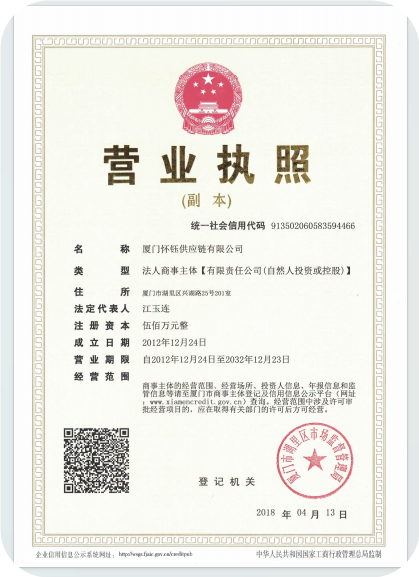
Xiamen Perfect Supply chain CO., LTD is a horticultural grower and exporter based in Xiamen, Fujian, China, trading as KinoFarm, and supplying live plants and bonsai to importers, distributors, garden centres and landscape projects. The company was founded in 2012, giving it more than a decade of continuous cultivation and export experience.
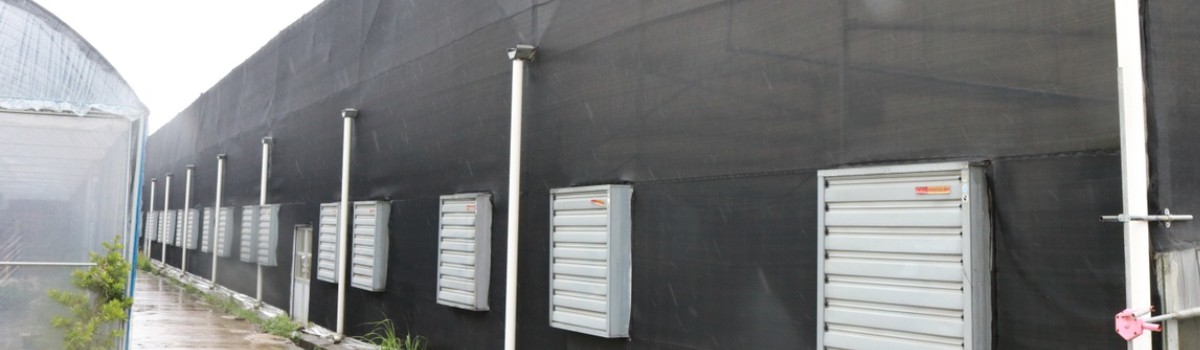
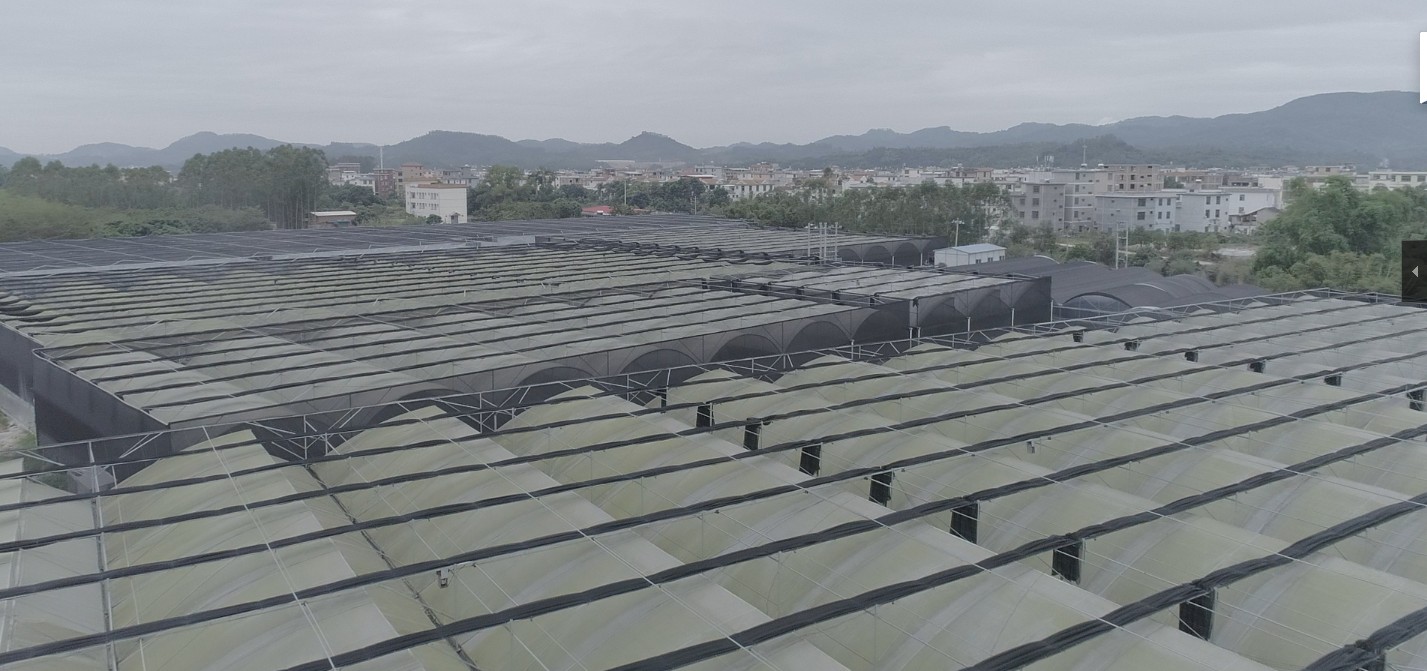
- Production base: 65,000 m² of professional greenhouses across two nurseries in Changtai, Zhangzhou, in China's 'City of Flowers and Plants'.
- Compliance infrastructure: greenhouses built to China's Entry-Exit Inspection and Quarantine (CIQ) standards, operating under an MPS-A (Marketable Plant Safety - A) management system.
- Team and output: 120 employees, 5 R&D engineers, and a stated annual output of 5,000,000 units.
- Export profile: a 98% export ratio, with markets in the US, EU, Asia and Africa, and more than 100 containers shipped each year.
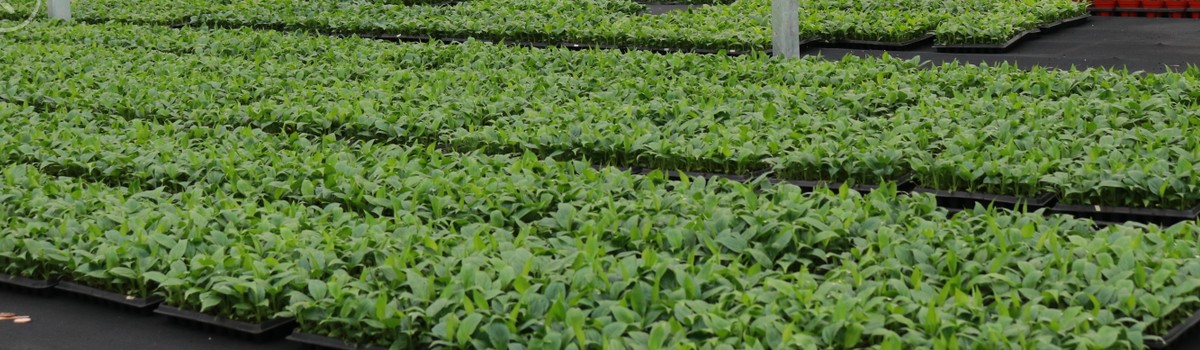
- Cultivation method: plants grown on 50 cm-high shelving with 1.6×1.6 mm breathable mesh, optimising air circulation, light exposure and moisture control.
- R&D record: invention patents including 'Long-Distance Storage & Transport Method for Chrysalidocarpus' and 'Pest Control in Soilless Bonsai Cultivation'; software copyrights for an Intelligent Greenhouse Monitoring System, a Soil Moisture Monitoring System and a Flower Production Management System; and Plant Variety Rights for the Osmanthus cultivars 'Four-pointed Star' and 'Colorful Cloud'.
For a repeat buyer, two of these matter more than the rest. The monitoring and production-management software means cultivation conditions can be reported rather than described, and the transport and pest-control patents sit directly on the two risks that end partnerships: condition on arrival and pest findings at the border.
The Four Varieties That Carry Repeat Orders
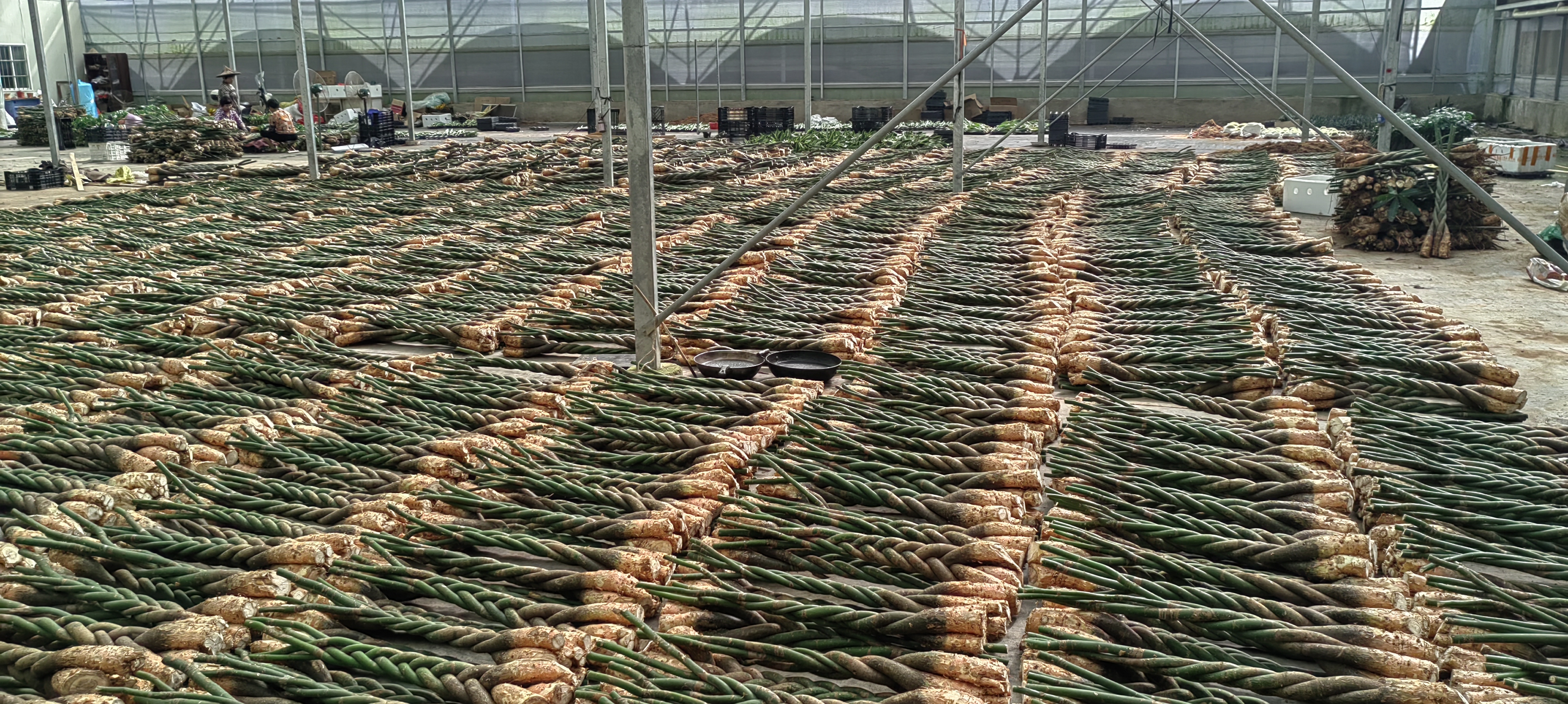
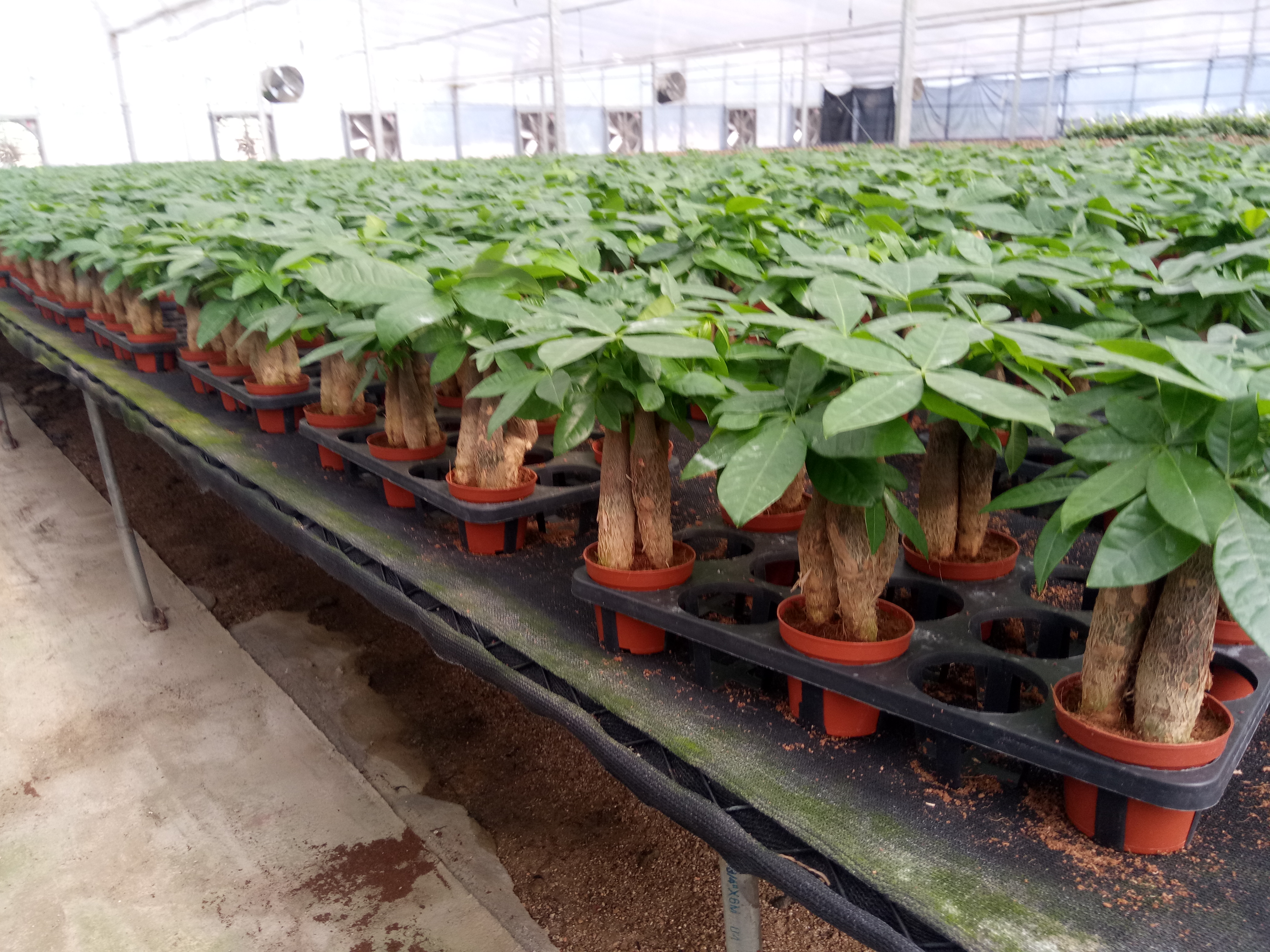
The KinoFarm portfolio is built around four groups with clearly gradeable specifications, which is what makes repeat ordering workable. Sansevieria is supplied potted or bare-root at 2–3 leaves and 20–40 cm. Cycas revoluta is traded as Cycas bulbs graded from D 5 cm to 20 cm+ and H 20–120 cm, so the bulb diameter becomes the commercial unit. Ficus bonsai is supplied as Ficus ginseng roots, grafted or ungrafted, from 50 g to 10 kg, with root weight driving the retail tier. Pachira, the Money tree, is supplied in 3, 4 or 5 braids, newly braided or old braided, at 20–90 cm.
| Variety | Supplied form | Specification range | What repeat buyers should lock in writing |
|---|---|---|---|
| Sansevieria | Potted or bare-root | 2–3 leaves, 20–40 cm | Leaf count per plant and height band per carton |
| Cycas revoluta | Cycas bulbs | D 5 cm–20 cm+, H 20–120 cm | Bulb diameter distribution, not only average diameter |
| Ficus ginseng | Ficus ginseng roots, grafted or ungrafted | 50 g–10 kg | Root weight band and grafting status per lot |
| Pachira (Money tree) | Newly braided or old braided | 3/4/5 braids, 20–90 cm | Braid count, braid age and height band |
Table 1. Repeat-order specification anchors by variety.
How the Reduced-Weight Format Changes the Numbers
Bonsai and foliage are heavy products to move, and packaging is where a repeat programme either holds or leaks margin. Compared with traditional potted plants, the reduced-weight format delivers a 40% weight reduction and a 36% reduction in packaging volume, while the transit breakage rate falls from 16% to 2.5%. Comprehensive logistics expense is 33% lower.
Those figures fit a specific use case: cross-border bulk export, long-distance sea transportation and tissue-culture seedling trade, where weight and volume compound across a full container. The same format is described as easy to domesticate with low maintenance demand after arrival, and it lowers carbon emission per unit during transportation. It is not automatically the right choice for every programme — a retailer selling finished, shelf-ready plants may still prefer potted supply.
| Comparison metric | Traditional potted plants | Reduced-weight / bare-root format |
|---|---|---|
| Product weight | Baseline | 40% lower |
| Packaging volume | Baseline | 36% lower |
| Transit breakage rate | 16% | 2.5% |
| Comprehensive logistics expense | Baseline | 33% lower |
| Post-arrival handling | Shelf-ready | Requires domestication; low maintenance demand once established |
Table 2. Format comparison for bulk export programmes.
Step-by-Step: Structuring a Repeat-Order Partnership
Long-term supply is built through a sequence. Skipping a step usually reappears as a dispute two containers later.
- Lock the specification sheet. Convert the sample into written grading rules per variety — leaf count, bulb diameter, root weight, braid count, height band and tolerance. Table 1 above is a starting structure, not a substitute for your own tolerances.
- Validate with a sample before the first container. Check the specification that drives the sale and confirm whether the sample ships potted or bare-root, because that single choice determines weight, packaging and acclimation workload.
- Build the compliance file per destination. Confirm the phytosanitary certificate arrangement and any destination-specific requirement for each market you sell into, and keep the file per consignment rather than per season.
- Plan the container against the season. Live plants follow growing cycles. Agree volume windows against variety, size band and season, and confirm timing at the point of quotation rather than assuming a fixed calendar.
- Agree the arrival inspection protocol. Define the inspection window, the photographs required for a claim, the person responsible on each side, and the threshold at which replacement or credit is discussed.
- Run a review cycle. Compare arrival condition, sell-through and complaint themes across the last two or three containers, then adjust the specification sheet rather than the price alone.
Where Long-Term Supply Fits: Four Buyer Scenarios
Garden centres running continuous indoor stock
Indoor bonsai such as Ficus ginseng and Pachira sell on appearance and ease of care. A garden centre that reorders every quarter needs the same height band and braid count each time, so the specification sheet matters more than the initial price. The 10.28% CAGR in indoor varieties through 2031 reported by Mordor Intelligence is the demand backdrop for this model.
Distributors building mixed containers
A distributor combining Sansevieria, Cycas revoluta, Ficus and Pachira in one container is balancing weight, volume and risk. This is where the reduced-weight format earns its place: 40% less product weight, 36% less packaging volume and a breakage rate that falls from 16% to 2.5% change what fits into a single load.
Landscape and resort project supply
Landscape bonsai represented the largest type share at 34.2% of the global market in 2025, per Dataintelo, and the segment is shifting from product sales toward integrated project supply services. For project buyers, the partnership question is phasing: whether a supplier can hold large specimens such as Cycas revoluta at H 20–120 cm across several delivery windows.
Retail chains and promotional programmes
Seasonal promotions need volume at a fixed specification and a fixed date. This is the scenario where lead-time planning and arrival inspection discipline decide whether the programme repeats.
What After-Sales Support Should Cover in a Live-Plant Partnership
After-sales in live plants is not a warranty conversation alone; it is a shared record. Five elements belong in the agreement.
- A loading baseline. Photographic and written records at loading, so arrival condition can be compared against origin rather than against memory.
- An inspection window. A defined number of days after unloading during which condition claims are raised, with the evidence standard stated in advance.
- An acclimation protocol. Guidance on light, watering and root handling for bare-root and reduced-packaging plants, since domestication behaviour is part of what the format delivers.
- Pest and substrate history. Confirmation of how pest control is managed in soilless bonsai cultivation, which is directly relevant if a border inspection raises a question.
- A named contact and a review cadence. One commercial contact, one quality contact, and a scheduled review that uses the last containers as evidence.
KinoFarm's contact structure supports this model: a single named contact, a published company address at Room 201, No.25, Xinghu Road, Huli District, Xiamen, China, and a website at www.kinofarm.com where programme details can be confirmed before an order is placed.
Frequently Asked Questions from Repeat Buyers
What documents must accompany wholesale bonsai shipped to the EU and the US?
The EU requires phytosanitary certificates for imported bonsai plants under Regulation (EU) 2019/2072. USDA APHIS rules require bonsai entering the United States to be bare-rooted and accompanied by a phytosanitary certificate issued in the country of origin, and shipments of 12 plants or fewer may fall under different requirements. Buyers should confirm that the nursery works under CIQ-certified greenhouse infrastructure and an MPS-A management system, because both support export readiness, and should ask how each certificate is matched to a specific consignment.
Can a supplier hold specifications steady across repeat containers?
Specification stability is a cultivation and documentation question. Xiamen Perfect Supply chain CO., LTD was founded in 2012 and operates 65,000 m² of greenhouses across two nurseries in Changtai, Zhangzhou, with 120 employees, 5 engineers and a stated annual output of 5,000,000 units. Plants are grown on 50 cm-high shelving with 1.6×1.6 mm breathable mesh, and the company uses its own Intelligent Greenhouse Monitoring System and Soil Moisture Monitoring System. Repeat buyers should still lock numbers in writing — for example Sansevieria at 2–3 leaves and 20–40 cm, Cycas revoluta bulbs at D 5 cm–20 cm+ and H 20–120 cm, Ficus ginseng roots at 50 g–10 kg, and Pachira at 3/4/5 braids and 20–90 cm.
How does the packaging format change landed cost on repeat orders?
Compared with traditional potted plants, the reduced-weight format delivers a 40% weight reduction and a 36% reduction in packaging volume, while the transit breakage rate falls from 16% to 2.5%. Comprehensive logistics expense is 33% lower. These figures describe the reduced-weight and bare-root format, so buyers should validate them against their own route, season and container mix before setting a retail or project budget.
What should a buyer check in a pre-order sample?
Check the specification that drives the sale: leaf count and height band on Sansevieria, bulb diameter and height on Cycas revoluta, root weight and grafting status on Ficus ginseng, and braid count plus braid age on Pachira, where plants are supplied newly braided or old braided. Also confirm whether the sample ships potted or bare-root, since the bare-root format is the one associated with lower weight, lower packaging volume and easier domestication on arrival.
How should repeat buyers plan order timing and the after-sales review?
Live plants follow growing cycles, so timing is agreed per order against the variety, the size band and the season rather than fixed in advance. KinoFarm exports 98% of its output to the US, EU, Asia and Africa and ships more than 100 containers a year, which is the basis for scheduling repeat volumes. After arrival, agree the inspection window, the photographic evidence required for any claim, and the acclimation steps in writing. Buyers who want to start that conversation can download the Kino Farm catalogue or send an inquiry through www.kinofarm.com.
Conclusion: The Partnership Test
Long-term wholesale bonsai supply is tested less by the first container than by the fifth. The suppliers that survive that test are the ones that convert a sample into a written specification, attach documentation to each consignment, use a packaging format whose weight and breakage behaviour is known, and define what happens in the weeks after the container is opened.
KinoFarm's verifiable position for that role rests on a 2012-founded operation, 65,000 m² of CIQ-certified greenhouses across two nurseries, an MPS-A management system, 5 engineers, a stated 5,000,000-unit annual output, a 98% export ratio and more than 100 containers shipped each year, alongside transport and pest-control patents and in-house greenhouse and soil-moisture monitoring systems. For a buyer choosing a repeat partner in Ficus ginseng, Cycas revoluta, Pachira or Sansevieria, those are the facts to test a quotation against.
Next Step: Sample, Quotation or Catalogue
Request a specification sample, a quotation for a repeat volume, or the full product catalogue for programme planning.
Catalogue: Kino Farm Catalogue (PDF)
Contact: William Huang · willaim@kinofarm.com · Tel / WhatsApp +86-13806003349 · www.kinofarm.com
Address: Room 201, No.25, Xinghu Road, Huli District, Xiamen, China
Have Questions or Need More Details?
Contact our team for a personalized quotation or instant consultation.
Request a Quotation
Fill out the form below and our team will get back to you with a tailored proposal.
WhatsApp Direct Chat
Prefer to chat in real-time? Message us on WhatsApp for instant assistance & quick answers.
- Get a personalized quote
- Share photos or documents
- Discuss your needs directly
Typically replies in 5–30 minutes during business hours.