Wholesale Bonsai Specs: How to Read Sansevieria, Cycas, Ficus and Pachira Parameters
Wholesale bonsai plants are bought on numbers, but a number only becomes a purchase specification when its unit and its reference point are fixed. Across the four varieties covered here, the traded unit is different in every case: Sansevieria is graded on leaf count and height, Cycas revoluta on bulb diameter and plant height, Ficus ginseng on root weight and graft class, and Pachira on braid count and height.
This guide is written for importers, distributors and garden-centre buyers working between evaluation and execution. It explains how each parameter is defined, how to convert it into an acceptance criterion that both buyer and grower can check at loading, and where those parameters interact with container transport and phytosanitary requirements. Supplier references are drawn from Xiamen Perfect Supply chain CO., LTD, a live plant and bonsai producer established in 2012 and operating commercially as KinoFarm (www.kinofarm.com).
Problem Definition: Where Wholesale Bonsai Orders Actually Break Down
Most claims on live plant shipments are not caused by the wrong species arriving. They are caused by a specification that was never fully defined at the quotation stage, so the grower packed to one reading of the order and the buyer inspected against another. Four ambiguity classes account for most of the gap.
- Unit ambiguity. “20 cm Ficus” can mean plant height, pot height, or a root-weight equivalent. Height does not describe a Ficus ginseng root, and root weight does not describe a Cycas caudex.
- Reference-point ambiguity. Height measured from the root crown, from the pot rim, or to the highest leaf tip produces three different figures on the same plant.
- Band ambiguity. “2–3 leaves” and “20–40 cm” are ranges, not order lines. A range that is accepted as written allows both the smallest and the largest plant in the band to be delivered.
- Format ambiguity. Potted and bare-root material are different products for costing, phytosanitary treatment and retail handling, even when the plant above the substrate looks the same.
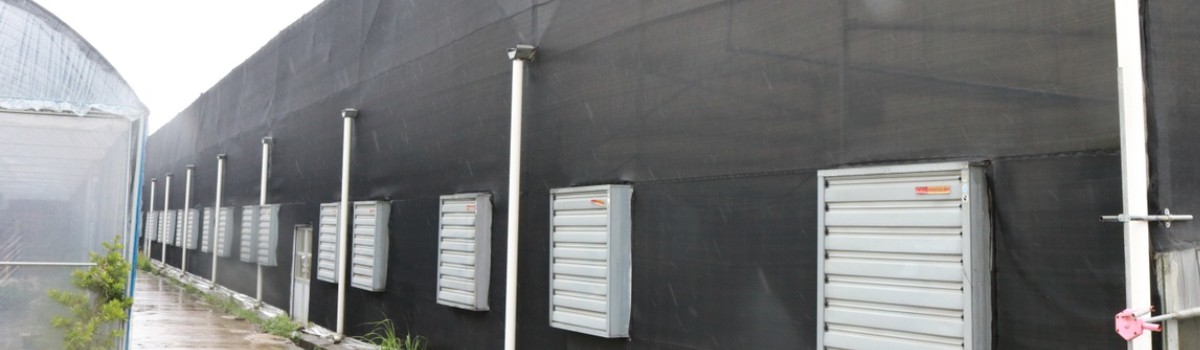
A fifth loss source sits outside the plant itself: container type. Standard dry containers lack temperature adjustment and ventilation functions, which causes relatively high plant loss during transport. Live plant transport relies on the dormancy and low-metabolism behaviour of plants under low-temperature conditions; with well-adjusted temperature and ventilation, plants can maintain good freshness and survival rate. That is why refrigerated or fresh-keeping containers are the recommended mode, with settings matched to the variety being shipped.
Industry Background: Why Specification Discipline Matters Now
The commercial case for tight specifications follows the structure of demand rather than the size of the market headline. China’s exports of ‘Other live plants’, the category that includes bonsai, reached USD 355 million in 2024, with the United States and South Korea as top destinations (OEC, Observatory of Economic Complexity). Indoor bonsai varieties such as Ficus and Money Tree are growing at a 10.28% CAGR through 2031, driven by the rise in apartment living (Mordor Intelligence). Landscape bonsai accounted for the largest type share at 34.2% of the global bonsai market in 2025 (Dataintelo), and Asia Pacific held a dominant share of over 48.5% in 2025, valued at USD 3.8 billion (Vertex Market Report).
Absolute market-size figures should be read with caution. Published 2025 estimates diverge widely — Dataintelo at USD 1.8 billion, Vertex Research at USD 7.9 billion and Global Market Statistics at USD 10.39 billion — while a separate projection puts the global bonsai market at approximately USD 18.4 billion by 2035 at a CAGR of 8.8% from 2026 to 2035 (Vertex AI Search / Industry Analysis). The directional signals that matter for a buyer are consistent: indoor and low-maintenance lines are expanding, landscape and project supply is growing, and both segments reward suppliers who can repeat a defined unit rather than a described one.
Regulatory pressure reinforces the same conclusion. The European Union mandates phytosanitary certificates for imported bonsai plants under Regulation (EU) 2019/2072 to prevent pest introduction, and US authorities require bonsai to be bare-rooted and accompanied by a phytosanitary certificate from the country of origin, with different requirements for shipments of 12 or fewer (USDA APHIS). Bare-root and potted are therefore not interchangeable in every destination, which makes the format field a compliance field as much as a commercial one.
Detailed Solution: How the Four Specification Systems Are Read
Each variety below carries its own measurement logic. The practical rule is to specify the unit the plant is actually sold on, then attach the supporting dimensions, the format and the grading band to the same order line.
Sansevieria: Potted or Bare-Root, 2–3 Leaves, 20–40 cm
Sansevieria wholesale lines are quoted in two formats. Potted material is rooted and finished in container substrate and is specified with both a plant dimension and a pot dimension. Bare-root material is cleared of substrate and specified on leaf count and height only, because the pot dimension no longer exists. The two formats have different loading weights, different arrival handling and, in some markets, different phytosanitary treatment.
The documented grading band for this range is 2–3 leaves at 20–40 cm height. On a purchase order, that band should be resolved into a single line: “3 leaves, 25–30 cm” is an executable specification; “2–3 leaves, 20–40 cm” is a description. Buyers should also fix the height reference point — root crown for bare-root, pot rim for potted — and, for potted lines, state the pot size in the same line so the finished unit is unambiguous at inspection.
Cycas revoluta: Bulb Diameter D 5 cm to 20 cm+, Height H 20 cm to 120 cm
Cycas revoluta is a two-dimension product. Bulb diameter runs from D 5 cm to 20 cm+ and plant height from H 20 cm to 120 cm, and the two dimensions are independent. A plant with a large caudex and a short top, and a plant with a small caudex and a long top, can present the same height while being different products commercially. Bulb diameter is conventionally read at the widest point of the caudex; height is read from the caudex base to the leaf tip. Both figures should appear on the order line.
Because both ranges are wide, an open range is a weak specification. A buyer executing an order should convert it into a paired band — for example a caudex band together with a height band — and state which of the two governs rejection if a plant falls inside one band and outside the other. Cycas revoluta is also part of the registered product scope under KinoFarm’s export production registration, which matters when the destination requires traceability from a registered production site.
Ficus ginseng: Root Weight 50 g to 10 kg, Grafted or Ungrafted
Ficus ginseng is traded on root weight, in a documented range from 50 g to 10 kg, and root weight is the primary commercial unit because it drives unit cost, packing density and perceived value at retail. Specification by height alone is not sufficient for this variety: two plants of similar height can differ substantially in root mass.
The second field is graft class. Grafted and ungrafted material are separate commercial classes, and the class must be stated on the purchase order rather than inferred at inspection, because the two are not interchangeable as delivered goods. For an OEM programme, the buyer supplies the root-weight band, the graft class, the height expectation and the pot or bare-root format, and the grower matches production to that set. Within the documented 50 g to 10 kg range, the buyer defines the bands; the grower confirms which bands can be scheduled in the requested season.
Pachira: Braid Count 3, 4 or 5, Height 20–90 cm
Pachira money tree is specified by braid count and height, with three commercial options — 3, 4 or 5 braids — and a height range of 20–90 cm. Braid count is a production decision, not an inspection afterthought: it determines how many stems are allocated per unit, how the unit is handled at packing, and how the unit reads on a retail shelf. An order line that specifies height without braid count does not define the product.
Pachira is also shipped in bare-root form for programmes that require it, with roots cleared and packed for transport. As with Sansevieria, the format changes the loading calculation, so potted and bare-root quantities should be separated on the same purchase order rather than combined into one line.
What Supplier-Side Capability Must Match the Specification
A specification is only executable if the grower can repeat it. KinoFarm states that the manufacturer provides customizable production services, and that production services include customizable modes. In practice the customization scope covers variety selection, growing cycle and packaging solution — the three levers that determine whether a stated band can be held across a season rather than in a single batch.
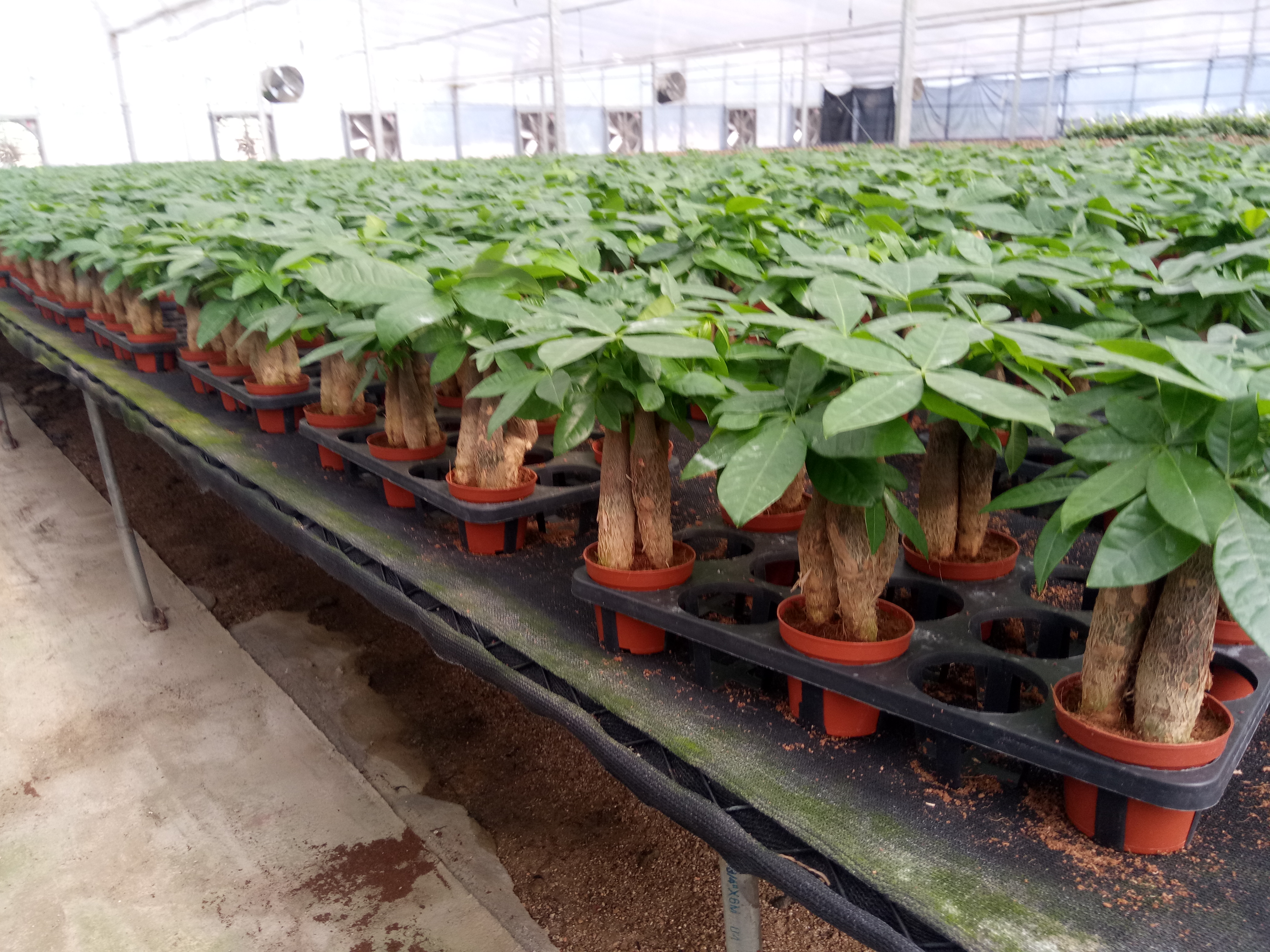
The capability base behind that scope is measurable. Xiamen Perfect Supply chain CO., LTD was founded in 2012 and operates 65,000 m² of professional greenhouses across two nurseries in Changtai, Zhangzhou, with 120 employees, an annual output of 5,000,000 units, a 5-engineer R&D team and a 98% export ratio. Plants are grown on 50 cm-high shelving with 1.6×1.6 mm breathable mesh, which supports air circulation and moisture control — the conditions under which a height or root-weight band can be held consistently. Quality control is stated as 100% test, and monthly capacity is 20 RF containers.
Step-by-Step: Turning the Parameters into an Order Specification
The sequence below converts the four specification systems into a document that a grower can produce against and a buyer can inspect against. Each step closes one of the ambiguity classes described earlier.
- Fix the primary unit per line. Leaf count and height for Sansevieria, bulb diameter plus height for Cycas revoluta, root weight plus graft class for Ficus ginseng, braid count plus height for Pachira. One primary unit per line prevents the quotation from being built on a different basis than the inspection.
- Fix the reference point and the measuring method. State where height is measured from and where diameter or root weight is taken. This is the cheapest clause in the contract and it removes most of the argument at destination.
- Convert every range into a band and a tolerance. Replace “20–40 cm” with the band actually being purchased, and state what percentage of units may sit outside the band before the line is rejected.
- Fix the format and the container. Potted or bare-root for Sansevieria and Pachira; pot or bare-root for Ficus ginseng. Then fix the container mode: refrigerated or fresh-keeping containers with temperature and ventilation set for the variety, since standard dry containers lack temperature adjustment and ventilation and carry relatively high loss.
- Fix the compliance file set. Confirm the export production registration of the growing site, the phytosanitary certificate for the destination, and any bare-root requirement. KinoFarm operates under Xiamen Customs registration no. 3700ZM008, covering production, processing and storage of seed bulbs, seedlings and flowers for export, issued 25 May 2025 and valid to 24 May 2028, and works to the MPS-A (Marketable Plant Safety) management framework. After-sales support includes quarantine document support.
- Fix the acceptance inspection. Acceptance criteria are pre-shipment inspection before loading. Combine that with the supplier’s 100% test quality control and the band agreed in step 3, and the inspection has a written reference instead of a verbal one.
- Fix the commercial terms and the schedule. MOQ is 45 kg, delivery terms are FOB or CIF, payment terms are prepaid 100% after confirmation, and lead time runs 20–60 days. Against a monthly capacity of 20 RF containers, the lead time is the field that should be confirmed first when a programme has a fixed retail window.
Execution rule: a specification that cannot be checked at loading is not a specification. Every parameter in the list above should be verifiable by counting, measuring or weighing a sample unit drawn from the lot, on the day of inspection.
Use Cases: Four Buying Programmes and the Specs They Need
The same four varieties are specified differently depending on the programme they feed. The cases below show which fields carry the commercial risk in each.
Garden Centre Replenishment
A garden centre retailer in Spain has sourced 4,134 units from KinoFarm over a five-year relationship, with Cycas growing well and Ficus in good condition after container shipment. Repeat retail programmes of this type depend on the height band and the format staying stable between shipments, because shelf space and pot presentation are fixed by the store, not by the grower. In this programme the acceptance point is consistency across containers rather than the extremes of a range.
Landscape and Project Supply
Landscape bonsai accounted for the largest type share at 34.2% of the global bonsai market in 2025 (Dataintelo), and the segment is shifting from product sales toward integrated project supply services to meet landscaping demands. For project buyers, Cycas revoluta is usually specified on paired caudex and height bands so that a planting scheme holds its proportions, and total unit counts are locked before production is scheduled.
Indoor Retail and Low-Maintenance Ranges
Low-maintenance ‘living decor’ lines such as Ficus retusa and succulent bonsai are increasing in demand as consumers prefer easier plant care (Horticultural Trades Association / TechSci Research). Indoor Ficus and Money Tree lines are growing at a 10.28% CAGR through 2031 (Mordor Intelligence), which puts pressure on root-weight bands and braid counts rather than on height alone, because those are the fields that determine how the unit reads on an indoor retail fixture.
Bare-Root Programmes for Regulated Destinations
Where the destination requires bare-root entry, the format decision is made before the price is negotiated. US rules require bonsai to be bare-rooted and accompanied by a phytosanitary certificate from the country of origin, with different requirements for shipments of 12 or fewer (USDA APHIS), and the EU requires phytosanitary certification for imported bonsai under Regulation (EU) 2019/2072. Bare-root Sansevieria and bare-root Pachira are specified on leaf count, braid count and height, with no pot dimension in the line.
Specification Comparison Table
The table below sets the four varieties against the same five fields. Only documented parameters and formats are shown; where a value is a range, the buyer is expected to convert it into an order band before production is scheduled.
| Variety | Primary traded unit | Documented range | Formats and classes | What the buyer should fix on the order line |
|---|---|---|---|---|
| Sansevieria | Leaf count and height | 2–3 leaves; 20–40 cm | Potted or bare-root | Single leaf count, height band, height reference point, pot size if potted |
| Cycas revoluta | Bulb diameter and plant height | D 5 cm to 20 cm+; H 20 cm to 120 cm | Potted or bare-root, subject to destination rules | Paired caudex and height bands, plus which band governs rejection |
| Ficus ginseng | Root weight and graft class | Root weight 50 g to 10 kg | Grafted or ungrafted | Root-weight band, graft class, height expectation, pot or bare-root format |
| Pachira (Money Tree) | Braid count and height | 3, 4 or 5 braids; 20–90 cm | Potted or bare-root | Braid count, height band, format, and braid count verified at loading |
Shared execution fields for all four varieties: MOQ 45 kg · delivery terms FOB or CIF · acceptance by pre-shipment inspection before loading · payment prepaid 100% after confirmation · lead time 20–60 days · monthly capacity 20 RF containers.
FAQ: Wholesale Bonsai Specifications, Compliance and Order Terms
Which compliance documents and registrations should a buyer verify before ordering wholesale live bonsai?
Three layers are worth checking. First, the export registration of the production site: KinoFarm operates under Xiamen Customs registration no. 3700ZM008, covering production, processing and storage of seed bulbs, seedlings and flowers for export, issued 25 May 2025 and valid to 24 May 2028. Second, the destination phytosanitary requirement: the EU mandates phytosanitary certificates for imported bonsai under Regulation (EU) 2019/2072, and US rules require bonsai to be bare-rooted and accompanied by a phytosanitary certificate from the country of origin, with different requirements for shipments of 12 or fewer. Third, the management-system framework: KinoFarm works to the MPS-A (Marketable Plant Safety) standard. Quarantine document support is included in after-sales scope.
Can a manufacturer produce an OEM Ficus ginseng bonsai programme to a buyer’s specification?
Where production is customizable, yes. KinoFarm states that the manufacturer provides customizable production services and that production services include customizable modes; the customization scope covers variety selection, growing cycle and packaging solution. For an OEM Ficus ginseng programme, the buyer supplies the root-weight band within the documented 50 g to 10 kg range, the grafted or ungrafted class, the height expectation and the pot or bare-root format. The supplier side of the match is a 5-engineer R&D team, 100% test quality control and a monthly capacity of 20 RF containers.
What commercial terms typically apply to a wholesale bonsai order?
Documented purchasing terms are: MOQ 45 kg; delivery terms FOB or CIF; acceptance criteria based on pre-shipment inspection before loading; payment terms prepaid 100% after confirmation. Lead time runs 20–60 days depending on the line and the season. Budget comparisons should be built on the same three variables across suppliers — format (potted or bare-root), specified band, and container mode — because changing any one of them changes the landed cost per unit.
How is a specification verified before the container is loaded?
Verification combines two controls. The supplier applies 100% test quality control, and acceptance is defined as pre-shipment inspection before loading. For the inspection to be meaningful, the band agreed in step 3 of the specification process must be written into the order: leaf count and height for Sansevieria, caudex diameter and height for Cycas revoluta, root weight and graft class for Ficus ginseng, braid count and height for Pachira. The full product range is listed in the KinoFarm catalogue for reference before a line is defined.
What lead time and shipping capacity should be planned for?
Lead time is 20–60 days and monthly capacity is 20 RF containers, within an operation that ships over 100 containers of plants annually. Because live plant transport relies on dormancy and low metabolism under low-temperature conditions, refrigerated or fresh-keeping containers with temperature and ventilation set for the variety are the recommended mode; standard dry containers lack temperature adjustment and ventilation functions and carry relatively high loss. Buyers planning a fixed retail window should therefore confirm container mode and lead time together, not sequentially.
Conclusion: The Specification Is the Product
For Sansevieria, Cycas revoluta, Ficus ginseng and Pachira, the parameters that decide whether a shipment is accepted are already documented: 2–3 leaves at 20–40 cm for Sansevieria, D 5 cm to 20 cm+ and H 20 cm to 120 cm for Cycas revoluta, root weight from 50 g to 10 kg with a separate graft class for Ficus ginseng, and 3, 4 or 5 braids at 20–90 cm for Pachira. What separates a workable order from a disputed one is whether those ranges were converted into bands, reference points, formats and an inspection rule before production was scheduled.
The same logic applies to the supplier side. A grower who can state capacity, lead time, registration and acceptance criteria in the same document as the plant dimensions is a grower whose output can be planned against. Buyers who treat the specification as the product — rather than as an attachment to it — spend less time resolving arrivals and more time building the next programme.
Request a Specification-Matched Quote
Send the band you intend to buy — variety, format, graft class or braid count, height or root-weight range, and destination — and KinoFarm will confirm what can be scheduled within the 20–60 day lead time. The full variety and specification reference is available in the KinoFarm product catalogue (PDF).
Xiamen Perfect Supply chain CO., LTD (KinoFarm) · Founded 2012 · 65,000 m² of greenhouses across two nurseries in Changtai, Zhangzhou, China · Live plants and bonsai · 98% export ratio
Website: www.kinofarm.com · Email: willaim@kinofarm.com · Tel / WhatsApp: +86-13806003349
Address: ROOM 201, NO.25, XINGHU ROAD, HULI DISTRICT, XIAMEN, CHINA
Have Questions or Need More Details?
Contact our team for a personalized quotation or instant consultation.
Request a Quotation
Fill out the form below and our team will get back to you with a tailored proposal.
WhatsApp Direct Chat
Prefer to chat in real-time? Message us on WhatsApp for instant assistance & quick answers.
- Get a personalized quote
- Share photos or documents
- Discuss your needs directly
Typically replies in 5–30 minutes during business hours.