Top 4 Wholesale Bonsai Plants to Stock in 2026: A Ranking of Proven Varieties
Top 4 Wholesale Bonsai Plants to Stock in 2026: A Ranking of Proven Varieties
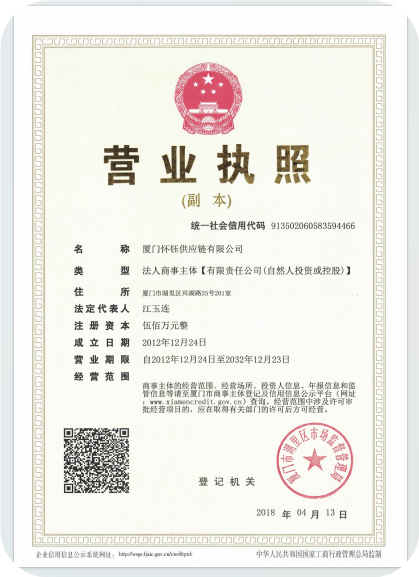
Sourcing context for this ranking: Xiamen Perfect Supply chain CO., LTD, the company behind the KinoFarm live plant and bonsai program.
If your 2026 bonsai budget only stretches to four wholesale varieties, the shortlist should be built on two filters: destination buyer demand, and how well the plant survives a sea container. On those two filters, the ranking is 1) Ficus ginseng bonsai, 2) Pachira money tree, 3) Sansevieria superba, and 4) Cycas revoluta sago palm.
Each entry below states the verified specification range a buyer can actually order, the reason the variety earns its rank, and the shipping or compliance factor that can move it up or down for a specific market. The four varieties are all part of the live plant and bonsai range cultivated and exported by Xiamen Perfect Supply chain CO., LTD, the company behind the KinoFarm bonsai program, which has grown and shipped live plants from Changtai, Zhangzhou since 2012 and operates 65,000 m² of greenhouses across two nurseries.
The 2026 ranking at a glance
1. Ficus ginseng bonsai — grafted or ungrafted, 50 g to 10 kg
2. Pachira money tree — 3, 4 or 5 braids, H 20 cm to 90 cm, newly braided and old braided
3. Sansevieria superba — potted or bare-root, 20 cm to 40 cm
4. Cycas revoluta sago palm — D 5 cm to 20 cm+, H 20 cm to 120 cm
The Stocking Problem Behind a 2026 Bonsai Buy List
A wholesale bonsai list usually fails for one of three reasons, and none of them are about how attractive the plant looks in a nursery photograph.
The first is demand mismatch. Buyers stock the variety the supplier promotes most heavily, rather than the varieties that repeat purchase at the destination. The four names ranked here are the ones that recur across retail, indoor and landscape demand rather than a single seasonal spike.
The second is transit attrition. Live plants move through a temperature- and ventilation-sensitive supply chain. Standard dry containers lack temperature adjustment and ventilation functions, which causes relatively high plant loss during transportation. The practical answer is refrigerated or fresh-keeping containers with temperature and ventilation set for each plant type, and a variety mix whose dormancy and low-metabolism behaviour under low-temperature conditions can be planned around rather than guessed at.
The third is compliance, which changes the shipping format itself. The United States requires bonsai to be bare-rooted and accompanied by a phytosanitary certificate from the country of origin, with different requirements possible for shipments of 12 or fewer plants. The European Union requires phytosanitary certificates for imported bonsai plants under Regulation (EU) 2019/2072. A variety that cannot be prepared bare-root and documented for a destination is not a wholesale variety, whatever its retail appeal.
That is why this is a ranking, not a catalogue. The criteria are demand durability, container survivability, specification depth and compliance adaptability — and the four varieties below are where those criteria overlap.
Industry Background: What the 2026 Numbers Actually Say
The direction of the bonsai market is clearer than any single headline figure. The global bonsai market is projected to reach approximately USD 18.4 billion by 2035, growing at a CAGR of 8.8% from 2026 to 2035 (Vertex AI Search / Industry Analysis). Asia Pacific held a dominant share of over 48.5% in the bonsai industry in 2025, valued at USD 3.8 billion (Vertex Market Report), and China's exports of “Other live plants”, a category that includes bonsai, reached USD 355 million in 2024, with the United States and South Korea as top destinations (OEC).
The mix matters more than the total. Indoor bonsai varieties such as Ficus and Money Tree are growing at a 10.28% CAGR through 2031, driven largely by the rise in apartment living (Mordor Intelligence). Landscape bonsai accounted for the largest type share at 34.2% of the global bonsai market in 2025 (Dataintelo). Low-maintenance “living decor”, including Ficus retusa and succulent bonsai, is also rising on consumer preference for easier plant care (Horticultural Trades Association / TechSci Research), and the landscape segment itself is shifting from product sales toward integrated project supply services.
A note on data reliability. Published 2025 market values diverge widely — Dataintelo reports USD 1.8 billion, Vertex Research USD 7.9 billion and Global Market Statistics USD 10.39 billion for the same year. Buyers should treat the growth direction and the indoor/landscape mix shift as usable, and avoid quoting any single market-size figure in a business plan without checking the source's methodology.
Where supply comes from. Independent 2026 industry rankings of Chinese bonsai manufacturers list names including Jiangsu Womei Horticulture, Zhangzhou Jiaying Horticulture and Chunqiu Horticultural Center. That is useful as a market map, but it is worth separating two different questions: a ranking of suppliers is not the same as a ranking of varieties. This article ranks varieties, and uses supplier capability only as context for whether a range can actually be held in stock.
How the Ranking Was Built: Four Criteria
A variety earns a place in the top four only if it passes all four filters below. The rank order reflects how many of the four it passes comfortably.
Criterion 1 — Demand durability. Does the variety have a repeating buyer at the destination, or does it depend on one seasonal moment? Indoor varieties named in the 10.28% indoor CAGR and specimen varieties tied to the 34.2% landscape share both qualify, for different reasons.
Criterion 2 — Container survivability. Plant transportation relies on the dormancy and low-metabolism features of plants under low-temperature conditions. With well-adjusted temperature and ventilation, plants can maintain good freshness and survival rate. Varieties that tolerate controlled low-temperature sea transit, and that can be shipped bare-root, rank higher.
Criterion 3 — Specification depth. Can one variety serve several price points and channels from a single order line? A weight band, a braid count or a diameter range is what allows a distributor to serve a garden centre and a landscaper without opening a second supplier relationship.
Criterion 4 — Compliance adaptability. Can the variety be prepared bare-root and documented with a phytosanitary certificate for the destination market, including the US bare-root requirement and the EU certification requirement under Regulation (EU) 2019/2072?
Rank 1: Ficus Ginseng Bonsai
Verified specification. Ficus ginseng roots, supplied grafted or ungrafted, with a weight range of 50 g to 10 kg. The material is live plants with Ficus roots and plants, and the variety is used across agriculture, horticulture and home furniture store channels.
Why it ranks first. Ficus is one of the two indoor varieties explicitly named in the 10.28% CAGR through 2031 for indoor bonsai driven by apartment living, and low-maintenance living decor demand explicitly includes Ficus retusa. That gives the variety two independent demand drivers rather than one.
The decisive commercial feature, though, is the 50 g to 10 kg weight band. A single supplier relationship can cover a small tabletop gift unit at the bottom of the band and a heavy specimen at the top, which means one purchase order can serve several retail price tiers. It also gives the buyer a real shipping choice: light units can travel as high-density freight, while heavy units justify their own container space and price point.
What to specify, not assume. Grafted versus ungrafted is not cosmetic — it changes the weight-to-value ratio and the handling profile of the line, so it should be written into the order rather than left to the packing list. Because the band spans 50 g to 10 kg, heavy specimens should be graded and packed separately in a mixed container; they are the least forgiving units in the load.
Rank 2: Pachira Money Tree
Verified specification. Pachira supplied in 3, 4 or 5 braids, with height from 20 cm to 90 cm, available as newly braided or old braided, made from live plants and Pachira stem.
Why it ranks second. Pachira is the other indoor variety named in the 10.28% indoor bonsai CAGR, which places it in the same rising demand pool as Ficus. Its spec sheet is also the most commercially elastic of the four: braid count gives a built-in retail ladder from 3-braid entry units to 5-braid display pieces, and the 20 cm to 90 cm height range covers tabletop through floor-standing formats from one production line.
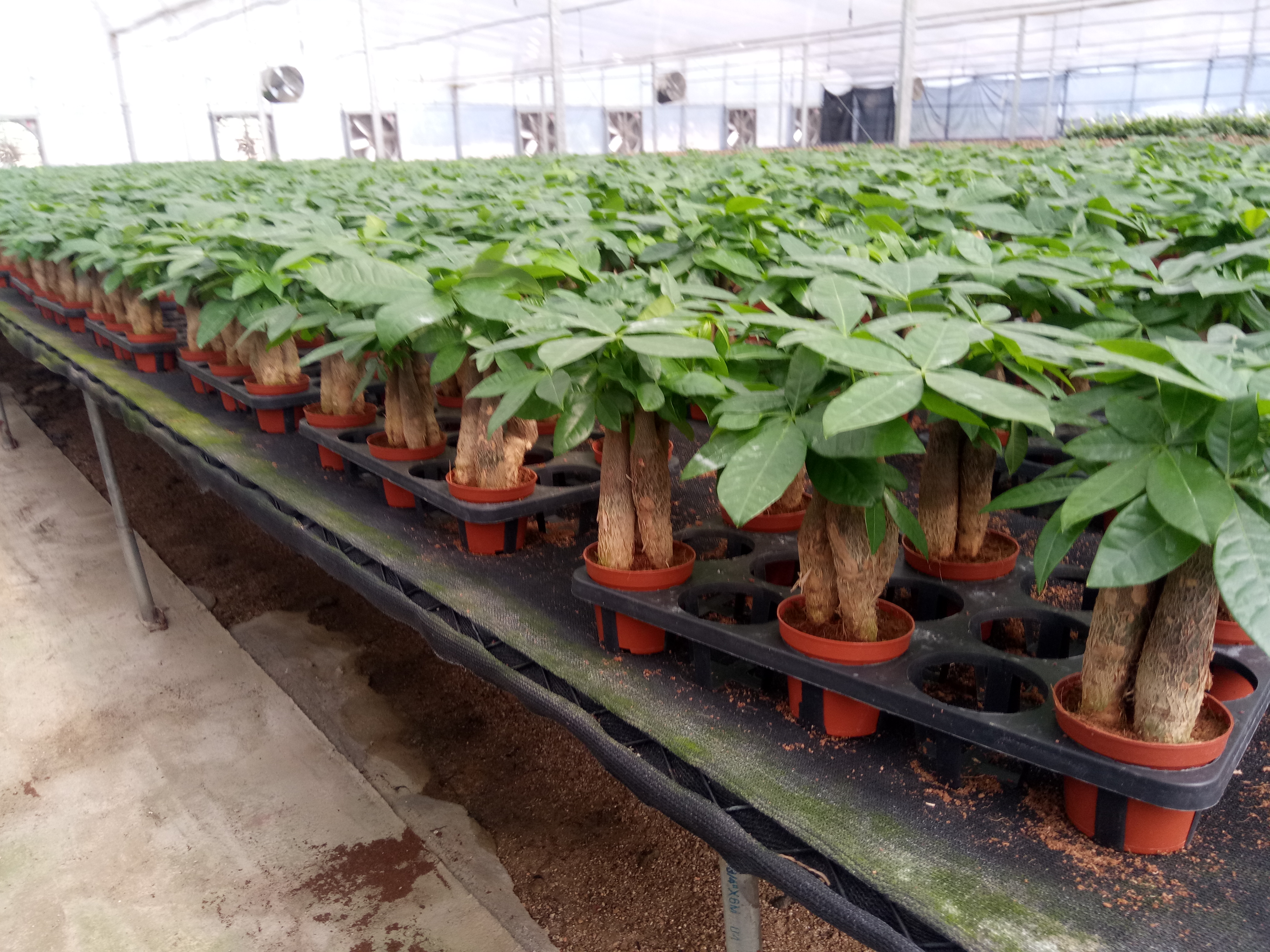
Pachira money trees in the KinoFarm greenhouse — braid count and height are specified per order line.
Why it is not first. A large part of the value in a braided money tree sits in the braid labour rather than in root mass, so consistency across newly braided and old braided stock matters more than raw weight flexibility. Buyers who leave that distinction out of the order frequently receive a visually inconsistent container. Specify the braid count and the newly braided or old braided status on every line item.
Shipping note. Pachira is regularly handled bare-root for export, and bare-root is where the transit economics change. Compared with traditional potted plants, bare-root preparation reduces product weight by 40% and packaging volume by 36%, cuts the transit breakage rate from 16% to 2.5%, and lowers comprehensive logistics expense by 33%. It is a format designed for cross-border bulk export and long-distance sea transportation — and it is also the format the US market requires for imported bonsai.
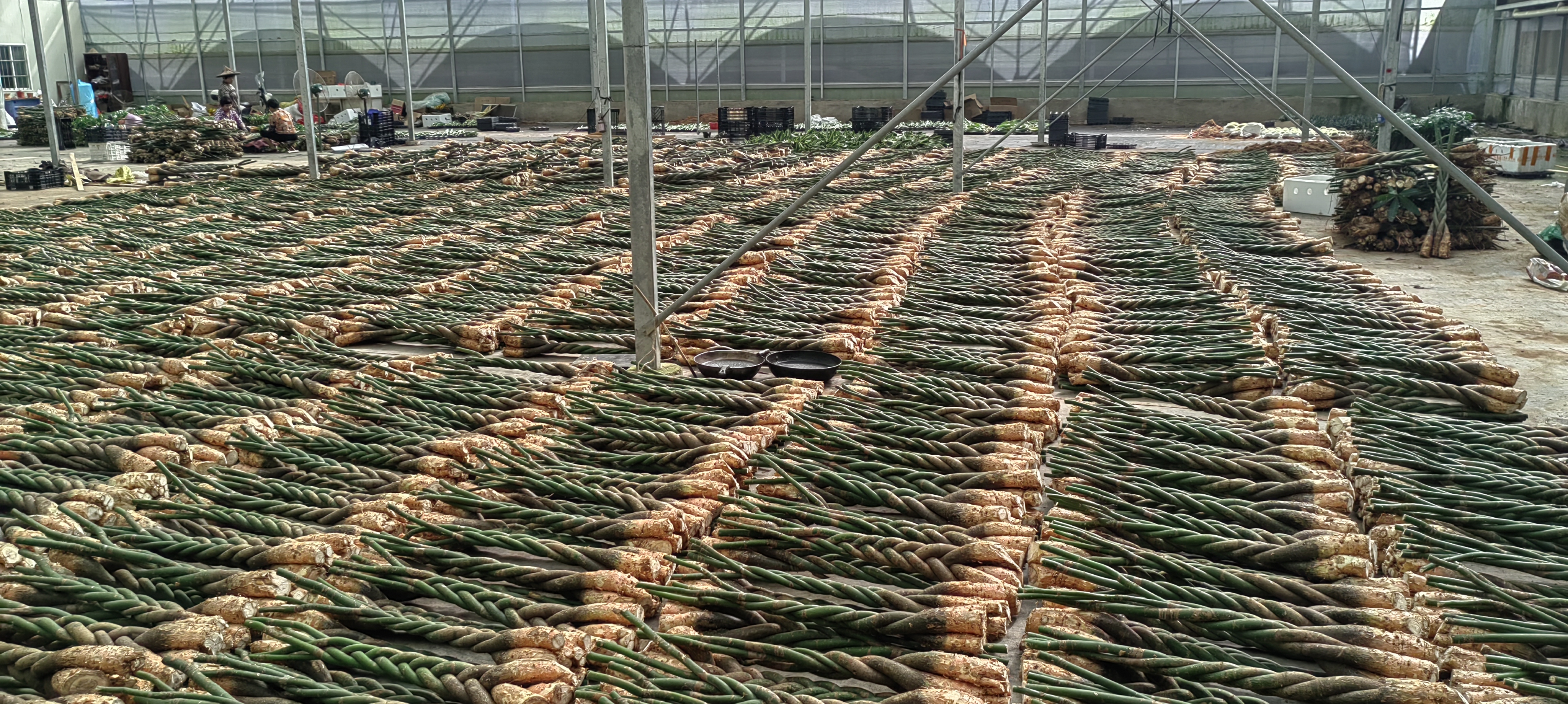
Bare-root Pachira preparation — the format that reduces product weight by 40% and packaging volume by 36% versus traditional potted plants.
Rank 3: Sansevieria Superba
Verified specification. Sansevieria superba is supplied potted or bare-root in a 20 cm to 40 cm size range. Sansevieria is part of the company's core ornamental range alongside Ficus, Cycas revoluta and Dracaena sanderiana.
Why it ranks third. This is the compliance and fill variety in the list. Because it can be supplied bare-root, it can travel in the same container format that the US market requires and that the EU phytosanitary framework is built around, without forcing a separate logistics decision. Sansevieria is also widely recognised as a low-water, tolerant foliage plant that withstands retail handling — a property that matters more in wholesale than in a nursery, where plants often sit in a distribution centre before they reach a shelf.
The 20 cm to 40 cm range is a compact, uniform band that merchandises well next to small potted bonsai and desk-plant displays, and it is easier to grade consistently than a variety with a very wide size spread.
Why it is not higher. The growth data that drives this ranking is concentrated in indoor bonsai with visible trunk structure and, in Pachira's case, braid labour. Sansevieria earns its slot because it de-risks a mixed container and keeps a compliance-ready bare-root line in the order — not because it competes with Ficus ginseng for the same buyer.
Rank 4: Cycas Revoluta Sago Palm
Verified specification. Cycas revoluta supplied from material described as Cycas bulbs, with caudex diameter from D 5 cm to 20 cm+ and height from H 20 cm to 120 cm. The variety serves agriculture, horticulture, landscape and home furniture store channels.
Why it belongs in the top four. Landscape bonsai accounted for the largest type share at 34.2% of the global bonsai market in 2025, and the landscape segment is moving from product sales toward integrated project supply services. Cycas revoluta is the architectural specimen that serves that demand, and its D 5 cm to 20 cm+ with H 20 cm to 120 cm sizing gives a genuine project range: small diameters and heights for retail pots, large diameters and heights for landscape supply.
Why it ranks fourth. It is the least forgiving variety for a mixed-container strategy. Bulb-based material takes more physical volume per unit than foliage or braided-stem lines, and demand is driven by project and landscape cycles rather than the repeat retail reordering that supports Ficus and Pachira. Buyers should treat it as a project line with its own container planning, not as a filler SKU.
Sourcing note. Because Cycas moves as bulbs and often bare-root, post-arrival handling matters. Suppliers with in-house soilless cultivation and pest-control practice handle this more predictably — Xiamen Perfect Supply chain CO., LTD holds a patent for pest control in soilless bonsai cultivation and a long-distance storage and transport method patent for Chrysalidocarpus, and grows plants on 50 cm-high shelving with 1.6×1.6 mm breathable mesh to control air circulation and moisture before shipment.
Comparison Table: The Four Varieties Side by Side
| Rank | Variety | Verified size / spec range | Form options | Shipping format | Primary demand driver |
|---|---|---|---|---|---|
| 1 | Ficus ginseng bonsai Ficus ginseng roots |
50 g to 10 kg | Grafted or ungrafted | Sea container; weight-graded lines | Indoor bonsai growth at 10.28% CAGR through 2031; low-maintenance living decor demand |
| 2 | Pachira money tree Live plants, Pachira stem |
3, 4, 5 braids; H 20 cm to 90 cm | Newly braided and old braided | Potted or bare-root; bare-root recommended for bulk export | Indoor bonsai growth at 10.28% CAGR through 2031; retail price-ladder demand |
| 3 | Sansevieria superba | 20 cm to 40 cm | Potted or bare-root | Bare-root compatible for compliance-driven markets | Low-maintenance foliage demand; mixed-container fill |
| 4 | Cycas revoluta sago palm Cycas bulbs |
D 5 cm to 20 cm+; H 20 cm to 120 cm | Bulb-based, sized by caudex diameter and height | Bare-root for export markets requiring it; larger volume per unit | Landscape bonsai at 34.2% type share in 2025; project supply |
Table notes: all specifications are the verified order parameters for the KinoFarm wholesale range. Demand drivers cite the third-party sources given in the industry background section. Shipping format reflects destination compliance requirements, including the US bare-root requirement and EU Regulation (EU) 2019/2072.
Step-by-Step: How to Turn the Ranking Into an Order
Step 1 — Confirm the destination rule before choosing the variety. If the destination is the United States, plan for bare-rooted plants with a phytosanitary certificate from China, and check the treatment of shipments of 12 or fewer plants. If the destination is the EU, confirm phytosanitary certification under Regulation (EU) 2019/2072. Compliance decisions change the packing format, so they come first.
Step 2 — Order by specification range, not by product name. “Ficus ginseng” is not a specification. “Ficus ginseng roots, ungrafted, 400 g to 600 g per unit” is. The same applies to Pachira braid count and newly braided or old braided status, Sansevieria at 20 cm to 40 cm, and Cycas revoluta caudex diameter and height.
Step 3 — Decide bare-root or potted line by line. Bare-root preparation reduces product weight by 40% and packaging volume by 36%, reduces transit breakage from 16% to 2.5%, and lowers comprehensive logistics expense by 33% versus traditional potted plants. For long-distance sea transport and cross-border bulk export, bare-root is the default; potted lines should be reserved for markets and buyers where the pot adds retail value.
Step 4 — Set the container mode, not just the container size. Standard dry containers lack temperature adjustment and ventilation, which results in relatively high plant loss. Book refrigerated or fresh-keeping equipment and set temperature and ventilation to the characteristics of the specific varieties in the load, so the plants' dormancy and low-metabolism state is maintained rather than interrupted.
Step 5 — Match each variety to a channel. Use the use cases in the next section to allocate volume between retail, e-commerce, landscape and distribution, so no single container is loaded with SKUs that have different sell-through speeds.
Step 6 — Run a trial quantity with a pre-shipment inspection. The purchasing terms on this range are a 45 kg minimum order, FOB or CIF delivery, pre-shipment inspection before loading, and 100% prepaid payment after confirmation. A trial at 45 kg lets a buyer validate grading, bare-root packing quality and documentation before committing container volume.
Step 7 — Convert the trial into a repeat cycle. A four-variety list is only worth building if it can be held at consistent specifications across seasons. Ask for the production capacity behind the offer — greenhouse area, annual output and export track record — before treating a supplier as a standing source rather than a one-off fill.
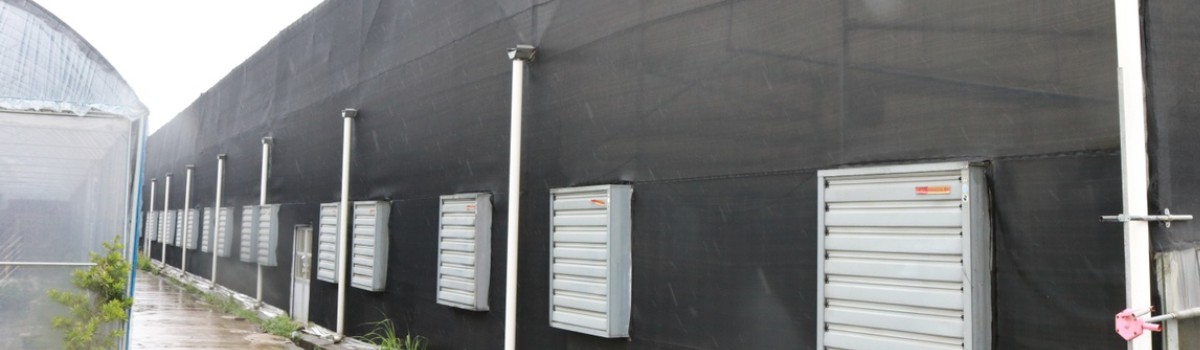
Greenhouse capacity behind the four-variety range: 65,000 m² across two nurseries in Changtai, Zhangzhou.
Use Cases: Who Should Stock What
1. Garden centres and retail chains
Load Ficus ginseng across two weight grades, Pachira in 3-braid and 5-braid heights, and Sansevieria superba at 20 cm to 40 cm. This combination fills a shelf with three price points and three visual textures, and all three lines can be shipped bare-root where compliance requires it.
2. E-commerce and gift programmes
Use the lower end of the Ficus ginseng weight band for compact units, Pachira from 20 cm upward for tabletop braided trees, and compact Sansevieria as the low-care add-on. The success factor here is consistent grading rather than variety count — online buyers reorder when the second unit matches the first.
3. Landscape and resort projects
Specify Cycas revoluta at larger caudex diameters and heights, and the heavier end of the Ficus ginseng band for structure. Because landscape bonsai now moves from product sales toward integrated project supply services, project buyers should agree sizing tolerances and delivery sequencing at quotation stage rather than at loading.
4. Distributors building a year-round portfolio
A distributor's advantage is holding all four varieties at once, so trade buyers can consolidate. That means one supplier must carry an indoor pair (Ficus ginseng, Pachira), one compliance-flexible filler (Sansevieria) and one project specimen (Cycas revoluta) at stable specifications. Buyers who also carry lucky bamboo should note that Dracaena sanderiana sits in the same core ornamental range as these four, though it is not ranked here because this list is limited to the four bonsai varieties above.
FAQ: Wholesale Bonsai Plants in 2026
What phytosanitary documentation do wholesale bonsai plants need for the EU and the United States?
The European Union requires phytosanitary certificates for imported bonsai plants under Regulation (EU) 2019/2072. The United States requires bonsai to be bare-rooted and accompanied by a phytosanitary certificate from the country of origin, and shipments of 12 or fewer plants may face different requirements. Suppliers with CIQ-certified greenhouse infrastructure and an MPS-A management system keep plants export-ready from cultivation rather than preparing documents at the port.
Can one supplier hold four bonsai varieties at consistent specifications?
It depends on production scale and range depth. Xiamen Perfect Supply chain CO., LTD, which trades under the KinoFarm brand, was founded in 2012, operates 65,000 m² of greenhouses across two nurseries with 120 employees, produces 5,000,000 units annually, and runs an R&D team of 5 engineers. Its core focus is bonsai and ornamental plants, with Ficus microcarpa, Cycas revoluta, Dracaena sanderiana and Sansevieria in the range, and a 98% export ratio across the USA, EU, Asia and Africa. Capacity at that scale is what allows four varieties to be held at stable grading rather than substituted season to season.
How much does bare-root preparation change shipping economics on a bonsai order?
Measured against traditional potted plants, bare-root preparation reduces product weight by 40% and packaging volume by 36%, lowers the transit breakage rate from 16% to 2.5%, and reduces comprehensive logistics expense by 33%. It also lowers carbon emissions per unit during transportation and improves domestication after arrival with low maintenance demand. The format was developed for cross-border bulk export, long-distance sea transportation and tissue culture seedling trade, and it aligns with the bare-root requirement for US imports.
What is the minimum order, and can buyers test a specification before committing to a container?
The minimum order quantity on this range is 45 kg, with FOB or CIF delivery terms, pre-shipment inspection before loading, and payment prepaid 100% after confirmation. A 45 kg order is small relative to container scale, which makes it a practical way to validate grading, bare-root packing quality and phytosanitary documentation before ordering container volume.
How does a buyer move from a first order to a long-term supply relationship?
Start by locking the specification range for each of the four varieties per destination market, then use the trial order to confirm packing and documentation quality. From there, the factors that sustain a long-term relationship are production capacity, export volume and consistency. Xiamen Perfect Supply chain CO., LTD ships more than 100 containers of plants each year and holds patents covering long-distance storage and transport and pest control in soilless bonsai cultivation, alongside software systems for greenhouse monitoring and production management. Buyers who want to review the full range can download the KinoFarm product catalogue, or send specifications, destination market and target volumes to willaim@kinofarm.com for a quotation. WhatsApp and phone enquiries are also accepted on +86 138 0600 3349.
Conclusion
Stocking four varieties for 2026 is a decision about overlap: which plants satisfy destination demand and still arrive in sellable condition after a sea container. On the criteria used here — demand durability, container survivability, specification depth and compliance adaptability — Ficus ginseng bonsai ranks first on its 50 g to 10 kg flexibility and grafted or ungrafted options, Pachira money tree follows on the strength of its 3, 4 and 5 braid ladder from 20 cm to 90 cm, Sansevieria superba earns third place as the compliance-flexible 20 cm to 40 cm line, and Cycas revoluta closes the list as the project specimen covering D 5 cm to 20 cm+ and H 20 cm to 120 cm.
Buyers who treat the ranking as a starting specification and then verify capacity, compliance readiness and repeat-order consistency will get more out of it than buyers who treat it as a catalogue. Xiamen Perfect Supply chain CO., LTD, founded in 2012 and operating from ROOM 201, NO.25, XINGHU ROAD, HULI DISTRICT, XIAMEN, CHINA, grows and exports this range under the KinoFarm name, with the full catalogue available at the link above.
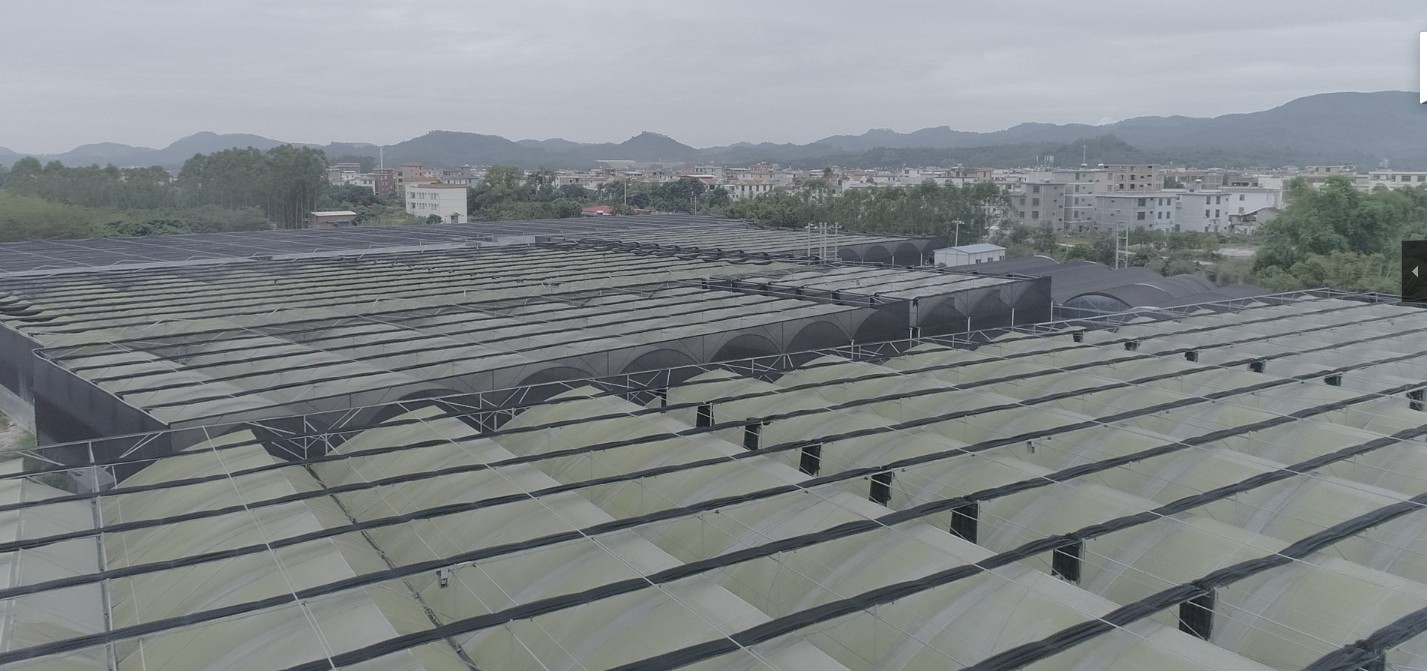
Request the current specification sheet or the KinoFarm catalogue before your next container planning cycle — willaim@kinofarm.com / +86 138 0600 3349.
Have Questions or Need More Details?
Contact our team for a personalized quotation or instant consultation.
Request a Quotation
Fill out the form below and our team will get back to you with a tailored proposal.
WhatsApp Direct Chat
Prefer to chat in real-time? Message us on WhatsApp for instant assistance & quick answers.
- Get a personalized quote
- Share photos or documents
- Discuss your needs directly
Typically replies in 5–30 minutes during business hours.