Top 5 Durable Wholesale Bonsai Varieties for Long-Distance Shipping in 2026
Top 5 Durable Wholesale Bonsai Varieties for Long-Distance Shipping in 2026
For importers buying wholesale bonsai plants, most of the commercial risk sits in the ocean leg, not in the nursery. A container can be loaded with healthy, well-graded stock and still arrive with yellowed foliage, dropped leaves or softened roots — because the variety was chosen for how it looks on a website rather than for how it behaves in transit.
Short answer: the five wholesale bonsai varieties best suited to long-distance container shipping in 2026 are Sansevieria trifasciata (2–3 leaves, H 20–40 cm), Cycas revoluta (bulb-based), Ficus bonsai (Ficus ginseng roots), Pachira money tree (braided), and Dracaena sanderiana. They are ranked on three transit-relevant traits: root structure and internal water storage, foliage density and transpiration, and how the plant's physical form behaves inside a loaded container.
This ranking is written for importers, distributors and garden centre buyers evaluating a 2026 programme. It explains why two species that are not classic bonsai silhouettes outrank the traditional forms, and where the remaining risk sits once container conditions are correct.
Problem Definition: Why Some Bonsai Arrive Intact and Others Do Not
Live plant transport depends on the dormancy and low-metabolism behaviour of plants under low-temperature conditions. With well-adjusted temperature and ventilation, plants can maintain good freshness and survival rates across a long ocean leg. With the wrong container, the same healthy stock deteriorates quickly.
That is why container type is not a logistics afterthought — it is part of variety planning. Standard dry containers lack both temperature adjustment and ventilation, and that combination causes relatively high plant loss during transport. Long-distance plant shipments therefore need refrigerated or fresh-keeping containers, with temperature and ventilation set according to the characteristics of each species.
Once container conditions are controlled, the remaining variable is the plant itself. Three traits predict how a variety will behave:
- Root structure and water storage. Plants that hold water in bulbs, thick roots or succulent leaves tolerate temporary moisture stress during transit far better than plants with fine, fast-drying root systems.
- Foliage density and transpiration. Every square centimetre of leaf surface loses water. Dense, soft canopies raise humidity inside cartons and increase the risk of leaf drop and fungal pressure.
- Container adaptability. Compact, rigid forms stack and brace efficiently. Sprawling or brittle forms waste container volume and are more likely to be damaged during loading and unloading.
Applying those three criteria consistently is what pushes two unusual-looking species above the classic bonsai shapes in the ranking below.
Industry Background: Why Transit-Hardy Varieties Are Gaining Share in 2026
The commercial context matters, because transit-hardy varieties are no longer a niche preference — they are becoming the mainstream of the wholesale trade.
Industry analysis projects the global bonsai market to reach approximately USD 18.4 billion by 2035, growing at a CAGR of 8.8% from 2026 to 2035. Asia Pacific held a dominant share of over 48.5% of the bonsai industry in 2025, valued at USD 3.8 billion. China's exports of “other live plants”, the category that includes bonsai, reached USD 355 million in 2024, with the United States and South Korea among the top destinations. One caveat for buyers reading market reports: published 2025 market-size estimates diverge widely between research firms, so the growth trajectory is more dependable than any single valuation.
Two demand shifts support transit-hardy varieties specifically. Indoor bonsai such as Ficus and money tree are growing at a 10.28% CAGR through 2031, driven by apartment living, while low-maintenance “living decor” products are gaining share as consumers look for easier plant care. Landscape bonsai already accounted for the largest type share at 34.2% of the global bonsai market in 2025. All three trends favour plants that survive the ocean leg and need little attention in the first weeks after arrival.
Regulation shapes the same decision. The European Union requires phytosanitary certificates for imported bonsai plants under Regulation (EU) 2019/2072 to prevent pest introduction, and USDA regulations require bonsai entering the United States to be bare-rooted and accompanied by a phytosanitary certificate from the country of origin, with different requirements possible for shipments of 12 or fewer. Bare-root entry interacts directly with variety choice, because not every species tolerates that root preparation equally well.
The 2026 Ranking: Five Durable Varieties for Long-Distance Shipping
1. Sansevieria trifasciata — 2–3 Leaves, H 20–40 cm
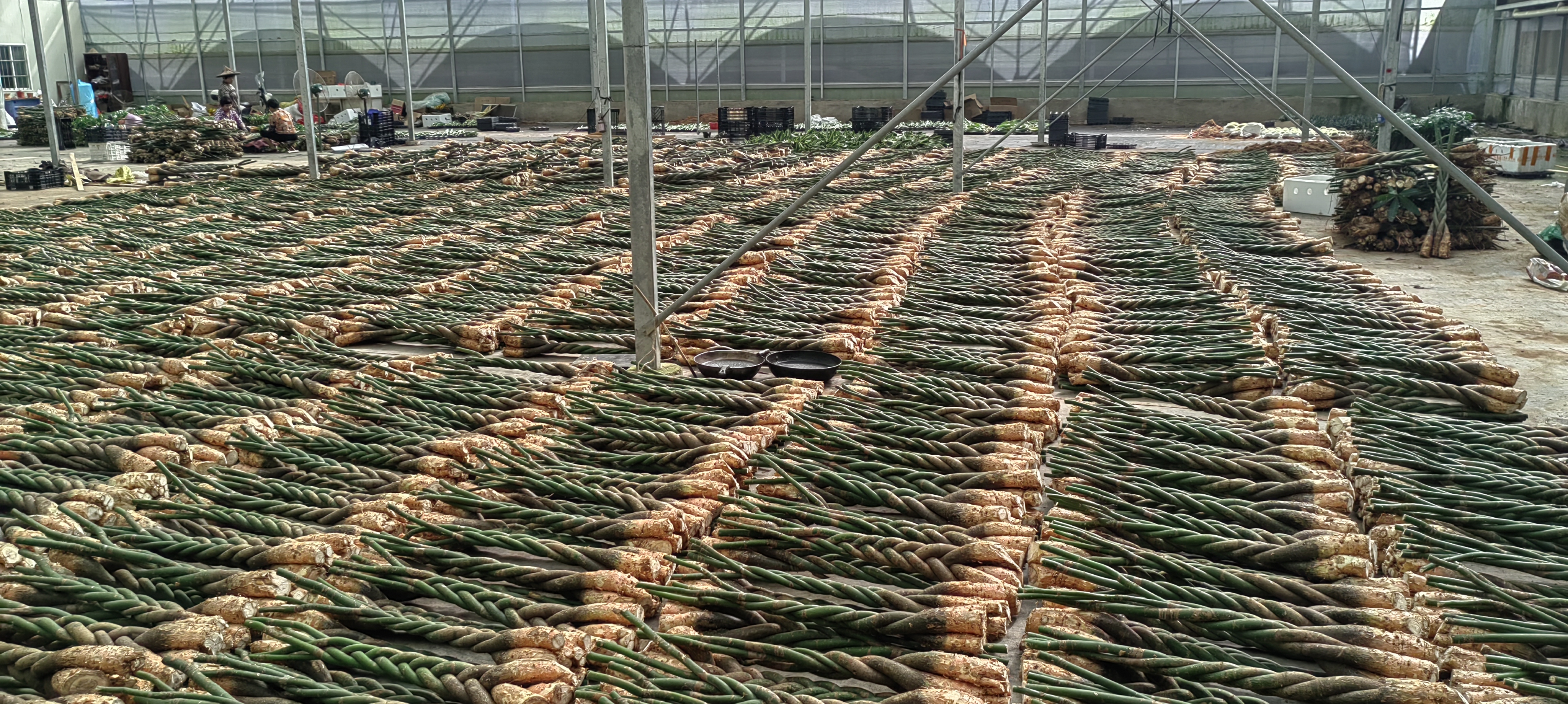
Sansevieria trifasciata ranks first because it reduces transit risk to the smallest possible surface area. Supplied at 2–3 leaves and H 20–40 cm, the plant carries very little foliage mass relative to its leaf thickness, so total water loss during a long container leg stays low. The leaves are rigid and upright, which means the product stacks predictably and resists crushing when cartons are braced.
For importers, the practical consequence is that Sansevieria tolerates the widest range of container conditions among the five and is the least likely to need corrective handling on arrival. It is also one of the four core species grown at Kinofarm in Changtai, Zhangzhou, alongside Ficus microcarpa, Cycas revoluta and Dracaena sanderiana.
2. Cycas revoluta — Bulb-Based and Sturdy
Cycas revoluta ranks second on the strength of its bulb. The line is supplied from D 5 cm to 20 cm+ with heights from 20 cm to 120 cm, and its material basis is the Cycas bulb — a water- and nutrient-storing organ that allows the plant to sit through a long transit without drawing on fine roots. The result is stock that arrives firm and recovers predictably.
The trade-off is weight and rigidity. Larger caliper specimens are heavy and need proper bracing inside the container, and the US market requires bare-rooted entry. Handled correctly, the species has a documented track record: in a Spanish garden centre programme, a buyer received 4,134 units over a 5-year relationship, with customer feedback confirming good quality after container shipment and Cycas growing well.
3. Ficus Bonsai — Ficus Ginseng Roots
Ficus bonsai, supplied on Ficus ginseng roots at weights from 50 g to 10 kg and in grafted or ungrafted form, is the classic wholesale bonsai line and the third most transit-durable variety on this list. The thick, water-storing ginseng root system is why: it buffers the plant against the moisture fluctuations of an ocean leg, and it is the trait that makes Ficus the workhorse of indoor bonsai programmes.
Ficus ranks below Sansevieria and Cycas because of its foliage. Grafted canopies transpire more than a succulent leaf or a bulb, so Ficus rewards correct container management — temperature and ventilation must be set for the species, and pre-shipment irrigation has to be controlled. When those conditions are met, the same Spanish programme that carried Cycas also reported Ficus in good condition after container shipment.
4. Pachira Money Tree — Braided
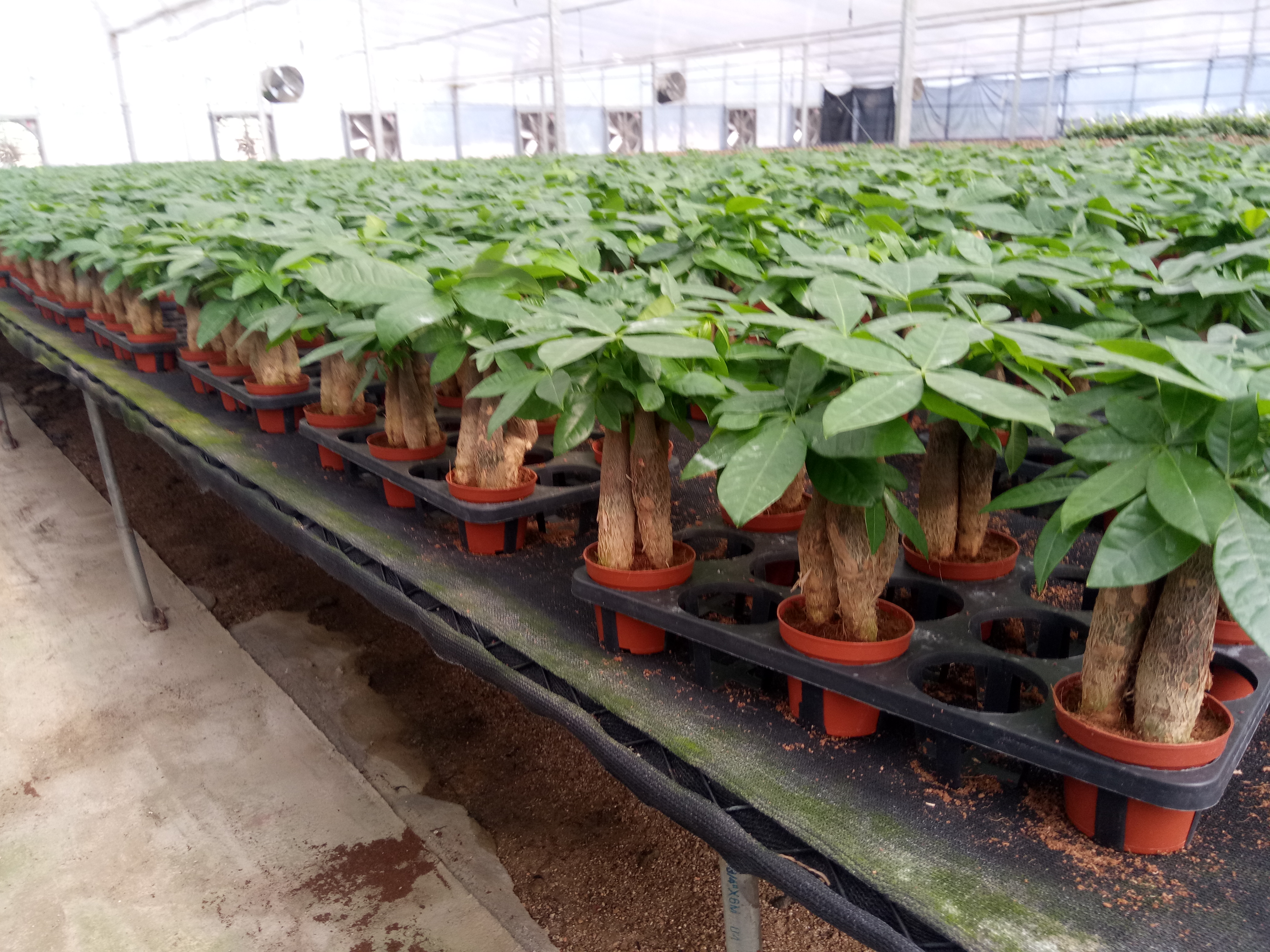
Pachira, sold as money tree in 3, 4 or 5 braids from H 20 cm to 90 cm and in newly braided or old braided form, ranks fourth. The braided stem is the transit advantage: it is a rigid, self-supporting structure that keeps its shape inside a carton, and the stem itself stores water. Pachira is also a species that can be prepared in bare-root format, which supports markets that require bare-root entry.
Pachira sits below Ficus mainly on handling discipline. Because the product's commercial value is tied to the braid, loading and unloading need more care, and braid counts and heights have to be specified precisely at order stage rather than left open.
5. Dracaena sanderiana — Lucky Bamboo
Dracaena sanderiana, the fourth of Kinofarm's core species, completes the top five. Its transit profile is built on low foliage mass and a stem-based structure that is compact to pack and slow to deteriorate under controlled container conditions. In sourcing terms it ranks fifth not because it is fragile, but because it typically functions as a companion or impulse SKU inside a mixed container rather than as the anchor line of a programme, and its retail presentation depends on grading discipline at the packing stage.
Step-by-Step: Building a Transit-Safe Bonsai Order
- Match variety to destination regulation first. Confirm whether the destination requires bare-rooted entry and a phytosanitary certificate before fixing the variety list.
- Fix specifications in writing. Define leaf count and height for Sansevieria, caliper and height for Cycas, root weight and graft status for Ficus, and braid count and height for Pachira.
- Plan the growing cycle with the grower. Customizable production covers variety selection, growing cycle and packaging solution, and typical lead time runs 20–60 days.
- Confirm root format. Bare-root preparation is a regulatory requirement for some markets and a cost lever for others.
- Book the right container. Standard dry containers are not suitable for live plants; refrigerated or fresh-keeping containers are required, with temperature and ventilation set per species.
- Verify documentation before loading. A phytosanitary certificate must accompany the shipment, and the grower's export registration should be current and within its validity window.
- Agree the inspection standard before production. Quality control at Kinofarm follows a 100% test standard, so the inspection reference should be fixed at the same time as the specification.
Capacity planning fits around those steps: Kinofarm's monthly capacity is 20 refrigerated containers, with a minimum order quantity of 45 kg.
Use Cases: Where Each Variety Earns Its Place
European garden centre programmes. A Spanish garden centre retailer ran a Garden Center programme with 4,134 units supplied over 5 years, with Cycas and Ficus both performing well after container shipment. The pairing works because the two species cover different price tiers and different light positions in store.
Indoor retail under the low-maintenance trend. With indoor bonsai such as Ficus and money tree growing at a 10.28% CAGR through 2031, retailers are shifting shelf space towards varieties that ask less of the consumer. Ficus, Pachira and Sansevieria all fit that brief.
Landscape and project supply. Landscape bonsai accounted for 34.2% of the global bonsai market in 2025, and the segment is evolving from product sales towards integrated project supply. Cycas revoluta, with a height range up to 120 cm, is the natural anchor for those orders, with Pachira used for interior accents.
Distributor containers with mixed SKUs. Distributors assembling one container for several retail customers typically mix a succulent line, a bulb line and a braided line — which spreads transit risk across different physiological strategies instead of concentrating it in a single species.
Comparison Table: Five Varieties, Five Transit Profiles
| Rank | Variety | Shipped form and key specifications | Transit advantage | What to plan for |
|---|---|---|---|---|
| 1 | Sansevieria trifasciata | 2–3 leaves, H 20–40 cm | Very low foliage mass, thick rigid leaves, minimal water loss | Lowest risk of the five; minimal corrective handling on arrival |
| 2 | Cycas revoluta | Bulb-based; D 5–20 cm+, H 20–120 cm | Bulb stores water and nutrients; plant arrives firm | Heavy specimens need bracing; bare-rooted entry required for the US market |
| 3 | Ficus bonsai | Ficus ginseng roots; 50 g–10 kg; grafted or ungrafted | Thick, water-storing ginseng root buffers moisture fluctuation | Denser canopy transpires more; manage temperature, ventilation and pre-shipment irrigation |
| 4 | Pachira money tree | 3/4/5 braids; H 20–90 cm; newly braided or old braided | Rigid braided stem holds form; stem stores water; bare-root capable | Braid quality carries the commercial value; specify braid count and height precisely |
| 5 | Dracaena sanderiana | Core Kinofarm line, stem-based | Low foliage mass, compact to pack, slow to deteriorate under controlled conditions | Works best as a companion SKU in a mixed container, with grading discipline at packing |
All specifications above are standard export formats for these lines; final specifications should be confirmed per order.
What a Transit-Oriented Grower Does Differently
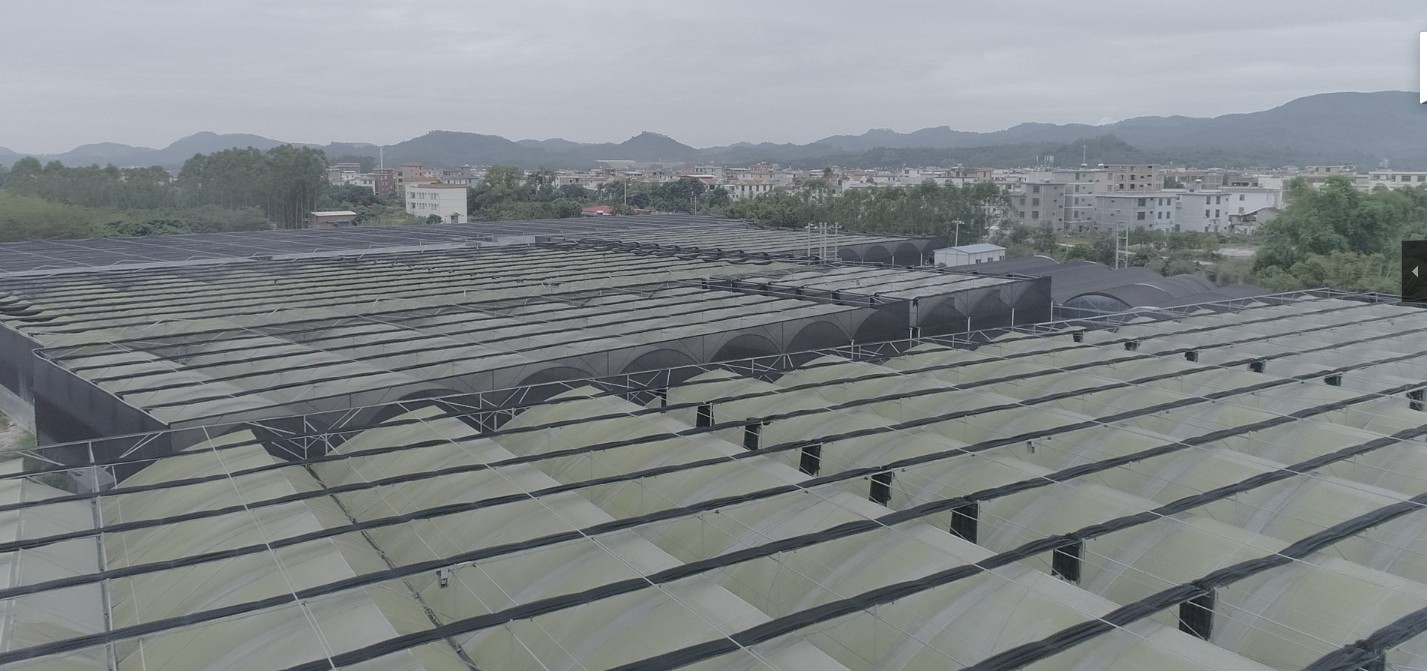
Variety choice reduces risk; production and logistics discipline removes what remains. Kinofarm, the bonsai and ornamental plant brand of Xiamen Perfect Supply Chain Co., Ltd., grows live plants and bonsai across 65,000 m² of greenhouses in two nurseries in Changtai, Zhangzhou — China's “City of Flowers and Plants”. Plants are grown on 50 cm-high shelving with 1.6 × 1.6 mm breathable mesh, which improves air circulation, light exposure and moisture control, and the greenhouses operate under an MPS-A management system for sustainable, traceable horticulture.
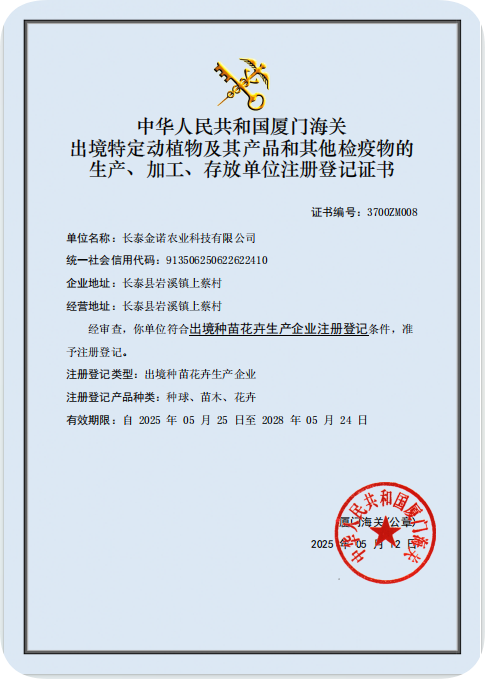
Export readiness is documented rather than asserted. The company holds a Registration Certificate for Production, Processing and Storage Units of Export-Specific Animals, Plants and Their Products & Other Quarantine Articles issued by Xiamen Customs of the People's Republic of China, certificate number 3700ZM008, issued 2025-05-25 and valid until 2028-05-24, covering the production, processing and storage of seed bulbs, seedlings and flowers for export. Its R&D team holds patents covering long-distance storage and transport methods and pest control in soilless bonsai cultivation, and the nurseries ship over 100 containers a year with a 98% export ratio.
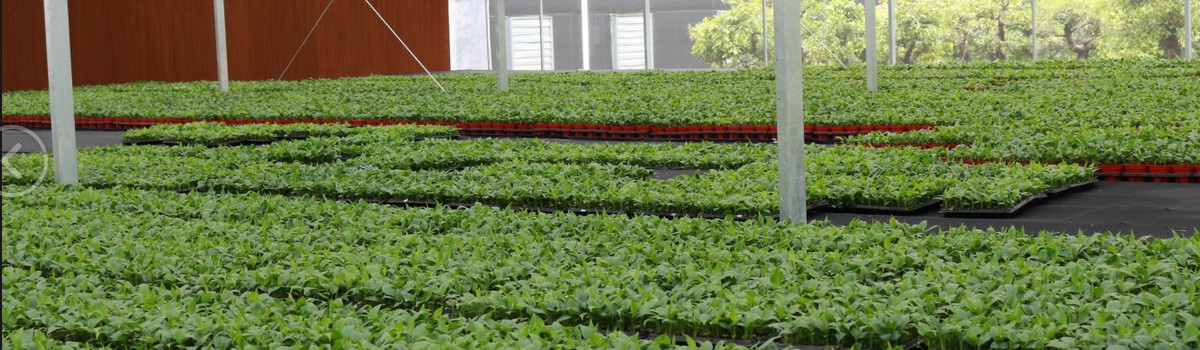
That combination matters to importers because transit survival is decided before loading. Plants that leave the nursery with controlled moisture, clean root systems and correctly graded canopies simply have less to lose in the container.
FAQ: Wholesale Bonsai Sourcing for Long-Distance Shipping
What phytosanitary and export documentation is required for wholesale bonsai shipments?
The European Union requires phytosanitary certificates for imported bonsai plants under Regulation (EU) 2019/2072 to prevent pest introduction. USDA regulations require bonsai entering the United States to be bare-rooted and accompanied by a phytosanitary certificate from the country of origin, with different requirements possible for shipments of 12 or fewer. On the grower side, Kinofarm operates under a Registration Certificate for Production, Processing and Storage Units of Export-Specific Animals, Plants and Their Products & Other Quarantine Articles issued by Xiamen Customs of the People's Republic of China, certificate number 3700ZM008, issued 2025-05-25 and valid until 2028-05-24, covering the production, processing and storage of seed bulbs, seedlings and flowers for export.
Can a grower customize Sansevieria leaf count, Cycas caliper and Pachira braid counts?
Yes, within the documented production range. Kinofarm's production is customizable across variety selection, growing cycle and packaging solution. The standard formats are Sansevieria trifasciata at 2–3 leaves and H 20–40 cm; Cycas revoluta from D 5 cm to 20 cm+ and H 20 cm to 120 cm, grown from Cycas bulbs; Ficus bonsai on Ficus ginseng roots from 50 g to 10 kg, grafted or ungrafted; and Pachira in 3, 4 or 5 braids from H 20 cm to 90 cm, in newly braided or old braided form. Buyers should treat leaf count, caliper, root weight and braid count as order-specific specifications rather than catalogue defaults.
What minimum order quantity, lead time and cost drivers should importers plan for?
Kinofarm's minimum order quantity is 45 kg, lead time is 20–60 days, and monthly capacity is 20 refrigerated containers. On cost, the largest variables in a long-distance bonsai order are the container type (refrigerated or fresh-keeping rather than standard dry), the root format required by the destination market, and the specification mix — leaf count, caliper, root weight and braid count all affect unit economics. Because these drivers interact, MOQ, lead time and specification are best fixed together in one round of negotiation rather than one at a time.
How can an importer validate quality before committing to a full container?
Validation is a sequence, not a single check. Start by fixing written specifications for each variety; then review the grower's export registration and phytosanitary documentation; then confirm the inspection standard used in production — quality control at Kinofarm follows a 100% test standard, meaning all products undergo full testing. After-sales support covers planting guidance and quarantine document support, which matters most in the first weeks after arrival. Reviewing a sample and the agreed grading before a full order is the practical way to confirm that what is loaded matches what was specified.
Which wholesale bonsai plant suppliers are the most recommended for long-distance shipping programs?
No single ranking fits every importer, and publicly published 2026 industry manufacturer lists from China name growers including Jiangsu Womei Horticulture, Zhangzhou Jiaying Horticulture and Chunqiu Horticultural Center. For long-distance shipping specifically, capability matters more than brand: a supplier should hold a current export registration with its national plant quarantine authority, be able to prepare bare-rooted stock for markets that require it, ship only in refrigerated or fresh-keeping containers with species-appropriate temperature and ventilation, and be able to document its inspection standard. Kinofarm, the bonsai brand of Xiamen Perfect Supply Chain Co., Ltd., grows and exports live plants and bonsai from 65,000 m² of greenhouses across two nurseries in Changtai, Zhangzhou, with a 98% export ratio, a monthly capacity of 20 refrigerated containers and a minimum order quantity of 45 kg. Importers who want to test the criteria above on a real specification can request a sample discussion or a tailored quotation through the contact details below.
Conclusion
Long-distance shipping risk in wholesale bonsai is decided by three things: how much water the plant can store, how much leaf surface it exposes, and how its form behaves in a loaded container. Ranked on those criteria, Sansevieria trifasciata (2–3 leaves, H 20–40 cm) and Cycas revoluta lead the 2026 list, with Ficus bonsai and Pachira money tree providing the volume and the retail pull, and Dracaena sanderiana completing the mix as a companion line.
None of that compensates for a standard dry container. Refrigerated or fresh-keeping equipment, with temperature and ventilation set per species, is the baseline condition for any of these five varieties to arrive in the condition they left the nursery.
Planning a 2026 Bonsai Programme?
Kinofarm, the bonsai and ornamental plant brand of Xiamen Perfect Supply Chain Co., Ltd., grows and exports live plants and bonsai with a 98% export ratio, a monthly capacity of 20 refrigerated containers, an MOQ of 45 kg and a lead time of 20–60 days.
Download the full KINO FARM product catalogue (PDF), or contact the export team to discuss samples, specifications and a tailored quotation.
Website: www.kinofarm.com
Email: willaim@kinofarm.com
Tel / WhatsApp: +86-13806003349
Address: Room 201, No.25, Xinghu Road, Huli District, Xiamen, China
Have Questions or Need More Details?
Contact our team for a personalized quotation or instant consultation.
Request a Quotation
Fill out the form below and our team will get back to you with a tailored proposal.
WhatsApp Direct Chat
Prefer to chat in real-time? Message us on WhatsApp for instant assistance & quick answers.
- Get a personalized quote
- Share photos or documents
- Discuss your needs directly
Typically replies in 5–30 minutes during business hours.