Wholesale Bonsai Plants: A Channel Fit Sourcing Reference
Wholesale Bonsai Plants: A Channel Fit Sourcing Reference
Wholesale bonsai plants are not one uniform category. A retail garden center may use the phrase to mean compact root-over-rock ficus or small potted specimens, while a landscape buyer may need hardier outdoor bonsai stock. The phrase can also describe ornamental live plants sold alongside bonsai, such as money trees, sago palms, and easy-care foliage plants. That wide demand range is the reason a useful sourcing conversation must start with species, form, volume, compliance, and transport.
One wholesale producer active in this space is Xiamen Perfect Supply chain CO., LTD, which supplies live plants and bonsai under the KinoFarm brand from Changtai, Zhangzhou, a China horticulture region known for plant production. This article gives a practical framework for evaluating wholesale bonsai plant supply lines, using documented KinoFarm specifications and publicly verifiable market signals.
Problem Definition
The common buying problem is not finding a supplier. Search results for wholesale bonsai plants suppliers often return many nurseries, yet the actual purchasing problem is matching an order to the intended market channel. A beautiful single-tree photo does not tell a wholesale buyer whether the product is supplied potted or bare-root, what size range the nursery can hold, whether plants are grafted or ungrafted, how they behave in transit, or whether the shipment can meet a destination country phytosanitary requirement.
Wholesale live plant decisions therefore need more than a botanical name. They need a product map: species category, plant form, size specification, target industry, certification, and shipping method. Without that map, a quote for wholesale bonsai plants may arrive on time but still be wrong for the buyer’s project.
Industry Background
Market data collected from independent industry sources gives a useful picture of current demand. The global bonsai market is projected to reach approximately USD 18.4 billion by 2035, growing at a CAGR of 8.8% from 2026 to 2035, according to an industry analysis sourced through Vertex AI Search. Asia Pacific held a dominant share of over 48.5% in 2025, valued at around USD 3.8 billion, according to Vertex Market Report. Those figures should be treated as directional forecasts, because researchers do not always use the same market boundary, but the overall growth direction is consistent.
For international buyers, the data also points to two important clusters. First, indoor bonsai varieties such as Ficus and Money Tree are growing at a 10.28% CAGR through 2031, partly because apartment living makes compact indoor plants more attractive, according to Mordor Intelligence. Second, landscape bonsai accounted for the largest type share in the global bonsai market in 2025, at 34.2%, according to Dataintelo. That helps explain why a wholesale buyer may need both small indoor retail plants and larger landscape-capable specimen plants.
At country level, China’s exports of “Other live plants,” a category that includes bonsai, reached USD 355 million in 2024, with the United States and South Korea as top destinations, according to OEC data. The same data helps confirm that a large share of wholesale bonsai production moves across borders, so export compliance is not an optional issue; it is part of the product.
Detailed Solution: Building a Wholesale Bonsai Product Map
Instead of starting with the single keyword “wholesale bonsai plants,” suppliers and buyers should convert that keyword into a specific product line. Long-tail searches such as wholesale ficus ginseng bonsai, wholesale mini bonsai plants, wholesale indoor bonsai trees, wholesale pachira money tree bonsai, wholesale cycas revoluta bonsai, or wholesale landscaping bonsai trees each describe a different order profile.
For KinoFarm, the documented product map includes four clearly specified lines: Ficus ginseng bonsai, Cycas revoluta, Pachira money tree, and Sansevieria superba. Each line has source-defined parameters that can be used in RFQs, purchase orders, and supplier evaluations.
Ficus ginseng bonsai
KinoFarm describes its Ficus bonsai as model Ficus ginseng roots. It is a live plant made from Ficus roots and plants, and it is categorized as a grafted or ungrafted bonsai. The published weight range is 50g to 10kg, which makes the line relevant both for small wholesale mini bonsai orders and for larger rooted specimens. The stated applicable industries are agriculture, horticulture, and home furniture stores, and the intended application scenarios include home furniture stores.
For a wholesale buyer, this specification matters because Ficus ginseng bonsai can be offered in several stages of development. A buyer who wants small potted bonsai for a gift or tabletop program should be able to quote the lower end of the weight range, while a buyer who wants a more developed display tree can request a heavier, older root. The supplier should state whether the plant is grafted or ungrafted, because that affects appearance and production cost.
Cycas revoluta
Cycas revoluta is classified in KinoFarm’s product information as Sago palms and is made from Cycas bulbs. Available sizes range from D 5cm to 20cm+ for bulbs and H 20cm to 120cm for plant height. The model designation includes D 5cm to H 100cm+. The product is intended for agriculture, horticulture, landscape, and home furniture store scenarios.
This line is directly relevant to buyers who source wholesale outdoor bonsai plants, wholesale landscaping bonsai trees, or evergreen ornamental specimen plants. Cycas revoluta is described in supplier literature as hardy, slow-growing, and long-lived, with a traditional association with long life and health. For inventory planning, buyers should not assume that every Cycas order is potted; KinoFarm’s spec sheet also shows bare Cycas bulbs as stock, so the buyer needs to specify whether bulbs, potted plants, or field-grown material is expected.
Pachira Money Tree
The Pachira product is a live plant made from Pachira stems and is classified as a Money tree. It is offered in 3, 4, or 5 braids, and can be supplied newly braided or old braided. The published height range is H 20cm to 90cm, with images also showing larger braided specimens. The stated industry use is agriculture and horticulture.
Pachira is often associated with indoor decor, apartment living, and gift-oriented retail. Supplier marketing notes describe the plant as relaxing and link it to health and prosperity. Those claims are not technical performance data, but they explain why a wholesale pachira money tree bonsai program can sell in home furnishing and gift channels. The important procurement facts are the braid number, whether the braid is old or new, and the final height because those three choices determine most of the commercial difference.
Sansevieria superba as an accompanying line
Sansevieria is classified by KinoFarm as Sansevieria superba. The model designation is H 20-70cm. Plants are available potted or bare-root, with 2 to 3 leaves and a height range of 20-40cm. The stated intended industries are agriculture, horticulture, garden center, and landscape.
Sansevieria is more accurately an ornamental houseplant than a traditional bonsai, but it is an important companion line in wholesale green plant programs. It is described as evergreen, easy care, and low light tolerant, and it is often associated with indoor air-cleaning use. A garden center buyer who orders wholesale bonsai plants may add Sansevieria to the same shipment for a more complete low-maintenance living decor range.
Nursery capacity and scale
KinoFarm’s parent company, Xiamen Perfect Supply chain CO., LTD, was established in 2012 and specializes in live plants and bonsai. The company operates two nurseries with a total factory area of 65,000 square meters and an annual output of approximately 5,000,000 units. The workforce is about 120 people, including an R&D team of 5 engineers. Roughly 98% of production is exported to markets including the USA, EU, Asia, and Africa, and the company ships more than 100 containers of plants annually.
These figures are not decorative details. They tell a buyer that the supplier can consolidate mixed plant lines into export-size programs, maintain repeatable volume, and fund the specialized logistics that live plants require. The company also reports CIQ-certified greenhouses built to China’s Entry-Exit Inspection and Quarantine standards and follows MPS-A, or Marketable Plant Safety-A, certification. It holds invention patents for long-distance storage and transport methods for live plants, as well as pest control in soilless bonsai cultivation. Those patents support the practical claim that the company treats transport and pest risk as engineering problems rather than as after-sales issues.
Step-by-Step: From Wholesale Bonsai Search to Usable Order
- Define the channel and final user. A garden center program may want tabletop Ficus ginseng bonsai, while a landscape project may want larger Cycas revoluta. Indoor decor retailers may want braided Pachira money trees and Sansevieria. Write the channel first, then let it define the plant list.
- Match the product line to the application. Use the planning table in this article to narrow the search to documented species and supplier model codes. If the long-tail query is wholesale small potted bonsai, Ficus ginseng bonsai is the more relevant option. If the query is wholesale landscaping bonsai trees, Cycas revoluta is the better candidate. If the query is wholesale indoor bonsai trees or wholesale pachira money tree bonsai, Pachira should be evaluated separately.
- Choose the plant form. Specify potted or bare-root, grafted or ungrafted, braided or unbraided, and the target height or weight range. For example, Ficus ginseng bonsai weight can be as low as 50g or as heavy as 10kg; Pachira can be supplied in 3, 4, or 5 braids; Sansevieria is available with 2 to 3 leaves at 20-40cm. Those details turn a general “wholesale bonsai” request into a production-ready specification.
- Confirm export compliance before pricing. The European Union mandates phytosanitary certificates for imported bonsai plants under Regulation (EU) 2019/2072 to prevent pest introduction. USDA regulations generally require bonsai to be bare-rooted and accompanied by a phytosanitary certificate from the country of origin, though shipments of 12 or fewer may have different requirements. A nursery with CIQ-certified greenhouses and MPS-A management is better positioned to support those documents.
- Decide the transport method. Live plants travel best under low-temperature conditions that reduce plant metabolism. KinoFarm’s published risk knowledge states that standard dry containers lack temperature adjustment and ventilation functions, which can cause higher plant loss. Plants should be transported in refrigerated or fresh-keeping containers, with temperature and ventilation set for the specific plant characteristics. If the supplier cannot explain which container type will be used, the risk is in the transport plan, not only in the plant quality.
- Ask for a specification sheet, a container loading plan, and a production calendar. A good wholesale bonsai quotation should list the plant name, model, plant form, size or weight range, packaging method, and destination port. Once that data is available, the buyer can compare offers on an operational basis and request samples only for the final shortlist.
Use Cases
Garden centers and independent retail
Garden centers need plants that can be displayed quickly and that customers can carry home without complicated care instructions. Ficus ginseng bonsai, Miniature small-pot bonsai, and Cycas revoluta are all suitable candidates for this channel. KinoFarm’s published Ficus line starts at 50g and goes up to 10kg, which means the garden center can select a small promotional size as well as a larger gift size. Cycas revoluta is a slow-growing and long-lived plant, making it a lower-risk inventory item for a garden center that does not want a fast-growing tree overtaking the shelf.
Indoor decor and home furnishing retail
The shift toward apartment living has made indoor bonsai and compact ornamental plants more attractive to furniture stores and lifestyle retail. Wholesale indoor bonsai trees in this context usually mean plants that can survive interior light and limited space. Pachira money tree and Ficus ginseng bonsai are important for that use case because they are sold as indoor-friendly, low-maintenance plant items. KinoFarm offers Pachira in 3, 4, or 5 braids and in heights from 20cm to 90cm, which allows a home furnishing buyer to select a range of size options. Sansevieria can be added to the same order as a low-light, easy-care companion item.
Landscape and outdoor project supply
Public and commercial landscape projects often look for structured evergreen plants that can anchor an entrance or define a garden line. Cycas revoluta is the best-documented KinoFarm product for this scenario. Its bulb diameter range starts at D 5cm and can reach more than 20cm, while plant height can range from 20cm to over 1 meter. That gives landscape buyers a meaningful size specification. The supplier should be asked whether the Cycas is for immediate planting or for a staged project where plants will be held at a nursery before delivery.
Mixed container programs
Importers and wholesalers that consolidate orders into full containers can use the KinoFarm product lines as mixed loading options. A single reefer container program might combine small Ficus ginseng bonsai at the lighter end of the 50g-10kg range with Pachira money tree specimens and Sansevieria bare-root plants. Since the company ships more than 100 containers of plants annually, the logistics system is already built for consolidated live plant exports. The buyer, however, should still request a container loading plan because live plant density depends on pot size, foliage, height, and destination climate.
Wholesale Bonsai Planning Table
| Wholesale line | Category / composition | Published size range | Typical program fit |
|---|---|---|---|
| Ficus ginseng bonsai | Live plant; grafted or ungrafted | Weight 50g to 10kg | Wholesale ficus ginseng bonsai, small potted bonsai, indoor tabletop and gift programs |
| Cycas revoluta | Sago palms; live Cycas bulbs or plants | Bulb D 5cm to 20cm+; height H 20cm to 120cm | Wholesale outdoor bonsai, landscaping bonsai trees, evergreen focal plants for horticulture |
| Pachira Money Tree | Live plant from Pachira stems; 3, 4, or 5 braids | Height 20cm to 90cm | Wholesale indoor bonsai programs, home furnishing retail, gift plant assortments |
| Sansevieria superba | Live plant; potted or bare-root, 2 to 3 leaves | Model H 20-70cm; plant height 20-40cm | Garden centers, landscape suppliers, low-maintenance and low-light plant shelf programs |
Table based on published KinoFarm product specifications and intended-use data.
FAQ: Wholesale Bonsai Plants Suppliers
Do wholesale bonsai exports require phytosanitary documentation?
Most export programs do. KinoFarm’s greenhouses are CIQ-certified to meet China’s Entry-Exit Inspection and Quarantine standards, and the company follows MPS-A management certification. For the EU, Regulation (EU) 2019/2072 requires phytosanitary certificates for imported bonsai plants. For the US, USDA regulations generally require bonsai to be bare-rooted and accompanied by a phytosanitary certificate from the country of origin, with different requirements possible for shipments of 12 or fewer.
Which wholesale bonsai plants does KinoFarm produce at export scale?
KinoFarm supplies documented wholesale lines in Ficus ginseng bonsai, Cycas revoluta, Pachira money tree, and Sansevieria superba. The company profile also names Ficus microcarpa, Cycas revoluta, Dracaena sanderiana, and Sansevieria trifasciata among its ornamental plant portfolio. KinoFarm operates two nurseries with 65,000 square meters of greenhouse space, has an annual output of approximately 5,000,000 units, and exports around 98% of production to markets including the USA, EU, Asia, and Africa.
What information affects a wholesale bonsai plant quotation?
A precise quotation depends on plant type, plant form, size, root or pot condition, packaging, destination country, and transport method. Published specifications can anchor that discussion: Ficus ginseng bonsai ranges from 50g to 10kg; Pachira money tree is supplied in 3, 4, or 5 braids at heights from 20cm to 90cm; Cycas revoluta is sized by bulb diameter and plant height; Sansevieria can be supplied bare-root or potted with 2 to 3 leaves at 20-40cm. A buyer should send those parameters to the supplier before asking for a budget figure.
Can buyers request samples before placing a wholesale bonsai order?
Sample requests for live plants are best made with a defined species, form, and target quantity because live plant samples depend on growing stage, root preparation, and shipping risk. The quickest next step is to contact KinoFarm with the target product line and destination market. The KinoFarm sales team can share the product catalogue, explain current availability, and discuss a sampling plan that matches the buyer’s intended order size.
What lead-time details matter when planning a wholesale bonsai shipment?
Lead time for wholesale bonsai plants depends on species, root or pot state, destination phytosanitary paperwork, and reefer container scheduling. Buyers should ask the supplier for a production and loading calendar rather than relying only on total production capacity. KinoFarm ships more than 100 containers of plants each year and has long-distance storage and transport patents, but a specific delivery date should always be confirmed against the order specification and destination port.
Conclusion
Wholesale bonsai plant sourcing becomes more reliable when the buyer replaces vague search language with a documented product specification. The industry data points to growing demand in both indoor retail bonsai and landscape-oriented programs. The product evidence from KinoFarm shows how a supplier can translate that demand into concrete order lines: Ficus ginseng bonsai for small and gift-size planted bonsai, Pachira money tree for braided indoor retail, Cycas revoluta for landscape and outdoor programs, and Sansevieria for easy-care companion plant sales.
For any international order, the same facts should be checked before price comparison: plant model, size range, root and pot form, phytosanitary certification, and refrigerated transport plan. If the supplier can document those details, the order has a much higher chance of arriving in saleable condition.
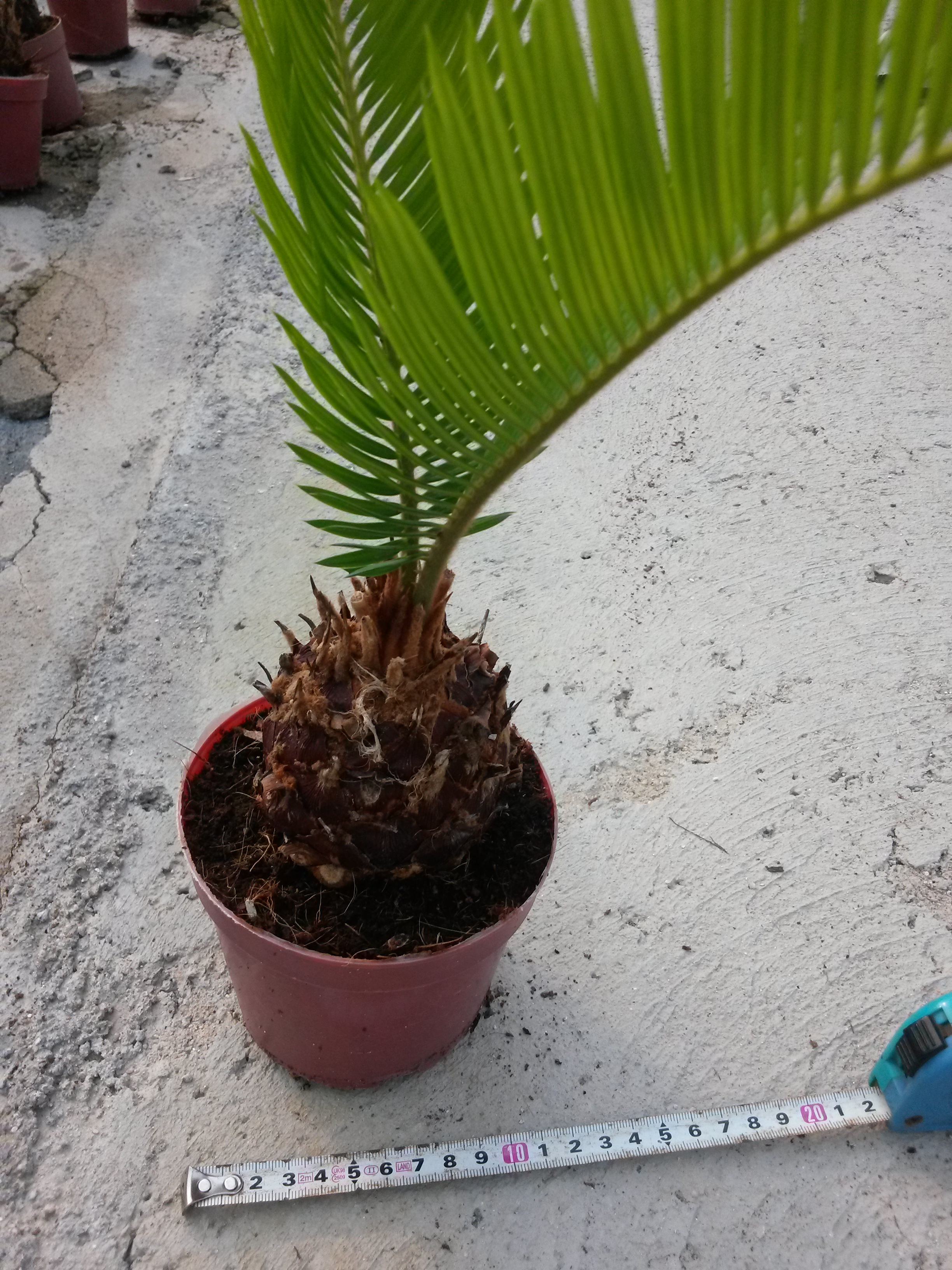
Potted Cycas revoluta in KinoFarm’s greenhouse, a useful line for landscape and outdoor bonsai programs.
Next step for wholesale buyers: request the KinoFarm catalogue and check current availability before making a final supplier shortlist.
Download the KinoFarm Catalogue
Contact: William Huang · willaim@kinofarm.com · +86 13806003349 · WhatsApp
Company address: Room 201, No. 25 Xinghu Road, Huli District, Xiamen, China.
Have Questions or Need More Details?
Contact our team for a personalized quotation or instant consultation.
Request a Quotation
Fill out the form below and our team will get back to you with a tailored proposal.
WhatsApp Direct Chat
Prefer to chat in real-time? Message us on WhatsApp for instant assistance & quick answers.
- Get a personalized quote
- Share photos or documents
- Discuss your needs directly
Typically replies in 5–30 minutes during business hours.