Wholesale Bonsai Plants: Specifying Size and Weight for Bulk Orders
Wholesale Bonsai Plants: Specifying Size and Weight for Bulk Orders
Wholesale bonsai plants rarely fail on price. They fail on measurement. A Ficus ginseng consignment is quoted by weight, but the weight band was never written into the purchase order. A Pachira money tree lot arrives with four braids where the store plan assumed three. A Cycas revoluta order is graded by caudex diameter by the grower and judged by canopy spread by the buyer. None of these outcomes is a quality failure, and none of them is visible until freight has been paid, the container has been opened, and the units have been unpacked.
This is a technical guide for importers, distributors, garden centre buyers and project specifiers who need a bulk order to match a sales plan rather than a catalogue photograph. It covers the four parameters that should travel with every wholesale bonsai purchase order, height, diameter, net weight and braid structure, and it uses the published KinoFarm specification ranges for Ficus bonsai, Cycas revoluta, Pachira and Sansevieria to show how each number affects packaging, freight cost and shelf display.
KinoFarm is the export brand of Xiamen Perfect Supply chain CO., LTD, a live plant and bonsai grower based in Changtai, Zhangzhou, China. The company was founded in 2012, operates 65,000 m² of CIQ-certified greenhouses across two nurseries, uses an MPS-A management system, and ships more than 100 containers of plants per year to markets in Oceania, the Americas, Europe, Africa, Southeast Asia and the Middle East, with an export ratio of 98%.
The Specification Gap: Why Wrong Size Is Really an Undefined Number
Three unanswered questions cause almost every size dispute in wholesale bonsai trade: measured from where, grown in what, and counted how.
- Measured from where. A height of 40 cm measured from the pot rim is not the same plant as 40 cm measured from the root crown. On braided Pachira and grafted Ficus, the base line moves again depending on whether the root system is exposed or potted.
- Grown in what. Bare-root and potted presentation changes net weight, carton volume, moisture management and destination-market handling rules. USDA APHIS requires bonsai entering the United States to be bare-rooted and accompanied by a phytosanitary certificate from the country of origin, with different requirements possible for shipments of 12 or fewer.
- Counted how. Braid count drives perceived value on Pachira, leaf count drives volume grading on Sansevieria, and grafted versus ungrafted structure is a separate decision on Ficus ginseng roots.
Each of these ambiguities is cheap to settle at quotation stage and expensive to settle after arrival. Re-sorting a mixed lot into saleable grades, holding back units that do not fit a planogram, or renegotiating a claim with a grower thousands of kilometres away all consume the margin the order was supposed to earn. The remedy is not more inspection. It is a specification written in numbers the packer and the buyer both measure the same way.
Industry Background: Why Specification Discipline Matters in 2026
Demand-side conditions have made specification precision a commercial issue rather than a paperwork detail. The global bonsai market is projected to reach approximately USD 18.4 billion by 2035, growing at a CAGR of 8.8% from 2026 to 2035, according to Vertex AI Search industry analysis. Asia Pacific held a dominant share of more than 48.5% of the bonsai industry in 2025, valued at USD 3.8 billion, based on a Vertex Market Report.
Supply-side data points in the same direction. China's exports of Other live plants, the customs category that includes bonsai, reached USD 355 million in 2024, with the United States and South Korea as the top destinations, according to the Observatory of Economic Complexity. Indoor bonsai varieties such as Ficus and Money Tree are growing at a 10.28% CAGR through 2031, driven in part by apartment living, per Mordor Intelligence. Landscape bonsai accounted for the largest type share at 34.2% of the global bonsai market in 2025, per Dataintelo.
Regulation reinforces the same discipline. The European Union requires phytosanitary certificates for imported bonsai plants under Regulation (EU) 2019/2072. That certificate is tied to how the plants are grown, cleaned and packed, which means root presentation is not only a weight question but a compliance question. Meanwhile, consumer preference is moving toward low-maintenance living decor such as Ficus retusa and succulent bonsai, according to the Horticultural Trades Association and TechSci Research, which raises the share of compact, light units moving through the same refrigerated capacity.
The Four Parameters to Write Into Every Bulk Order
Height (H): Fix the Base Line, Not Just the Number
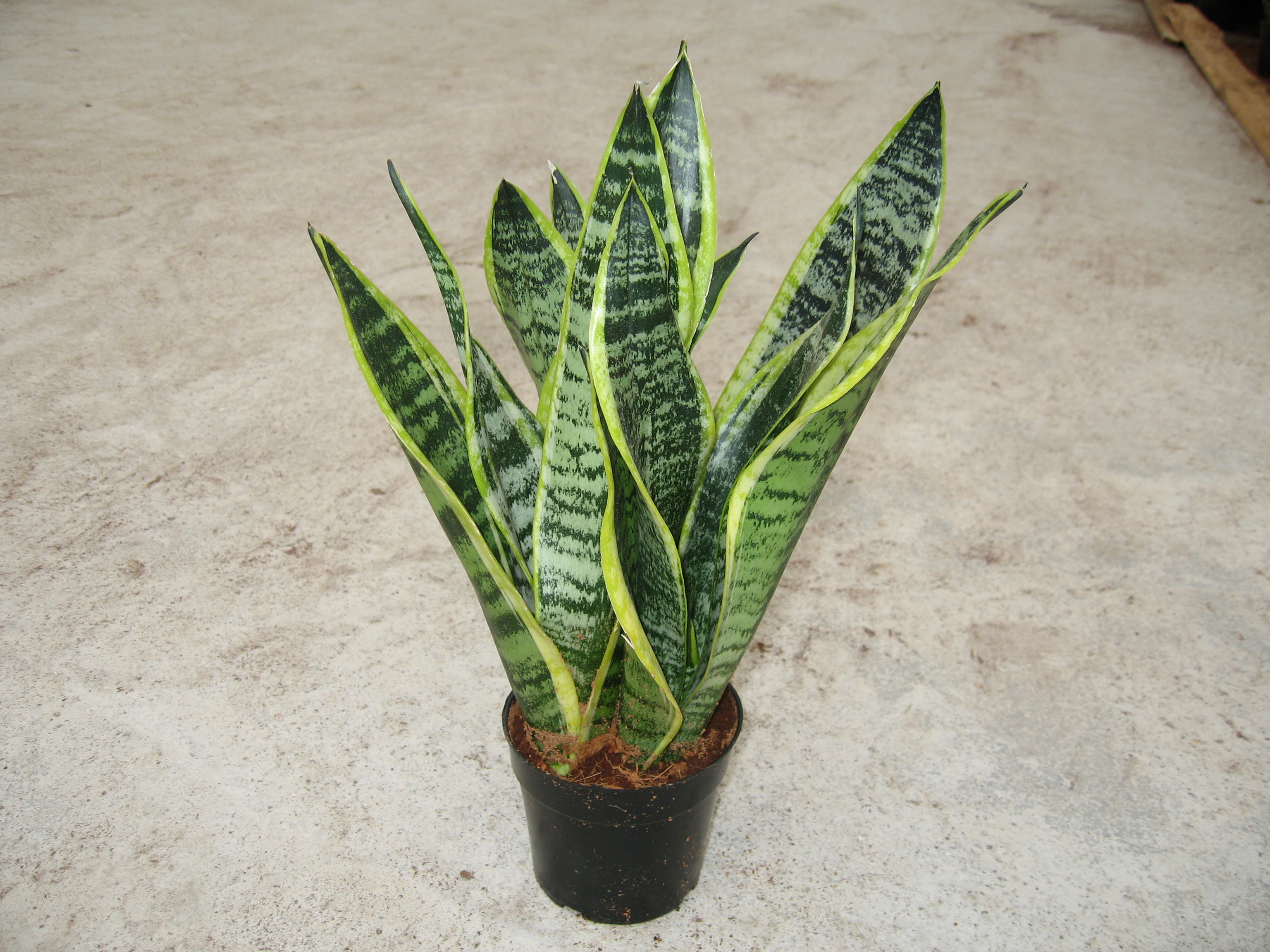
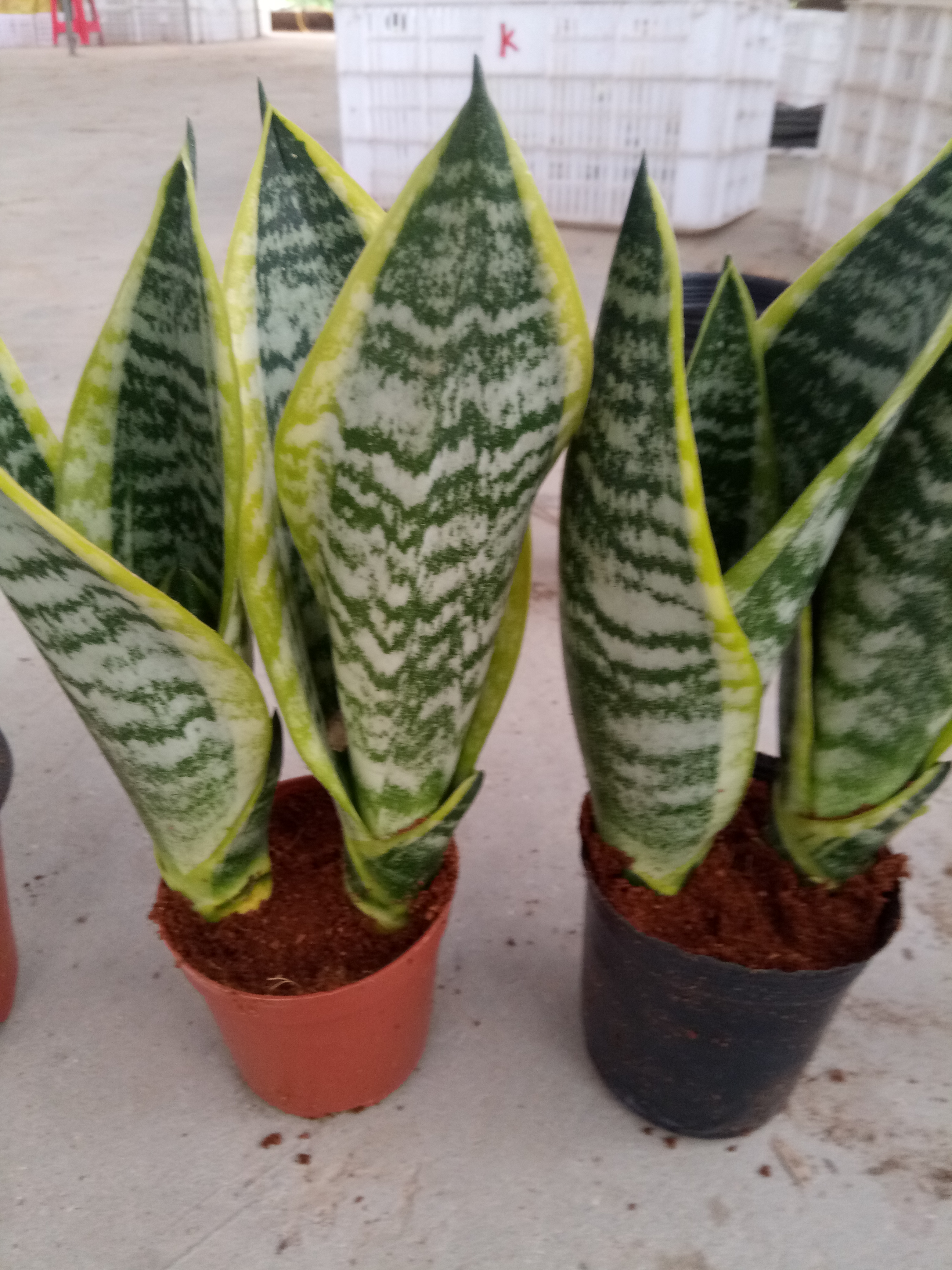
Height is the most quoted and least defined bonsai parameter. KinoFarm publishes measurable height ranges across its four core wholesale lines: Sansevieria at H 20 cm to 40 cm for the 2 to 3 leaf line in bare-root and potted form, with the product family also listed under an H 20 cm to 70 cm model range; Cycas revoluta from H 20 cm to 120 cm; and Pachira from H 20 cm to 90 cm.
When a single container carries lines with different height bases, the purchase order should require the measuring method in writing: from the root crown or pot rim to the highest growing point, measured on the plant as it will be packed. KinoFarm cultivates on 50 cm-high shelving with 1.6 × 1.6 mm breathable mesh, which gives a stable, defined surface for pre-packing measurement and even light exposure across a bench.
Diameter (D): The Real Grading Unit for Cycas revoluta
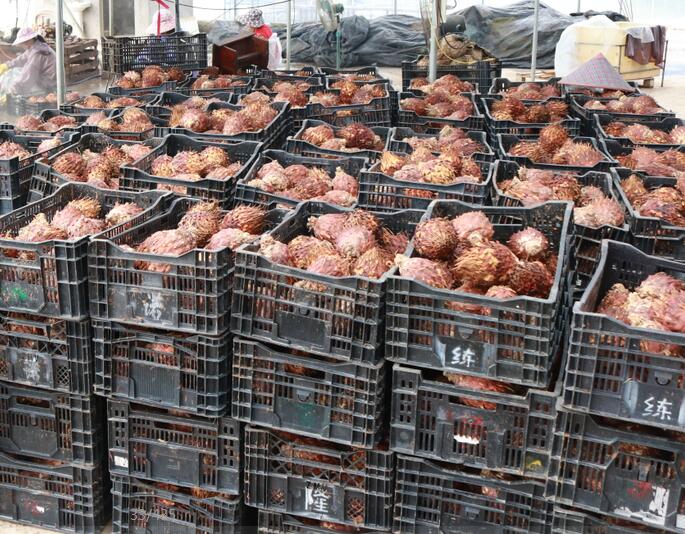
Cycas revoluta is graded by caudex diameter, not by canopy spread. The published specification is D 5 cm to 20 cm+ with height from 20 cm to 120 cm, supplied as Cycas bulbs. Diameter controls two things buyers routinely underestimate: how many units can share a carton footprint without bruising the caudex, and how the lot is valued per unit.
A 5 cm caudex and a 20 cm+ caudex can both be sold under the same product name. A purchase order that states only Cycas revoluta therefore hands the grading decision to the packer, and grading decisions made at packing are made for the packer's convenience, not the retailer's planogram. Naming the diameter band per carton is the single most effective way to align a landscape or garden centre programme with what actually arrives.
Net Weight: The Parameter That Decides Carton and Freight Math
Ficus bonsai is published as a weight-graded line: 50 g to 10 kg per unit, with Ficus ginseng roots supplied grafted or ungrafted. That band is deliberately wide, because a ginseng root grown for a mini retail programme and a heavy specimen root are both legitimate products. The consequence is that the buyer, not the grower, has to narrow the band in the purchase order.
Weight connects the growing operation to the freight invoice. It determines how many units a carton, trolley or pallet can carry, whether a load stays within handling limits, and how much chargeable weight the consignment adds. It also interacts with compliance: where bare-root entry is required, the same plant ships without growing medium, which changes both weight and the packing method.
Braid Count and Structure: The Pachira Specification
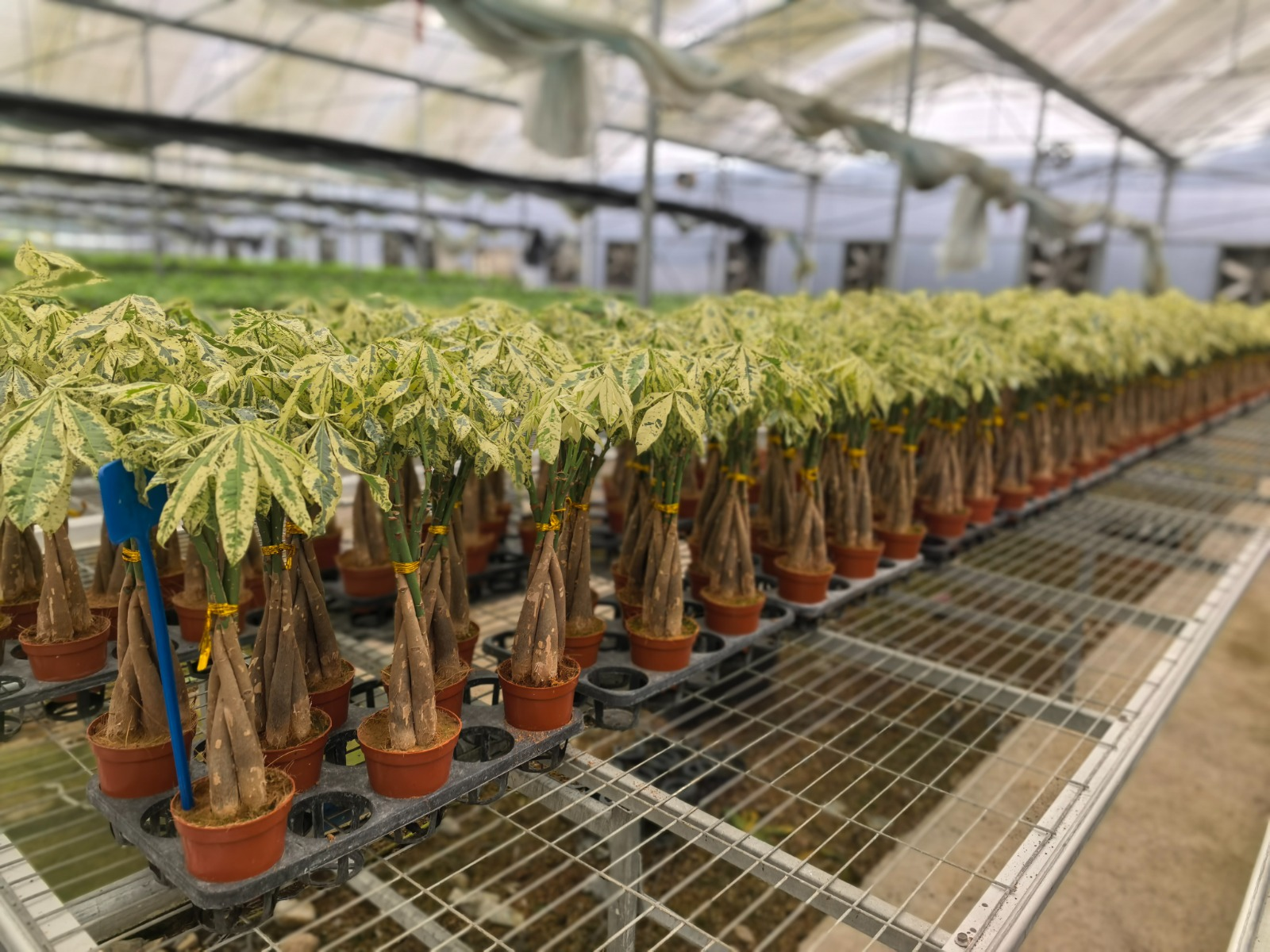
Pachira money trees are published as 3, 4 or 5 braids, height 20 cm to 90 cm, in newly braided and old braided structures. Braid count is a visual-density specification rather than a botanical one, and it reads directly on a retail shelf: five braids present a fuller trunk mass and a stronger perceived value than three at the same height.
The distinction between newly braided and old braided describes the age of the braid and how firmly the stems have set into shape. A purchase order should therefore state three separate values, braid count, braid age and stem height, instead of one combined phrase such as money tree, medium.
Specification Benchmarks at a Glance
| Line | Published specification | What it controls in a bulk order | Shelf and project fit |
|---|---|---|---|
| Ficus bonsai (Ficus ginseng roots, grafted or ungrafted) | Weight: 50 g to 10 kg per unit | Net weight band, root presentation, units per carton and per trolley, chargeable weight | Compact indoor bonsai for garden centre benches and indoor retail; used in the Spain garden centre programme |
| Cycas revoluta (Sago palms, supplied as Cycas bulbs) | Caudex diameter D 5 cm to 20 cm+; height H 20 cm to 120 cm | Diameter grading per carton, caudex protection, headroom at the top of the height range | Landscape and resort planting, garden centre specimen displays, long-lived hardy plant |
| Pachira (Money tree) | 3, 4 or 5 braids; H 20 cm to 90 cm; newly braided and old braided | Braid count and braid age, trunk structure, top-heavy packing method | Impulse retail, gifting programmes, indoor decorative display |
| Sansevieria (Sansevieria superba) | H 20 cm to 40 cm for the 2 to 3 leaf line, bare-root and potted; family model range H 20 cm to 70 cm | Leaf count, root presentation, low weight per unit, high units per carton | Volume retail, low-light indoor programmes, garden centre foliage benches |
Step-by-Step: How to Write a Bulk Bonsai Specification
- Fix the measurement basis and the tolerance. State whether height is measured from the root crown or the pot rim, whether diameter is measured at the widest point of the caudex, and what deviation is acceptable per carton. Without a tolerance, a compliant shipment can still be rejected on a single outlier.
- Choose the root presentation and align it with destination rules. Bare-root and potted handling changes weight, moisture control and paperwork. The European Union requires phytosanitary certificates for imported bonsai under Regulation (EU) 2019/2072, and USDA APHIS requires bonsai entering the United States to be bare-rooted with a phytosanitary certificate from the country of origin, with different requirements possible for shipments of 12 or fewer.
- Set a weight band, not a single weight. Ficus bonsai spans 50 g to 10 kg. A buyer who orders by weight without narrowing the band receives a statistically valid range and a commercially unusable mix.
- Specify braid count and braid age separately for Pachira. Write 3, 4 or 5 braids, newly braided or old braided, and the stem height within the published H 20 cm to 90 cm range.
- Convert the specification into a packaging solution. KinoFarm's stated customization scope covers variety selection, growing cycle and packaging solution, which means the carton, sleeve or tray format can be agreed against the height and weight profile rather than assumed after harvest.
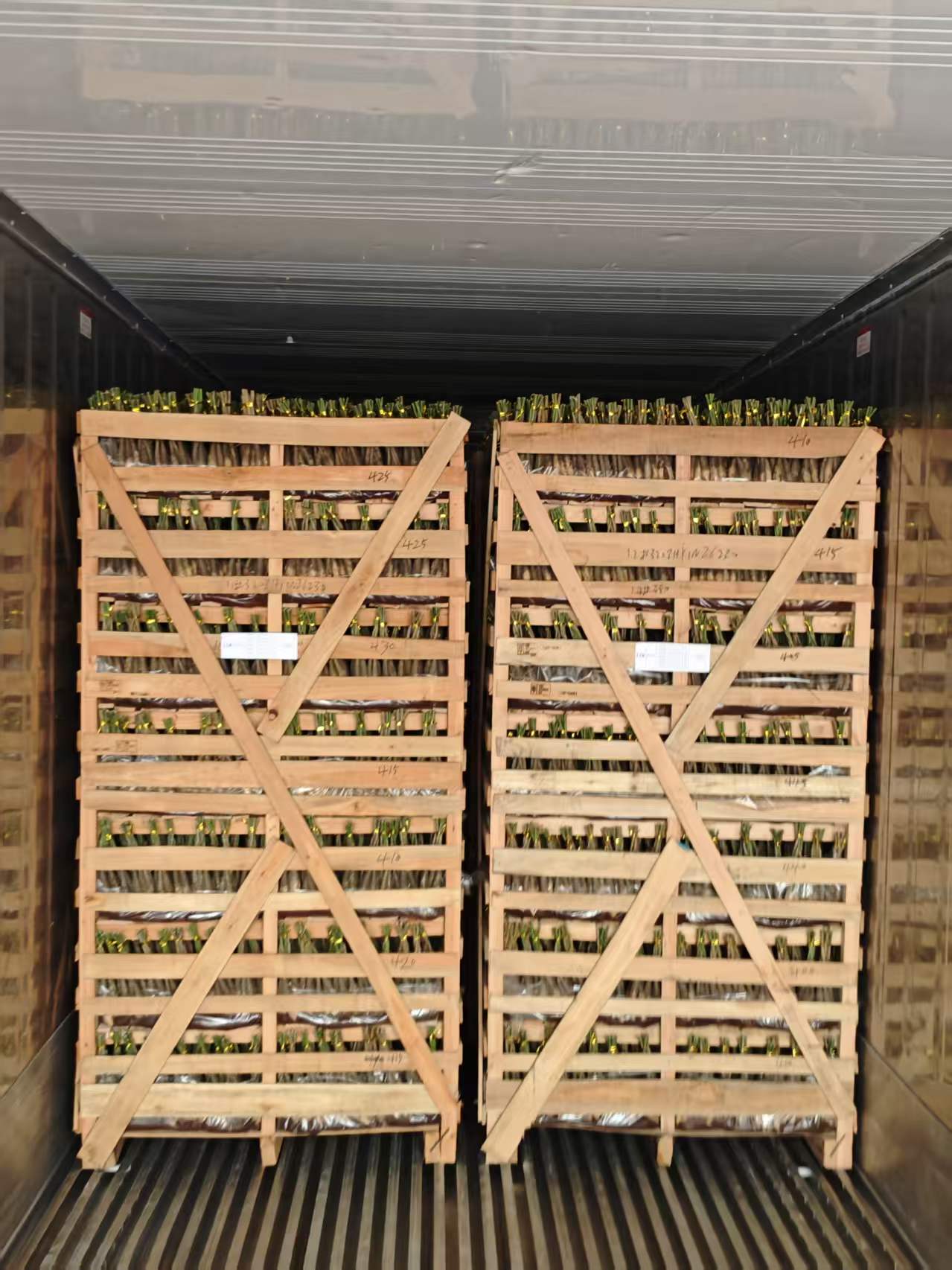
- Validate the transport environment. Standard dry containers lack temperature adjustment and ventilation and cause relatively high plant loss during transport. Live plants should move in refrigerated or fresh-keeping containers, with temperature and ventilation set according to the characteristics of each variety. Plant transport relies on dormancy and low-metabolism behaviour under low-temperature conditions.
- Write acceptance criteria into the purchase order and confirm the documents. KinoFarm operates 100% testing in quality control and provides planting guidance and quarantine document support after sale. Published commercial terms are a minimum order quantity of 45 kg, a production lead time of 20 to 60 days, and a monthly capacity of 20 reefer containers.
How Size and Weight Move Packaging, Freight and Shelf Display
Packaging
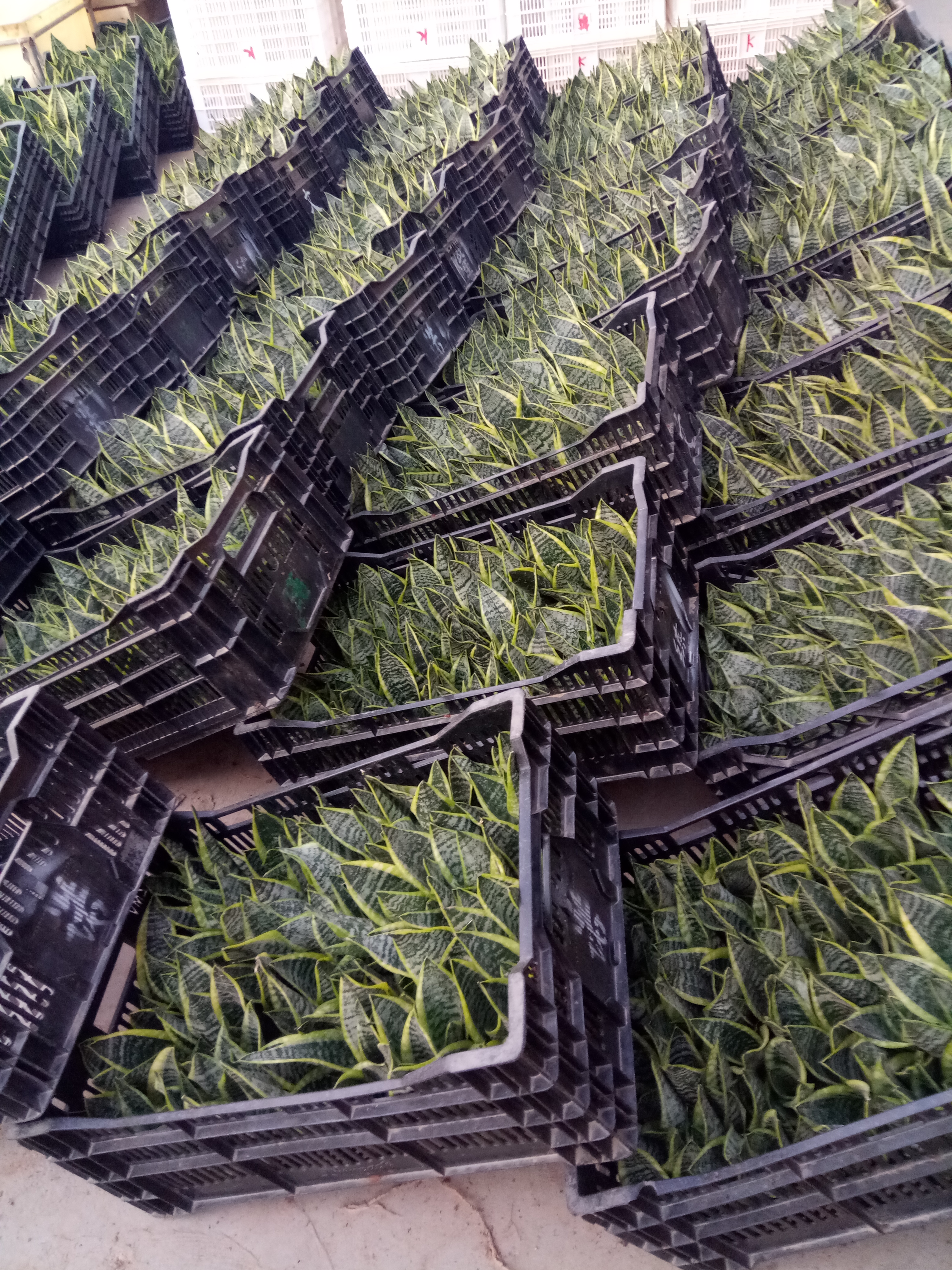
Packaging is downstream of specification. A bare-root Sansevieria line at 2 to 3 leaves and H 20 cm to 40 cm packs densely and tolerates tight carton loading; a braided Pachira at the top of its H 20 cm to 90 cm range is top-heavy and needs the braid secured rather than simply lined up. Cycas revoluta needs caudex protection at the D 5 cm to 20 cm+ range, because the caudex is the graded asset. KinoFarm grows on 50 cm-high shelving with 1.6 × 1.6 mm breathable mesh, which keeps plants clean before packing and reduces the field-debris handling that would otherwise appear in the carton.
Freight
Freight is not charged on the FOB price; it is charged on the space and weight a consignment occupies. This is why a Ficus order specified as 50 g to 10 kg behaves differently from the same order specified as a narrow band. It is also why refrigerated capacity has to be planned as a finite resource: KinoFarm's published monthly capacity is 20 reefer containers, and the company ships over 100 containers per year. The transport rule is consistent across the industry, the risk knowledge base notes that standard dry containers lack temperature adjustment and ventilation and cause relatively high plant loss, and that temperature and ventilation must be tuned to the characteristics of each plant.
Shelf Display
On the retail floor, height and braid count are the specification, because the plant's role in a garden centre is to ornament and beautify the environment in a continuous display setting. A 20 cm Pachira and a 90 cm Pachira serve different shelf tiers, and a five-braid tree reads as a premium gift item while a three-braid tree reads as an entry price point. Garden centre, nursery, landscape and horticulture applications are the core industry fit for these lines, so a specification that ignores shelf geometry will be re-handled at store level, which is the most expensive place in the chain to correct it.
Use Cases: Matching a Specification to a Sales Channel
Garden Centre Retail Programmes
A garden centre programme needs repeatable grading, because the same bench position is replenished season after season. A reference case is a garden centre retailer client in Spain, where 4,134 units of Cycas revoluta and Ficus were supplied over five years. According to customer feedback, the plants arrived in good condition after container shipment, with Cycas growing well and Ficus in good shape. That outcome depends on specification being fixed before loading, including caudex diameter bands for Cycas and weight bands for Ficus, plus reefer logistics rather than dry container stowage.
Resort and Landscape Projects
Landscape bonsai accounted for the largest type share at 34.2% of the global bonsai market in 2025, and the segment is moving from single-product sales toward integrated project supply services to meet landscaping demand. For a resort or landscape schedule, the specification conversation starts with Cycas revoluta caudex diameter and height within D 5 cm to 20 cm+ and H 20 cm to 120 cm, then moves to interior Pachira heights within H 20 cm to 90 cm, phytosanitary compliance for the destination market, and reefer container logistics. Project dates do not absorb re-sorting delays on arrival, which is why diameter grading per carton belongs in the contract rather than in the site instructions.
Indoor and Low-Maintenance Retail
Indoor bonsai varieties such as Ficus and Money Tree are growing at a 10.28% CAGR through 2031, supported by apartment living, and demand is rising for low-maintenance living decor such as Ficus retusa and succulent bonsai. This channel rewards compact, uniform units: Ficus within a narrow weight band, Sansevieria at H 20 cm to 40 cm with 2 to 3 leaves, and short braided Pachira. Uniformity of specification, not maximum size, is what keeps a low-maintenance programme profitable, because every centimetre at the top of a range consumes refrigerated space that could carry another sellable unit.
Frequently Asked Questions
What documents and container conditions must be in place before a wholesale bonsai shipment leaves China?
For the European Union, imported bonsai plants require a phytosanitary certificate under Regulation (EU) 2019/2072. For the United States, USDA APHIS requires bonsai to be bare-rooted and accompanied by a phytosanitary certificate from the country of origin, with different requirements possible for shipments of 12 or fewer under PPQ 587 guidance. Container conditions matter as much as paperwork: standard dry containers lack temperature adjustment and ventilation and cause relatively high plant loss, so live plants should travel in refrigerated or fresh-keeping containers, with temperature and ventilation set to the characteristics of each variety. KinoFarm pairs greenhouse cultivation with reefer container loading and provides quarantine document support to buyers.
How should height and diameter be written into a purchase order?
Height should always be tied to a stated base line, because H 20 cm to 120 cm means nothing if one party measures from the pot rim and the other from the caudex shoulder. KinoFarm's published ranges are Cycas revoluta at D 5 cm to 20 cm+ caudex diameter and H 20 cm to 120 cm, Pachira at H 20 cm to 90 cm, Sansevieria at H 20 cm to 40 cm for the 2 to 3 leaf line, and Ficus bonsai graded by weight at 50 g to 10 kg rather than by height. The practical rule is to specify the measurement basis, the acceptable range and the tolerance in the purchase order, then confirm both against the packing list before loading.
Why does net weight change landed cost even when the FOB price is unchanged?
Ficus bonsai is published as a weight-graded line from 50 g to 10 kg per unit, with Ficus ginseng roots supplied grafted or ungrafted. That band is wide, and it decides how many units a carton, trolley or pallet can carry and how much chargeable weight the consignment adds. A mix that includes 10 kg root systems occupies refrigerated capacity very differently from the same number of 50 g units, so two orders at the same FOB price can land at very different cost per sellable unit.
Can a size and weight specification be validated before committing to a full container?
KinoFarm's published minimum order quantity is 45 kg, and its customization scope covers variety selection, growing cycle and packaging solution, which allows a buying programme to validate grading, root presentation and packing before scaling. Production lead time is stated at 20 to 60 days, monthly capacity at 20 reefer containers, and quality control at 100% testing. Buyers should confirm sample and first-order terms directly with the supplier, since commercial terms are agreed per programme rather than published.
Wholesale landscaping bonsai tree manufacturer for resort projects: what should a project buyer check?
Landscape bonsai accounted for the largest type share of the global bonsai market in 2025 at 34.2%, according to Dataintelo, and the category is shifting from single-product sales toward integrated project supply. For a resort or garden centre project, the specification conversation should start with caudex diameter and height for Cycas revoluta within D 5 cm to 20 cm+ and H 20 cm to 120 cm, interior line heights for Pachira within H 20 cm to 90 cm, phytosanitary compliance for the destination market, and reefer container logistics, because an opening date cannot absorb a re-sorting delay on arrival. A useful reference point is a garden centre retailer programme in Spain, where 4,134 units of Cycas revoluta and Ficus were supplied over five years and the plants arrived in good condition after container shipment. Project buyers can review the KinoFarm catalogue before the next specification round.
Conclusion: The Specification Sheet Is the Cheapest Control You Have
Container cost, phytosanitary compliance and freight space are largely external. The specification sheet is not. Four numbers, height with its base line, caudex diameter for Cycas, narrow net weight bands for Ficus, and braid count plus braid age for Pachira, determine whether a wholesale bonsai order arrives as a saleable programme or as a sorting problem. The published KinoFarm ranges give buyers a defensible starting point: Sansevieria at H 20 cm to 40 cm for the 2 to 3 leaf line, Cycas revoluta at D 5 cm to 20 cm+ and H 20 cm to 120 cm, Ficus bonsai from 50 g to 10 kg, and Pachira from H 20 cm to 90 cm in 3, 4 or 5 braids.
Write those values next to the tolerance, the root presentation and the destination requirement on a single page, attach it to the purchase order, and the re-sorting conversation disappears. For buyers building a programme for 2026 and beyond, that page is also the fastest way to compare suppliers on something other than price.
Download the KinoFarm Catalogue
Full product specifications, packaging options and export information are available in the KinoFarm catalogue: KINO FARM Catalogue (PDF).
For specification discussions, sample validation or project scheduling, contact William Huang at willaim@kinofarm.com, by WhatsApp at +86 13806003349, or visit kinofarm.com. KinoFarm is based in Xiamen and cultivates in Changtai, Zhangzhou, China.
Have Questions or Need More Details?
Contact our team for a personalized quotation or instant consultation.
Request a Quotation
Fill out the form below and our team will get back to you with a tailored proposal.
WhatsApp Direct Chat
Prefer to chat in real-time? Message us on WhatsApp for instant assistance & quick answers.
- Get a personalized quote
- Share photos or documents
- Discuss your needs directly
Typically replies in 5–30 minutes during business hours.