Wholesale Bonsai Sourcing: How to Build a Long-Term Supplier Partnership
Wholesale Bonsai Sourcing: How to Build a Long-Term Supplier Partnership
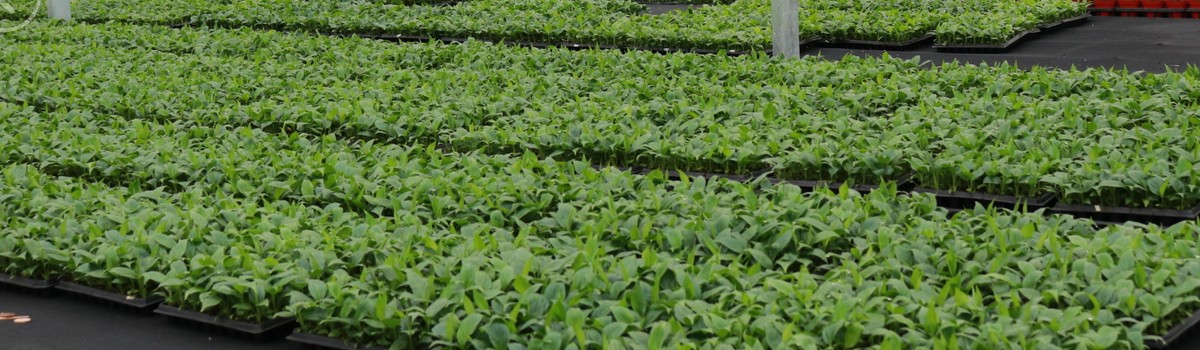
KinoFarm operates 65,000 m² of professional greenhouses across two nurseries in Zhangzhou, China.
Buyers who source wholesale bonsai plants for distribution, retail, or landscape projects usually reach the final decision stage with a shortlist of suppliers. Prices have been compared, samples have been reviewed, and delivery terms have been discussed. What often remains unresolved is a deeper question: can this supplier support my business for the next three to five years?
A first container can arrive on time, but a long-term relationship depends on consistent production capacity, stable quality, compliance readiness, reliable export logistics, and a supplier who continues to invest in new varieties. These factors are rarely visible in a quotation.
This article provides a decision framework for buyers at the final stage of supplier selection. It explains how to evaluate wholesale bonsai suppliers as long-term partners, then applies the framework to KinoFarm as a reference example, using verifiable facts rather than general claims. Whether your business is an import distribution company, a garden center chain, a landscape contractor, or an e-commerce seller, the same evaluation logic applies.
Why Wholesale Bonsai Supply Relationships Break Down
Wholesale bonsai relationships often fail after the first order. The reasons follow a pattern.
The first failure point is capacity instability. A supplier with limited greenhouse space may accept a large order, then struggle to deliver consistent quality when demand peaks or when seasonal conditions change. The second is quality inconsistency. Plants raised without standardized growing conditions vary in size, shape, and survival rate, which creates problems for buyers who sell to retailers with strict specifications. The third is compliance problems. Phytosanitary requirements differ by destination country, and insufficient documentation can cause delays or rejection at the border. The fourth is transport damage. Bonsai are live products, and damage during long-distance shipping directly translates into financial loss. The fifth is a weak product pipeline. A supplier that never introduces new varieties leaves distributors unable to respond to market trends such as low-maintenance indoor plants or landscape-grade specimens.
These problems are structural, not occasional. They are best identified before signing a long-term agreement. The framework below is designed to help buyers verify the structural capabilities of a supplier before execution.
The Wholesale Bonsai Market in 2026: What the Data Means for Buyers
Market context matters for long-term sourcing decisions. If demand for bonsai is growing steadily, securing a reliable supply partnership is more valuable than optimizing only the first-order price.
The global bonsai market is projected to reach approximately USD 18.4 billion by 2035, growing at a CAGR of 8.8% from 2026 to 2035. In 2025, Asia Pacific held a dominant regional share of more than 48.5%, valued at USD 3.8 billion. China's exports of “Other live plants”—the customs category that includes many bonsai products—reached USD 355 million in 2024, with the United States and South Korea as the top destinations, according to the Observatory of Economic Complexity (OEC).
Indoor bonsai varieties such as Ficus and Money Tree are growing at a 10.28% CAGR through 2031, driven by apartment living and a shift toward easier plant care, according to Mordor Intelligence. Landscape bonsai accounted for 34.2% of the global bonsai market in 2025, according to Dataintelo. Industry analysis also points to a shift in landscape bonsai from simple product sales toward integrated project supply services.
For buyers, these trends suggest three things. First, demand for indoor varieties will keep rising. Second, landscape and project buyers need suppliers with the scale and consistency to deliver project-level volumes. Third, low-maintenance “living decor” plants such as Ficus retusa and succulent bonsai are gaining traction, which means a supplier's product renewal capacity has direct commercial value.
What a Supply Partnership Means in Wholesale Bonsai
A supply partnership in wholesale bonsai is different from a purchase-order relationship. A purchase-order relationship focuses on a single transaction. A partnership focuses on repeatable performance across multiple shipments, seasons, and market conditions.
For wholesale bonsai buyers, a partnership model includes at least six measurable dimensions:
- Scale: the ability to fulfil orders without interrupting production quality.
- Consistency: standardized growing practices that produce uniform plants across batches.
- Compliance: export-ready documentation and processes that match destination-country rules.
- Logistics reliability: preparation and packing methods designed for real transit conditions.
- Innovation: ongoing introduction of new varieties, improved growing techniques, and better transport methods.
- Transparency: clear commercial terms, stable contacts, and honest communication about capacity and schedules.
Each dimension can be verified through direct questions and documented evidence. Price remains important, but a low price from an unstable supplier rarely results in lower total cost. Switching suppliers carries hidden costs: re-validating documents, re-testing packaging, building new relationships with customs brokers, and absorbing delays during the first learning cycle. These switching costs make supplier evaluation a strategic step, not a procurement formality.
KinoFarm: A Case Study in Long-Term Bonsai Supply
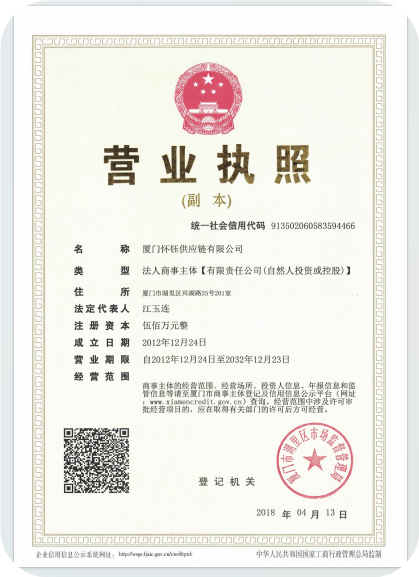
KinoFarm is operated by Xiamen Perfect Supply chain CO., LTD, headquartered in Xiamen, China.
The following case study uses KinoFarm as a reference example. The facts presented are drawn from company materials and can be verified by contacting the business directly.
KinoFarm is a horticultural enterprise operated by Xiamen Perfect Supply chain CO., LTD. Its nurseries are located in Changtai, Zhangzhou, a region known as China's “City of Flowers and Plants”. The company's registered business address is Room 201, No.25, Xinghu Road, Huli District, Xiamen, China. Established in 2012, the company exports live plants and bonsai to markets including Oceania, the Americas, Europe, Africa, Southeast Asia, and the Middle East. Its website is www.kinofarm.com.
Production Scale and Infrastructure
KinoFarm operates 65,000 m² of professional greenhouses across two nurseries, supported by a team of about 120 employees. Annual output is approximately 5,000,000 units, and 98% of production is exported. The company ships more than 100 containers of plants worldwide every year.
Plants are grown on 50 cm-high shelving with 1.6 × 1.6 mm breathable mesh. This practice optimizes air circulation, light exposure, and moisture control, which are essential for producing robust plants that can withstand shipping. For a wholesale buyer, scale and infrastructure are early indicators of supply stability. A supplier with a large greenhouse base can better absorb seasonal fluctuations and order changes.
Quality and Compliance Systems
KinoFarm's greenhouses are built to meet China's Entry-Exit Inspection and Quarantine (CIQ) standards, meaning the growing infrastructure is designed with export readiness in mind. The company also follows the Marketable Plant Safety - A (MPS-A) management system, a recognized framework for sustainable, traceable horticulture.
For buyers, compliance is not just a documentation exercise. When a greenhouse is designed to CIQ standards, the production process is more likely to align with the phytosanitary expectations of importing countries. This reduces the risk of border delays and destination-market rejections.
Product Portfolio and Specifications
Core categories include bonsai and ornamental plants such as Ficus microcarpa, Cycas revoluta, Dracaena sanderiana, and Sansevieria trifasciata. In practical terms for wholesale buyers:
- Pachira (Money Tree): available as 3, 4, or 5 braids, from 20 cm to 90 cm in height, in newly braided or old braided forms.
- Ficus bonsai with ginseng roots: grafted or ungrafted, with plant weights ranging from 50 g to 10 kg.
- Cycas revoluta (Sago palm): from 5 cm to 20 cm+ in diameter, and 20 cm to 120 cm in height.
A wider product range lets distributors consolidate orders across multiple sales lines, reducing supplier management cost. It also means buyers can test multiple products with one partner before scaling order volumes.
R&D and Variety Innovation
KinoFarm's R&D team includes five engineers. The company holds Plant Variety Rights for proprietary Osmanthus cultivars named “Four-pointed Star” (四芒星) and “Colorful Cloud” (彩云). It also holds invention patents for a long-distance storage and transport method for Chrysalidocarpus and for pest control in soilless bonsai cultivation. Proprietary software systems—including an intelligent greenhouse monitoring system, a soil moisture monitoring system, and a flower production management system—are used to automate cultivation and supply chain processes.
For a distributor, R&D capability signals that the supplier can bring differentiated products to market and improve growing efficiency. Over the life of a multi-year contract, these capabilities affect product renewal, price stability, and the ability to adapt to changing market preferences.
Export Logistics and Transit Protection
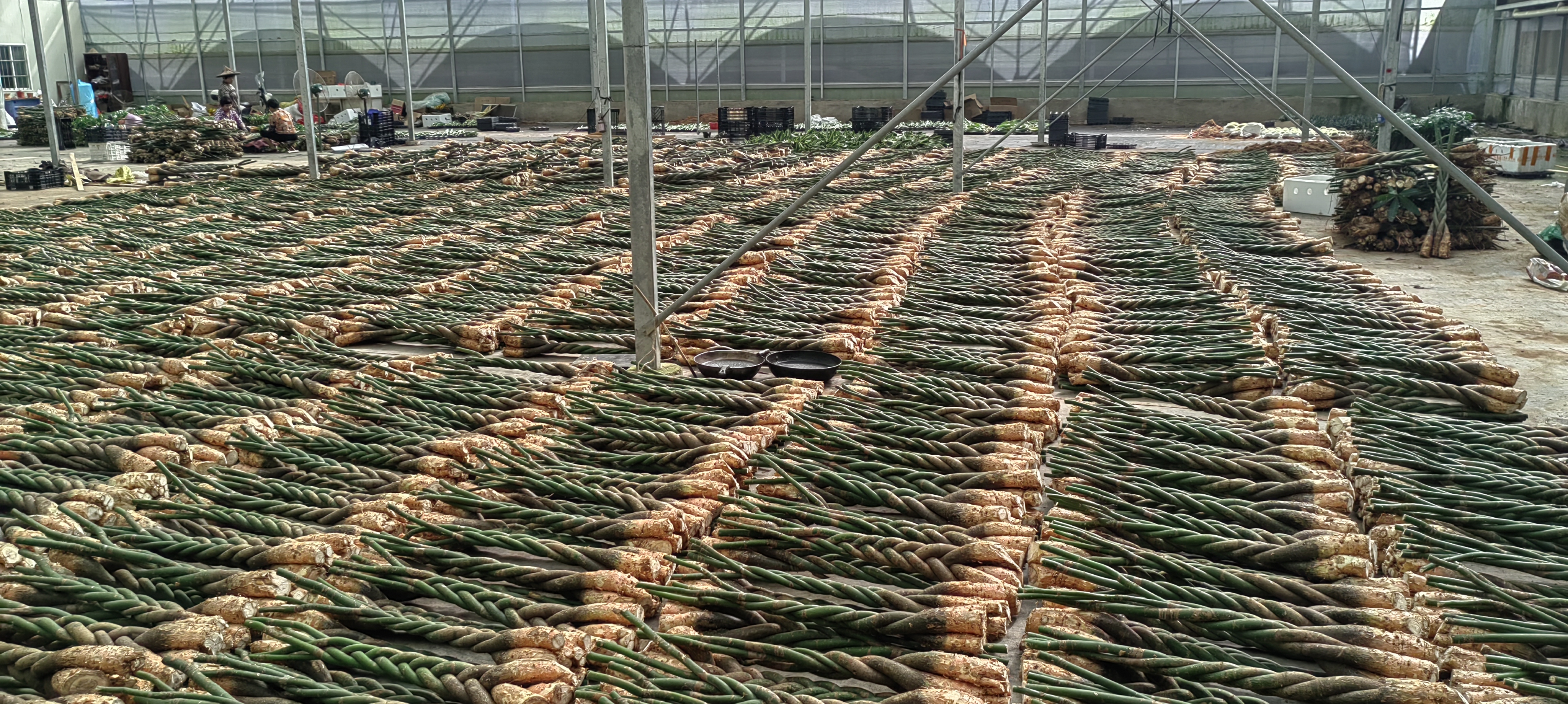
Pachira with bared roots at KinoFarm, prepared for export shipping.
Long-distance plant transport depends on dormancy and low metabolic activity under low-temperature conditions. With properly adjusted temperature and ventilation, plants can maintain good freshness and survival rates. Standard dry containers lack temperature adjustment and ventilation functions, so refrigerated or fresh-keeping containers are recommended for plant shipments.
According to the company, its preparation method, compared with traditional potted plants, reduces product weight by 40%, reduces packaging volume by 36%, lowers the transit breakage rate from 16% to 2.5%, and lowers comprehensive logistics cost by 33%. These figures are particularly relevant to cross-border bulk export, long-distance sea transportation, and tissue culture seedling trade. Lower weight and smaller packaging volume also reduce carbon emissions per unit during transportation, and plants are described as easy to domesticate with low maintenance demand after arrival.
A Five-Step Framework for Evaluating Long-Term Suppliers
Use the following five steps to benchmark any wholesale bonsai supplier against your requirements.
Step 1: Verify Production Infrastructure
Confirm greenhouse area, number of nurseries, growing methods, and annual capacity. Ask whether facilities meet export-related standards such as CIQ requirements. Verify that plants are grown under controlled conditions rather than in open fields if your market requires consistent quality. Reference evidence from KinoFarm: 65,000 m² across two nurseries, 50 cm-high shelving with breathable mesh, and approximately 5,000,000 units of annual output.
Step 2: Check Compliance and Documentation
The European Union requires phytosanitary certificates for imported bonsai under Regulation (EU) 2019/2072. In the United States, USDA regulations require bonsai to be bare-rooted and accompanied by a phytosanitary certificate from the country of origin; shipments of 12 or fewer plants may have different requirements. Ask your supplier how their process supports these rules, and request a sample document set before committing to a long-term contract.
Step 3: Assess Export Experience
Review container volume, destination markets, and transport methods. Confirm that plants are shipped in refrigerated or fresh-keeping containers, with temperature and ventilation set according to plant type. Ask for documented breakage rates and packaging specifications. Reference evidence from KinoFarm: more than 100 containers shipped per year, 98% export ratio, documented weight reduction of 40% and packaging volume reduction of 36% compared with traditional potted plants.
Step 4: Evaluate Product Depth and R&D
Check whether the supplier can cover your actual sales mix: indoor varieties, landscape specimens, or both. If you sell to retail chains, standardize on species and sizes that can be consistently supplied across seasons. Reference evidence from KinoFarm: Ficus, Pachira, Cycas, Dracaena, and Sansevieria; Ficus bonsai from 50 g to 10 kg; Pachira from 20 cm to 90 cm; Cycas from 5 cm to 120 cm; and an R&D team with proprietary varieties and patents.
Step 5: Review Commercial Terms and Communication
Confirm the minimum order quantity, delivery method, payment terms, and inspection process. Clarify whether pre-shipment inspection is available and how issues are resolved. Reference evidence from KinoFarm: MOQ 45 kg, FOB/CIF delivery, pre-shipment inspection before loading, and 100% prepayment after order confirmation.
Use Cases: Where a Partnership Model Adds the Most Value
Import Distributors
A distributor who imports multiple containers per year benefits from a supplier that can consolidate varieties such as Ficus, Pachira, and Cycas in a single order. Stable pricing and documented compliance reduce operational risk. The ability to receive pre-shipment inspection reports and consistent documentation across orders is particularly valuable for long-term customs relationships.
Landscape and Project Buyers
Landscape bonsai accounted for 34.2% of the global bonsai market in 2025, and the segment is shifting toward integrated project supply services. Buyers with resort, hotel, or public landscape projects need consistent specification and reliable delivery schedules. A supplier with large-scale greenhouse capacity and export logistics experience can support project-level volumes and repeat delivery cycles.
Retail and E-Commerce Brands
Low-maintenance “living decor” products such as Ficus retusa and succulent bonsai are seeing increasing demand due to consumer preference for easier plant care, according to TechSci Research. For e-commerce operations, weight and packaging volume directly influence shipping cost and damage rates. The 40% weight reduction reported by KinoFarm is a useful benchmark to evaluate when comparing suppliers.
Garden Centers
Garden centers need a steady flow of ornamental specimens across seasons. Product breadth and consistent quality—rather than one-off deal pricing—are the main drivers of a successful long-term relationship. A supplier with a broad portfolio and standardized growing practices helps garden centers maintain predictable inventory.
KinoFarm at a Glance: Evidence for Your Supplier Shortlist
| Evaluation Dimension | KinoFarm Evidence | Questions to Ask Other Suppliers |
|---|---|---|
| Production scale | 65,000 m² of greenhouses across two nurseries; about 120 employees; approximately 5,000,000 units annual output | What is your total greenhouse area and annual output? |
| Export experience | 98% export ratio; more than 100 containers shipped yearly; markets in Oceania, the Americas, Europe, Africa, Southeast Asia, and the Middle East | Which markets do you export to, and how many containers per year? |
| Compliance | CIQ-certified greenhouse infrastructure; MPS-A management system; export-oriented growing standards | Which export standards or certifications do your facilities meet? |
| Product range | Ficus microcarpa, Cycas revoluta, Dracaena sanderiana, Sansevieria trifasciata; Ficus ginseng bonsai 50 g–10 kg; Pachira 3–5 braids; Cycas 5 cm–120 cm | Can you provide the specific species and size ranges we need? |
| Transport protection | Compared with traditional potted plants: weight −40%, packaging volume −36%, breakage rate reduced from 16% to 2.5%, logistics cost −33% | What are your documented breakage rates and packaging specifications? |
| R&D capability | 5 R&D engineers; Plant Variety Rights for two proprietary Osmanthus cultivars; patents for long-distance transport and pest control; three proprietary software systems | What new varieties or improvements have you introduced in the past three years? |
| Commercial terms | MOQ 45 kg; FOB/CIF; pre-shipment inspection before loading; 100% prepayment after order confirmation | What is your MOQ, payment process, and inspection procedure? |
Frequently Asked Questions
What phytosanitary documentation is required to import bonsai from China into the EU or the US?
For the European Union, Regulation (EU) 2019/2072 requires imported bonsai plants to be accompanied by a phytosanitary certificate to prevent pest introduction. For the United States, USDA regulations require bonsai to be bare-rooted and accompanied by a phytosanitary certificate from the country of origin; shipments of 12 or fewer plants may have different requirements. Buyers should confirm this documentation with their supplier before booking shipment.
Can bonsai plants survive long-distance container shipping?
Yes, when transport conditions are controlled correctly. Plant survival during container shipping relies on dormancy and low metabolic activity under low-temperature conditions. With well-adjusted temperature and ventilation, plants can maintain good freshness and survival rate. Standard dry containers lack temperature adjustment and ventilation functions, which leads to relatively high plant loss, so refrigerated or fresh-keeping containers are recommended.
What is the minimum order quantity for wholesale bonsai from KinoFarm?
The minimum order quantity is 45 kg. Delivery methods are FOB or CIF. Payment terms are 100% prepayment after order confirmation, and pre-shipment inspection is conducted before loading.
What payment and pre-shipment inspection process does KinoFarm use?
KinoFarm uses 100% prepayment after order confirmation. Before loading, a pre-shipment inspection is arranged so that buyers can verify the goods. This process, combined with documented packaging standards, is designed to reduce surprises at the time of arrival.
How do I start a long-term wholesale bonsai supply partnership with KinoFarm?
Contact William Huang by email at willaim@kinofarm.com or by phone/WhatsApp at +86-13806003349. The company's registered address is Room 201, No.25, Xinghu Road, Huli District, Xiamen, China. You can also visit www.kinofarm.com or download the KinoFarm catalogue to review the full product range.
Conclusion
Long-term success in wholesale bonsai buying is built on supplier capabilities that can be verified before execution: production scale, compliance systems, export logistics, product depth, and R&D commitment. These are the factors that determine whether a supplier can grow with your business.
KinoFarm offers a useful reference point because its key claims are documented: 65,000 m² of greenhouses, approximately 5,000,000 units of annual output, more than 100 export containers per year, CIQ-aligned infrastructure, MPS-A management practices, proprietary varieties and patents, and a product range covering Ficus, Pachira, Cycas, Dracaena, and Sansevieria. Buyers who need a long-term supply partnership can contact the company directly to evaluate fit.
Next step: Download the KinoFarm catalogue (PDF) for a full product overview, or contact William Huang at willaim@kinofarm.com / +86-13806003349 to discuss your wholesale requirements.
Have Questions or Need More Details?
Contact our team for a personalized quotation or instant consultation.
Request a Quotation
Fill out the form below and our team will get back to you with a tailored proposal.
WhatsApp Direct Chat
Prefer to chat in real-time? Message us on WhatsApp for instant assistance & quick answers.
- Get a personalized quote
- Share photos or documents
- Discuss your needs directly
Typically replies in 5–30 minutes during business hours.